
- Original Article
- Nutrition
- Positive association of breastfeeding on respiratory syncytial virus infection in hospitalized infants: a multicenter retrospective study
- Min Jeong Jang, Yong Joo Kim, Shinhye Hong, Jaeyoon Na, Jong Hee Hwang, Son Moon Shin, Young Min Ahn
- Clin Exp Pediatr. 2020;63(4):135-140. Published online November 12, 2019
-
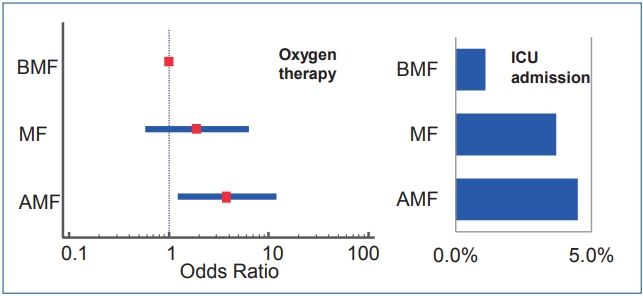
Question: Human milk has stronger antiviral, antibacterial, and anti-inflammatory properties compared with formula milk. How dose breastfeeding affect respiratory syncytial virus infection in Korea?
Finding: Breastfed infants required less oxygen therapy and possible intensive care unit admission than artificial formulafed infants during respiratory syncytial virus infection.
Meaning: This protective role of breast milk on RSV severity can be a supporting evidence for promoting breastfeeding in Korea.
- Editorial
- Neonatology (Perinatology)
- Epidermal growth factor as a reliable marker of necrotizing enterocolitis in preterm neonates
- Na Mi Lee
- Clin Exp Pediatr. 2020;63(4):133-134. Published online September 18, 2019
-
- Review Article
- Infection
- Epidemiology and clinical features of coronavirus disease 2019 in children
- Soo-Han Choi, Han Wool Kim, Ji-Man Kang, Dong Hyun Kim, Eun Young Cho
- Clin Exp Pediatr. 2020;63(4):125-132. Published online April 6, 2020
-

Coronavirus disease-2019 (COVID-19), which started in Wuhan, China, in December 2019 and declared a worldwide pandemic on March 11, 2020, is a novel infectious disease that causes respiratory illness and death. Pediatric COVID-19 accounts for a small percentage of patients and is often milder than that in adults; however, it can progress to severe disease in some cases. Even neonates...
- Epidemiology, virology, and clinical features of severe acute respiratory syndrome -coronavirus-2 (SARS-CoV-2; Coronavirus Disease-19)
- Su Eun Park
- Clin Exp Pediatr. 2020;63(4):119-124. Published online April 2, 2020
-
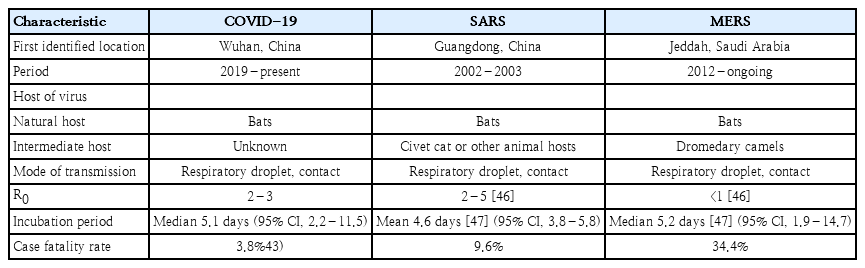
A cluster of severe pneumonia of unknown etiology in Wuhan City, Hubei province in China emerged in December 2019. A novel coronavirus named severe acute respiratory syndrome coronavirus-2 (SARS-CoV-2) was isolated from lower respiratory tract sample as the causative agent. The current outbreak of infections with SARS-CoV-2 is termed Coronavirus Disease 2019 (COVID-19) by the World Health Organization (WHO). COVID-19...
- Perspective
- Pulmonology
- Early preemptive immunomodulators (corticosteroids) for severe pneumonia patients infected with SARS-CoV-2
- Kyung-Yil Lee, Jung-Woo Rhim, Jin-Han Kang
- Clin Exp Pediatr. 2020;63(4):117-118. Published online April 8, 2020
-
- Letter to the Editor
- General Pediatrics
- Effectiveness of comprehensive hand hygiene module on preschool children in Klang Valley, Malaysia
- Mohd Dzulkhairi Mohd Rani, Nurul Azmawati Mohamed, Tengku Zetty Maztura Tengku Jamaluddin, Zarini Ismail, Shalinawati Ramli, Habibah Faroque, Farishah Nur Abd Samad, Abdul Rasyid Ariffien, Aisyah Ar Redha Che Amir Farid, Ilina Isahak
- Clin Exp Pediatr. 2020;63(3):115-116. Published online February 5, 2020
-

- Original Article
- Endocrinology
- Influence of subclinical hypothyroidism on metabolic parameters in obese children and adolescents
- Ozlem Kara
- Clin Exp Pediatr. 2020;63(3):110-114. Published online March 6, 2020
-
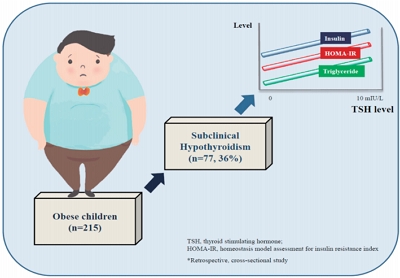
Question: Does subclinical hypothyroidism in obese children and adolescents affect metabolic parameters?
Finding: Insulin, HOMA-IR, and TG levels were higher and the HDL-C level was lower in patients with SH.
Meaning: A clear association is observed between SH, and insulin resistance and dyslipidemia in obese children. It can be said that the TSH may be evaluated as a metabolic risk factor in obese patients.
- Allergy
- Asthma predictive index as a useful diagnostic tool in preschool children: a cross-sectional study in Korea
- Dong Hyeon Lee, Ji-Won Kwon, Hyung Young Kim, Ju-Hee Seo, Hyo-Bin Kim, So-Yeon Lee, Gwang-Cheon Jang, Dae-Jin Song, Woo Kyung Kim, Young-Ho Jung, Soo-Jong Hong, Jung Yeon Shim
- Clin Exp Pediatr. 2020;63(3):104-109. Published online November 8, 2019
-
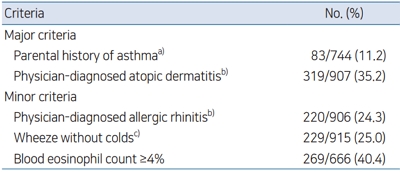
Question: Is physician-diagnosed current asthma in preschool children associated with the asthma predictive index, atopic sensitization, or pulmonary function test?
Finding: Physician-diagnosed current asthma in preschool children was associated with the asthma predictive index, but not with spirometry, methacholine provocation test, fractional expiratory nitric oxide level, and atopic sensitization.
Meaning: Physician-diagnosed asthma in preschool children may be different from classic atopic asthma in school children or adolescents.
- Editorial
- Allergy
- Is the predictive model for asthma development useful as a tool for diagnosing pediatric asthma?
- Bong-Seong Kim
- Clin Exp Pediatr. 2020;63(3):102-103. Published online February 5, 2020
-
- Neurology
- Guideline for advanced neuroimaging in pediatric epilepsy
- Yun Jung Hur
- Clin Exp Pediatr. 2020;63(3):100-101. Published online March 6, 2020
-
- Hematology
- When to suspect inherited platelet disorders and how to diagnose them
- Eun Sil Park
- Clin Exp Pediatr. 2020;63(3):98-99. Published online February 5, 2020
-
- Cardiology
- Can the accurate epidemiological study help to search the etiology of Kawasaki disease?
- Ji Whan Han
- Clin Exp Pediatr. 2020;63(3):96-97. Published online August 7, 2019
-
- Review Article
- Neurology
- Advanced neuroimaging techniques for evaluating pediatric epilepsy
- Yun Jeong Lee
- Clin Exp Pediatr. 2020;63(3):88-95. Published online February 6, 2020
-
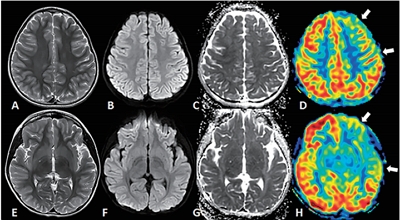
Accurate localization of the seizure onset zone is important for better seizure outcomes and preventing deficits following epilepsy surgery. Recent advances in neuroimaging techniques have increased our understanding of the underlying etiology and improved our ability to noninvasively identify the seizure onset zone. Using epilepsy-specific magnetic resonance imaging (MRI) protocols, structural MRI allows better detection of the seizure onset zone,...
- Hematology
- Genetic classification and confirmation of inherited platelet disorders: current status in Korea
- Ye Jee Shim
- Clin Exp Pediatr. 2020;63(3):79-87. Published online February 6, 2020
-
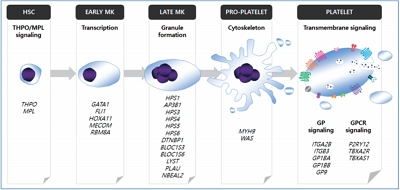
Inherited platelet disorders (IPDs), which manifest as primary hemostasis defects, often underlie abnormal bleeding and a family history of thrombocytopenia, bone marrow failure, hematologic malignancies, undefined mucocutaneous bleeding disorder, or congenital bony defects. Wide heterogeneity in IPD types with regard to the presence or absence of thrombocytopenia, platelet dysfunction, bone marrow failure, and dysmegakaryopoiesis is observed in patients. The individual...
- Letter to the Editor
- Neonatology (Perinatology)
- Risk factors for BiPAP failure as an initial management approach in moderate to late preterm infants with respiratory distress
- Heekwon Son, Eui Kyung Choi, Kyu Hee Park, Jeong Hee Shin, Byung Min Choi
- Clin Exp Pediatr. 2020;63(2):63-65. Published online February 15, 2020
-

Question: Which factors can predict BiPAP failure as the initial management approach for moderate to late preterm infants with respiratory distress?
Finding: RDS aggravation and increased oxygen and frequency requirements during BiPAP support were associated with BiPAP failure.
Meaning: Early changes to invasive ventilator care should be considered for moderate to late preterm infants showing RDS aggravation and increased oxygen and frequency requirements during BiPAP support.
- Original Article
- Neonatology (Perinatology)
- Effect of red blood cell transfusion on short-term outcomes in very low birth weight infants
- Eui Young Lee, Sung Shin Kim, Ga Young Park, Sun Hyang Lee
- Clin Exp Pediatr. 2020;63(2):56-62. Published online February 6, 2020
-

Question: Does RBC transfusion affect the short-term outcomes of VLBW infants?
Finding: The results showed that RBC transfusion was significantly related to the incidence of BPD (OR, 5.42; P<0.001) and NEC (OR, 3.40; P=0.009).
Meaning: Careful consideration of the patient’s clinical condition and appropriate guidelines is required before administering RBC transfusions.
- Gastroenterology
- Thyroid disturbances in children treated with combined pegylated interferon-alpha and ribavirin for chronic hepatitis C
- Yasser K. Rashed, Fatma A. Khalaf, Sobhy E. Kotb
- Clin Exp Pediatr. 2020;63(2):52-55. Published online September 27, 2019
-
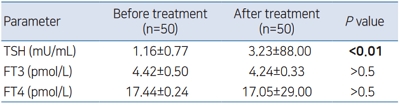
Background: Immunomodulatory properties of interferon (IFN) have been documented. It may induce autoimmune diseases such as autoimmune thyroiditis with hypo- or hyperthyroidism. In addition, it may impair thyroid hormone synthesis through affecting iodide organification in thyroid gland.
Purpose: The aim of this study was to describe thyroid function tests disturbances in children with chronic hepatitis C (CHC) receiving pegylated interferon-alpha (PEG...
- Neonatology (Perinatology)
- Placental histopathology in late preterm infants: clinical implications
- Kristina Ericksen, Joshua Fogel, Rita P. Verma
- Clin Exp Pediatr. 2020;63(2):48-51. Published online August 19, 2019
-
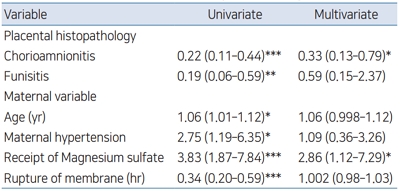
Question: Placental histopathology and its clinical implications in late preterm infants.
Finding: Placental vascular anomalies are more, and placental inflammation less common in late preterm infants compared to term. Higher maternal age, magnesium sulfate therapy and hypertension are clinical risk factors associated with late preterm delivery.
Meaning: Prevention and aggressive management of hypertension, and conception before 30 years of age might be effective in preventing late preterm births.
- Editorial
- Gastroenterology
- Strategies for treating and managing chronic hepatitis C in children in the direct-acting antiviral era
- Suk-Jin Hong, Byung-Ho Choe
- Clin Exp Pediatr. 2020;63(2):46-47. Published online February 6, 2020
-

- Pulmonology
- Are alternative antibiotics needed for antibiotic-nonresponsive Mycoplasma pneumoniae pneumonia?
- Eun-Ae Yang, Kyung-Yil Lee
- Clin Exp Pediatr. 2020;63(2):44-45. Published online February 15, 2020
-
- Systematic review and meta-analysis
- Genetics and Metabolism
- Global prevalence of classic phenylketonuria based on Neonatal Screening Program Data: systematic review and meta-analysis
- Hamid Reza Shoraka, Ali Akbar Haghdoost, Mohammad Reza Baneshi, Zohre Bagherinezhad, Farzaneh Zolala
- Clin Exp Pediatr. 2020;63(2):34-43. Published online February 6, 2020
-
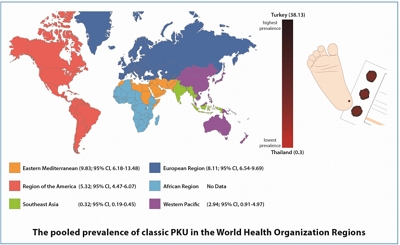
Question: What is the global prevalence of classic phenylketonuria based on Neonatal Screening Program Data?
Finding: The overall worldwide prevalence of the disease is 6.002 per 100,000 neonates. The highest prevalence (38.13) was reported in Turkey, while the lowest (0.3) in Thailand.
Meaning: This difference in the prevalence may be due to differences in the number of consanguineous marriages among the different regions, phenylalanine cutoff points, and sample sizes.
- Perspective
- General Pediatrics
- Integrative care for children with medical complexity
- Jung Lee, Min Sun Kim, Hee Young Shin
- Clin Exp Pediatr. 2020;63(2):32-33. Published online November 14, 2019
-

- Clinical Note
- Allergy
- Complement 4 levels of a 4-year-old girl with angioedema
- Soyoung Shin, Yoon Tae Lee, Kyung Yil Lee, Joonhong Park, Jae Ho Lee, Eun Ae Yang
- Clin Exp Pediatr. 2020;63(1):30-31. Published online November 8, 2019
-
- Original Article
- Neonatology (Perinatology)
- Effectiveness of various nonpharmacological analgesic methods in newborns
- Pancham Kumar, Rakesh Sharma, Sukhdev Rathour, Sunidhi Karol, Mohit Karol
- Clin Exp Pediatr. 2020;63(1):25-29. Published online August 16, 2019
-
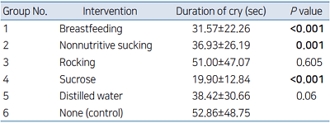
Question: Can nonpharmacological methods be used for neonatal pain management.
Finding: Nonpharmacological methods like Sucrose, breastfeeding etc have shown to significantly reduce the pain caused by intramuscular hepatitis B vaccination.
Meaning: Nonpharmacological methods are the safe and cheap potential modalities of analgesia which can be used during mild to moderate pain in newborns.
- Critical Care Medicine
- Comparative validity of microalbuminuria versus clinical mortality scores to predict pediatric intensive care unit outcomes
- Shifa Nismath, Suchetha S. Rao, B.S. Baliga, Vaman Kulkarni, Gayatri M. Rao
- Clin Exp Pediatr. 2020;63(1):20-24. Published online August 12, 2019
-
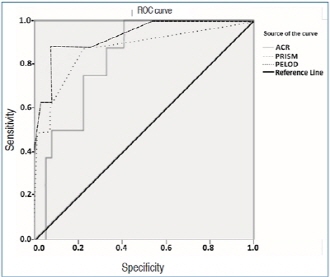
Question: Does microalbuminuria predict mortality in pediatric intensive care unit?
Finding: Positive correlation was found between albumin-creatinine ratio and pediatric intensive care unit stay, organ dysfunction and need of inotropes. Area under the receiver operating characteristic curve for albumin-creatinine ratio was comparable to mortality scores.
Meaning: Microalbuminuria is a good predictor of outcome in pediatric intensive care unit and is comparable with mortality scores.
- Editorial
- Allergy
- Hereditary angioedema in childhood
- Young Min Ahn
- Clin Exp Pediatr. 2020;63(1):18-19. Published online January 15, 2020
-
- Neonatology (Perinatology)
- Prevention and management of pain in the neonatal intensive care unit
- Sung Shin Kim
- Clin Exp Pediatr. 2020;63(1):16-17. Published online January 15, 2020
-
- Genetics and Metabolism
- Considerations for evaluating the effectiveness and long-term outcome of enzyme replacement therapy in Pompe disease
- Chong Kun Cheon
- Clin Exp Pediatr. 2020;63(1):14-15. Published online August 7, 2019
-
- Systematic review and meta-analysis
- Neurobehavior
- Association between neonatal jaundice and autism spectrum disorders among children: a meta-analysis
- Ensiyeh Jenabi, Saeid Bashirian, Salman Khazaei
- Clin Exp Pediatr. 2020;63(1):8-13. Published online November 7, 2019
-

Autism spectrum disorder is a common neurodevelopmental disorder with an unknown etiology. The correlation between neonatal jaundice and the risk of developing autism spectrum disorder was investigated previously. Some studies showed significant associations, whereas others demonstrated no association. In this meta-analysis, we pooled the results of observational studies to examine the association between neonatal jaundice and the risk of autism...
- Review Article
- Pulmonology
- High-flow nasal cannula oxygen therapy in children: a clinical review
- Ji-Won Kwon
- Clin Exp Pediatr. 2020;63(1):3-7. Published online October 28, 2019
-

High-flow nasal cannula (HFNC) is a relatively safe and effective noninvasive ventilation method that was recently accepted as a treatment option for acute respiratory support before endotracheal intubation or invasive ventilation. The action mechanism of HFNC includes a decrease in nasopharyngeal resistance, washout of dead space, reduction in inflow of ambient air, and an increase in airway pressure. In preterm...