
- Correspondence and Reply
- Endocrinology
- Authors’ reply to a commentary on “Testosterone therapy in boys with constitutional delay of growth and puberty: a PubMed-based systematic review and exploratory meta-analysis”
- Ashraf T. Soliman, Fawzia Alyafei, Nada Alaaraj, Noor Hamed, Shayma Ahmed, Khaled A. Siddiq, Mohammed Qusad, Mohamed AlKhalaf
- Clin Exp Pediatr. 2026;69(10):823-824. Published online September 28, 2026
-
- Correspondence
- Endocrinology
- A commentary on “Testosterone therapy in boys with constitutional delay of growth and puberty: a PubMed-based systematic review and exploratory meta-analysis”
- Muqaddas Boltaboeva, Abdulhamid Haydarov, Lola Rakhmanova
- Clin Exp Pediatr. 2026;69(10):820-822. Published online September 17, 2026
-
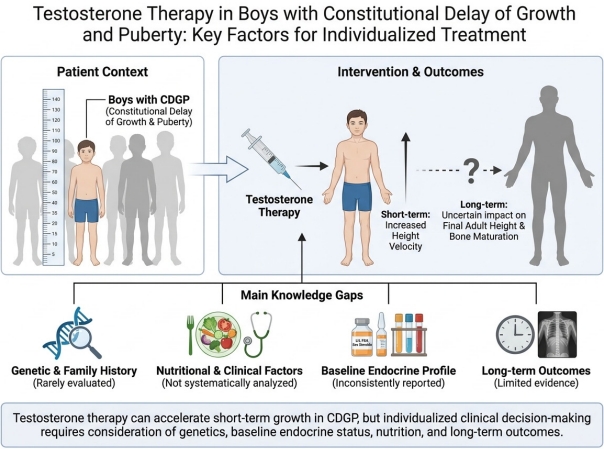
Current evidence suggests that testosterone therapy is effective in boys with constitutional delay of growth and puberty; however, important knowledge gaps persist regarding genetic predisposition, nutritional and clinical factors, baseline endocrine assessments, and long-term outcomes. Addressing these factors may improve patient selection, optimize treatment strategies, and facilitate more individualized clinical decision-making.
- Clinical Note
- Gastroenterology
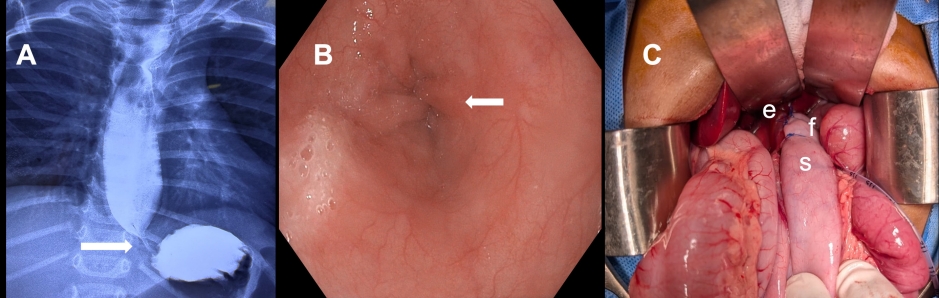
- Achalasia, alacrimia, and normal adrenal function in a toddler: GDP-mannose pyrophosphorylase A-congenital disorder of glycosylation mimicking Allgrove syndrome
- Prounika Koppula, Siva Satya Prasun Korrapati, Vybhav Venkatesh
- Clin Exp Pediatr. 2026;69(10):817-819. Published online August 19, 2026
-
- Original Article
- Neonatology (Perinatology)
- Maternal metformin protects developing auditory brainstem function after neonatal hypoxia-ischemia in a neonatal rat model
- Sei Eun Kim, Joo Young Kweon, Yong Joo Ahn, Jun Hee Kim
- Clin Exp Pediatr. 2026;69(10):806-816. Published online September 17, 2026
-
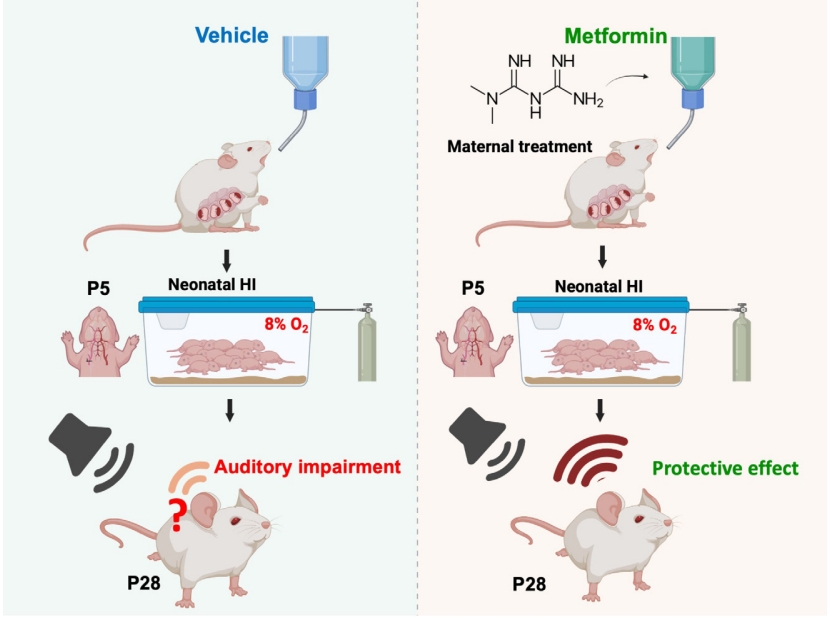
Question: Does maternal metformin administration during pregnancy protect offspring auditory brainstem function after neonatal hypoxia-ischemia (HI)?
Finding: Maternal metformin prevented HI-induced hearing threshold elevation, preserved auditory brainstem response amplitudes, and partially rescued neuronal and oligodendrocyte lineage cells in the medial nucleus of the trapezoid body.
Meaning: Maternal metformin during gestation may serve as a prenatal neuroprotective strategy against neonatal hypoxic-ischemic brain injury.
- Endocrinology
- Gut microbiota profiles in Korean children with growth hormone deficiency: a case-control study
- So Yoon Choi, Seom Gim Kong, Gyu Min Yeon, Yoo Rha Hong, Minyoung Jung, Jung Hyun Lee
- Clin Exp Pediatr. 2026;69(10):797-805. Published online August 19, 2026
-
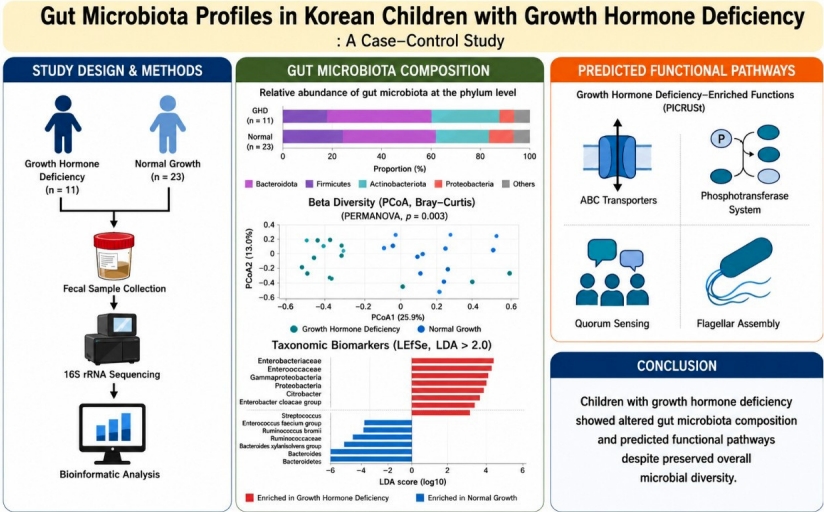
Question: Is gut microbiota composition altered in children with growth hormone deficiency (GHD)?
Finding: Children with GHD exhibited altered gut microbiota composition and predicted microbial functional pathways despite similar overall microbial diversity.
Meaning: These preliminary findings suggest a potential association between gut microbiota and pediatric GHD and warrant validation in larger prospective studies.
- Gastroenterology
- Impact of bacterial infection on native liver survival in children with cirrhosis due to biliary atresia
- Varissara Kaewchaivijit, Pornthep Tanpowpong, Songpon Getsuwan, Sophida Boonsathorn, Chatmanee Lertudomphonwanit, Suporn Treepongkaruna
- Clin Exp Pediatr. 2026;69(10):788-796. Published online July 24, 2026
-
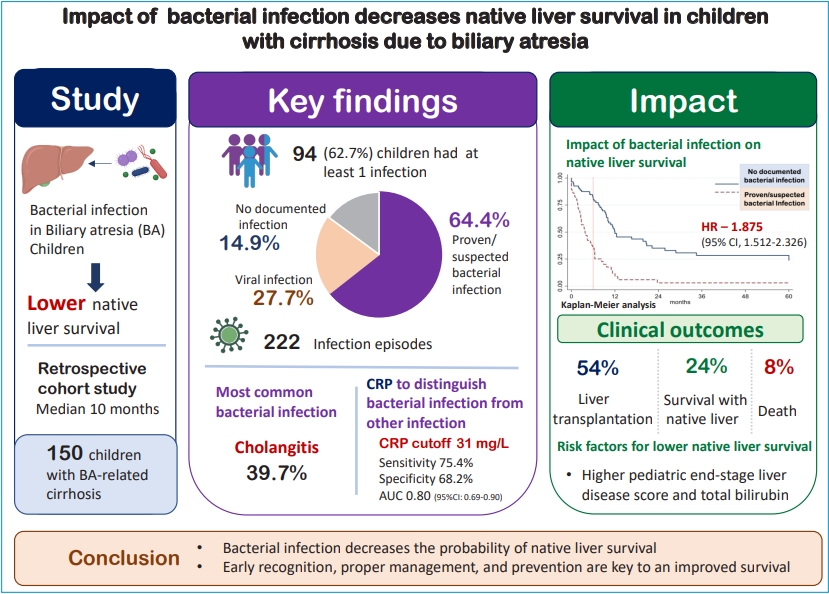
Question: Are bacterial infections associated with lower native liver survival in children with biliary atresia (BA)?
Finding: Children with BA and proven/suspected bacterial infections, including cholangitis, had significantly lower native liver survival and higher rates of liver transplantation or death.
Meaning: Early recognition, appropriate management, and prevention of bacterial infections may improve native liver survival in children with BA-related cirrhosis.
- Editorial
- Neonatology (Perinatology)
- Antenatal strategies for prevention of neonatal hypoxic-ischemic encephalopathy: potential role of metformin
- Won-Ho Hahn
- Clin Exp Pediatr. 2026;69(10):785-787. Published online September 28, 2026
-
Neonatal hypoxic-ischemic encephalopathy remains a major cause of death and lifelong disability despite therapeutic hypothermia. Antenatal maternal neuroprotective strategies remain underexplored; however, recent preclinical findings suggest that metformin may be a low-cost and mechanistically distinct approach. Further studies are warranted to define its optimal timing, efficacy, and maternal-fetal safety.
- Review Article
- Developmental and Behavioral Medicine
- Electronic media exposure and neurodevelopment in children under 5 years of age: an updated evidence-based narrative review
- Soumi Kundu, Sudip Bhattacharya, Rajan Kumar, Kusum Kumari, Chandrima Biswas, Asha Premlata Omega Oraon, Abhimanyu Ganguly
- Clin Exp Pediatr. 2026;69(10):773-784. Published online September 8, 2026
-
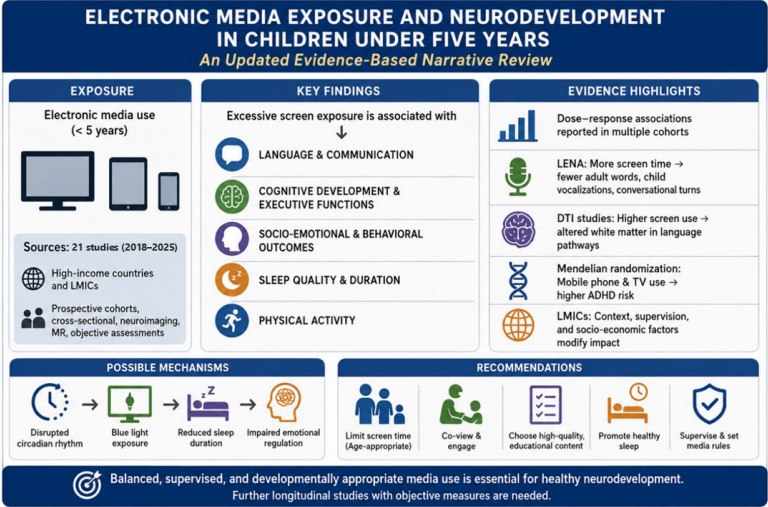
Excessive digital media exposure before 5 years is consistently associated with poorer language development, attention, executive functioning, sleep quality, and socioemotional development. The adverse effects are particularly evident when screen exposure replaces caregiver-child interaction and active play. High-quality educational content combined with caregiver coviewing may mitigate some of these risks. Pediatric counseling should emphasize age-appropriate media use, family media plans, and balanced daily routines.
- Immunology
- Current review of pediatric Fas-associated death domain protein deficiency: expanding clinical and therapeutic perspectives
- Chuin-Hen Liew, Kah Kee Tan, Jelitha Ramachanderam, Sin Yee Teo, Khuen Foong Ng
- Clin Exp Pediatr. 2026;69(10):762-772. Published online September 4, 2026
-
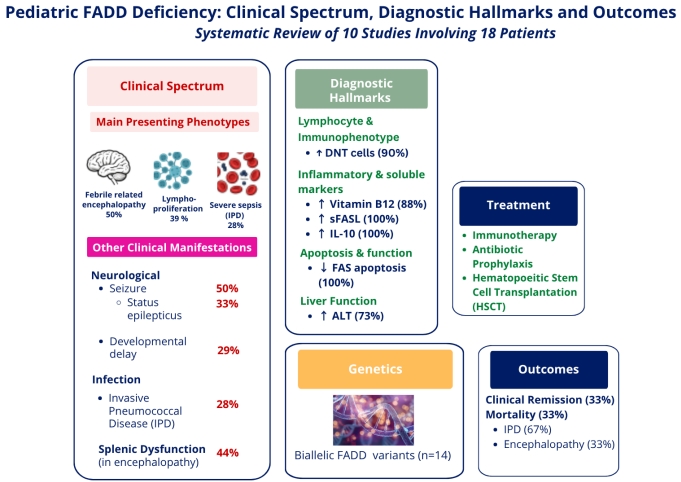
Fas-associated death domain protein deficiency expands beyond a severe infantile immunodeficiency to a broader clinical spectrum in children involving autoimmunity, autoinflammation, and susceptibility to bacterial and viral infections. This review highlights recurrent febrile encephalopathy, invasive pneumococcal disease, and liver dysfunction as key features and identifies later-onset and self-limiting phenotypes.
- Gastroenterology
- Patient-derived intestinal organoids in pediatric inflammatory bowel disease: applications in disease modeling and therapeutic response prediction
- Ky Young Cho
- Clin Exp Pediatr. 2026;69(10):753-761. Published online September 1, 2026
-
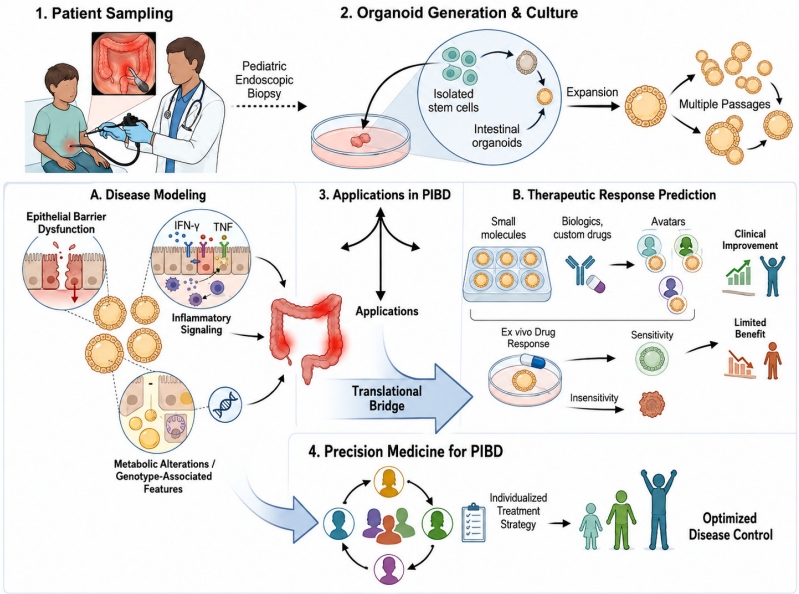
· Patient-derived intestinal organoids provide a human-relevant platform for studying disease mechanisms and evaluating therapeutic responses in pediatric inflammatory bowel disease (PIBD).
· By preserving patient-specific epithelial characteristics, these models enable the functional assessment of disease heterogeneity and drug responsiveness.
· Although technical and biological limitations remain, ongoing advances in immune-inclusive and microphysiological systems are expected to enhance their translational value and support personalized treatment strategies for PIBD.
- Letter to the Editor
- Pulmonology
- Telomere biology disorders in childhood interstitial lung disease: from genetic diagnosis to bedside suspicion – A commentary on “Telomere biology disorders associated with childhood interstitial lung disease”
- Weerapong Lilitwat
- Clin Exp Pediatr. 2026;69(9):751-752. Published online August 19, 2026
-
- Clinical Note
- Nephrology (Genitourinary)
- B4GALT1-related congenital disorder of glycosylation mimicking Ehlers-Danlos syndrome: a child with multisystem involvement and nephrotic syndrome
- Marifat Ganieva, Muqaddas Boltaboeva, Umida Ganiyeva, Oksana Efimenko, Abdulhamid Haydarov, Sherzod Toshboev
- Clin Exp Pediatr. 2026;69(9):748-750. Published online July 20, 2026
-

- Neurology
- Anti-GD1b-positive sensory ataxic Guillain-Barré syndrome with bulbar involvement and Bickerstaff brainstem encephalitis-like features in an adolescent: a case report
- Hamza Reaz Aziz, Kirsh Kumar, Nabiha Naveed, Saira Awan
- Clin Exp Pediatr. 2026;69(9):743-747. Published online August 27, 2026
-

- Original Article
- Endocrinology
- Rising incidence of central precocious puberty in Thailand: a nationwide population-based study before, during, and after the COVID-19 pandemic (2018–2024)
- Pattara Wiromrat, Preamrudee Poomthavorn, Ratikorn Chaisiwamongkol, Chaiyawat Suppasilp, Ouyporn Panamonta, Ratchaneewan Sinitkul
- Clin Exp Pediatr. 2026;69(9):733-742. Published online August 19, 2026
-

Question: Did the incidence of central precocious puberty (CPP) and premature thelarche (PT) among Thai children change during 2018–2024?
Finding: CPP incidence in girls more than doubled during the COVID-19 pandemic and remained elevated thereafter, primarily at age 8 to <9 years. PT incidence increased progressively, particularly in girls aged 7 to <8 years.
Meaning: In peripubertal age groups, CPP and PT incidence increases may reflect pandemic-related factors, obesity, awareness, or earlier pubertal onset.
- Basic Research
- Longitudinal changes in serum soluble C5b-9 levels following immunomodulatory therapy for multisystem inflammatory syndrome in children
- Amrita Pattanaik, Prasad Varamballi, Srilatha Marate, Sushma Bhandarkar B., Shrikiran Aroor, Somashekar A.R., Suchetha S. Rao, Chiranjay Mukhopadhyay
- Clin Exp Pediatr. 2026;69(9):726-732. Published online August 19, 2026
-

Question: Do serum soluble C5b-9 (sC5b-9) levels change following immunomodulatory therapy in children with multisystem inflammatory syndrome in children (MIS- C)?
Finding: In this longitudinal multicentric study of 100 children with MIS-C, serum sC5b-9 concentrations significantly decreased following treatment, although some patients showed persistently elevated levels at discharge.
Meaning: Serial sC5b-9 measurements may indicate treatment-associated immune activity and recovery in MIS-C.
- Oncology
- Pediatric patients with cancer exhibit increased neutrophil extracellular traps and reduced active deoxyribonuclease I: diagnostic, prognostic, and therapeutic opportunities
- Nuria Benavent, Julia Oto, Patricia Verger, Alejandro Herreros-Pomares, Raquel Herranz, Bienvenida Argilés, Julia Balaguer, Antonio Juan-Ribelles, Santiago Bonanad, Pilar Medina, Adela Cañete
- Clin Exp Pediatr. 2026;69(9):713-725. Published online August 19, 2026
-

· Circulating neutrophil extracellular trap (NET) markers are increased in pediatric cancer and correlate with disease risk and outcomes.
· Cell-free DNA and calprotectin levels show diagnostic and prognostic value, whereas impaired deoxyribonuclease I activity identifies a targetable mechanism.
· NETs are promising biomarkers and therapeutic targets for high-risk pediatric tumors.
- Cardiology
- Red cell distribution width and reticulocyte hemoglobin content as predictors of iron depletion in children with cyanotic congenital heart disease
- Hanyudh Prichayudh, Kanhatai Chiengthong, Khwaunrat Whaidee, Navaporn Phiphattanatikanunt, Vidhavas La-orkhun, Pornthep Lertsapcharoen
- Clin Exp Pediatr. 2026;69(9):706-712. Published online July 29, 2026
-

Question: Are red cell distribution width (RDW) and reticulocyte hemoglobin content (CHr) reliable alternative markers for detecting iron depletion in children with cyanotic congenital heart disease, whose status is often masked by compensatory polycythemia?
Finding: Multivariate analysis demonstrated that RDW (≥18.8%) and CHr (<28 pg) are strong independent predictors of iron depletion in this vulnerable population.
Meaning: Combined use of these accessible markers facilitates earlier diagnosis and improves clinical management in resource-limited healthcare facilities.
- Editorial
- Endocrinology
- A commentary on “Rising incidence of central precocious puberty in Thailand: a nationwide population-based study before, during, and after the COVID-19 pandemic (2018–2024)”
- Won Kyoung Cho
- Clin Exp Pediatr. 2026;69(9):704-705. Published online August 27, 2026
-
Nationwide Thai data showed that central precocious puberty (CPP) incidence rose sharply during the COVID-19 pandemic and plateaued, whereas premature thelarche (PT) continued to increase postpandemic, particularly among girls aged 7-8 years. Because progression from PT to CPP cannot always be predicted at presentation, longitudinal follow up is preferable to reassurance after a single visit. Childhood obesity may further complicate diagnosis by blunting gonadotropin responses, warranting cautious interpretation of stimulation testing.
- Review Article
- Emergency Medicine
- Reconciling conflicting evidence on stress ulcer prophylaxis in critically ill children: a systematic review and meta-analysis
- Hiroyuki Oikawa, Shotaro Nozaki, Munehiro Furuichi
- Clin Exp Pediatr. 2026;69(9):694-703. Published online August 24, 2026
-

By appraising all nonrandomized studies using the ROBINS-I V2 (Risk Of Bias In Non-randomized Studies of Interventions, version 2) and finding them at critical risk of confounding, we restricted the synthesis to randomized trials. Stress ulcer prophylaxis (SUP) showed no demonstrated benefit; the previously reported mortality signal was not reproduced, and an exploratory signal of increased central line-associated bloodstream infection could not be excluded. With very low overall certainty, current evidence is insufficient to support routine SUP.
- Endocrinology
- Effect of lifestyle interventions on pediatric obesity: a lifestyle medicine systematic review
- Jung Eun Choi, Hee Jeoung Lim, Kyung Hee Kim, Hae Soon Kim
- Clin Exp Pediatr. 2026;69(9):686-693. Published online August 27, 2026
-

Lifestyle interventions effectively improve the anthropometric and cardiometabolic outcomes of children and adolescents with overweight or obesity. Multicomponent approaches integrating diet, physical activity, and behavioral strategies demonstrate the most consistent and comprehensive benefits. These findings strongly support the application of lifestyle medicine principles in pediatric obesity management. Long-term integrated interventions addressing multiple health behaviors are needed to ensure sustainable improvements.
- Perspective
- Neonatology (Perinatology)
- Neonatal care in a low-birthrate society: insights from population-based observations in Japan
- Hirokazu Arai, Hiroshi Miura, Yohei Onodera, Hiroyuki Adachi, Akira Sato, Tomoo Ito, Masaru Mizuno
- Clin Exp Pediatr. 2026;69(8):683-685. Published online July 24, 2026
-

Declining birth rates are reshaping neonatal care. In low-birthrate settings, shifts in the underlying causes of neonatal death, including greater use of perinatal palliative care for trisomy 18 and challenges in maintaining expertise in extremely low-birth-weight infants, may contribute to fluctuations in neonatal mortality. These observations highlight the need for a coordinated system-level support.
- Clinical Note
- Neonatology (Perinatology)
- Peters anomaly: a rare etiology of corneal clouding in the newborn
- Gregory Ison, Srividya Naganathan
- Clin Exp Pediatr. 2026;69(8):680-682. Published online July 13, 2026
-

- Nephrology (Genitourinary)
- A rare genetically confirmed case of apparent mineralocorticoid excess syndrome due to a homozygous HSD11B2 variant in a 2-year-old child with severe hypertension: response to targeted therapy
- Bashair Alabbasi, Mugahid Elamin, Ghadah Alsallum, Ghada Alzahrany
- Clin Exp Pediatr. 2026;69(8):676-679. Published online July 24, 2026
-

- Original Article
- Neurology
- Patient-independent automated pediatric seizure monitoring based on expert-labeled electrographic ictal data as core reference knowledge
- Yoon Gi Chung, Jaeso Cho, Anna Cho, Hunmin Kim, Byung Chan Lim
- Clin Exp Pediatr. 2026;69(8):665-675. Published online July 14, 2026
-

Question: Can deep learning models trained on expert-verified electroencephalography segments reliably detect seizures and be applied to single-channel wearable monitoring?
Finding: This technique demonstrated 80.1%–100% sensitivity and low false-alarm rates. On 1,604 expert-labeled segments, the model outperformed previous studies in terms of latency and accuracy across unseen datasets.
Meaning: Expert-labeled data are essential for achieving universal seizure detection. This channel-specific approach enabled efficient and continuous monitoring using wearable devices.
- Neonatology (Perinatology)
- Efficacy and safety of home-based fiberoptic blanket versus hospital-based light-emitting diode phototherapy for neonatal jaundice: a retrospective cohort study from Thailand
- Chayatat Ruangkit, Thanyathorn Thaninjeerawat, Saitarn Klaidangklum, Saowalak Prasopa, Pongsakorn Atiksawedparit, Sasivimon Soonsawad
- Clin Exp Pediatr. 2026;69(8):655-664. Published online July 1, 2026
-

Question: Is a home-based fiberoptic phototherapy blanket as effective and safe as hospital-based overhead light-emitting diode phototherapy for the treatment of neonatal jaundice?
Finding: Home phototherapy (HPT) resulted in a slower bilirubin reduction rate than inpatient phototherapy (IPT); however, both modalities achieved the therapeutic targets without phototherapy-related complications.
Meaning: With careful patient selection, structured monitoring, and reliable follow-up, HPT is a safe and feasible alternative to IPT for neonatal jaundice.
- Gastroenterology
- Prognosis of pediatric hepatic Wilson disease with ATP7B loss of function variants
- Amresh Kumar Mishra, Moinak Sen Sarma, Anchal Dubey, Pratik Gadekar, Amita Moirangthem, Anshu Srivastava, Amrita Mathias
- Clin Exp Pediatr. 2026;69(8):646-654. Published online July 13, 2026
-

Question: Do the loss of function (LOF) of ATP7B mutated variants affect the severity or outcomes of hepatic Wilson disease (WD)?
Finding: LOF is associated with advanced liver disease, portal hypertension, and extrahepatic involvement. LOF did not determine hepatic or overall outcomes. ATP7B: c.813C>A (truncation variant) has an aggressive course with higher predisposition to acute liver failure. Lower serum exchangeable copper levels and higher disappearance of Kayser-Fleischer ring were observed in ATP7B: c.3809A>G (nontruncation variant) suggesting a better effect of chelation and lesser systemic copper.
Meaning: Truncation of the ATP7B protein determines the severity of the phenotype in WD.
- Other
- Association between sodium content of intravenous immunoglobulin and electrolyte changes and clinical course of Kawasaki disease
- Yoshitaka Watanabe, Naomi Yagi, Toya Hattori, Chisato Oyake, Shota Endo, Maria Yoshimi, Takayoshi Kyoda, Hirokazu Ikeda
- Clin Exp Pediatr. 2026;69(8):639-645. Published online July 1, 2026
-

Question: Hyponatremia in Kawasaki disease is associated with inflammation and disease severity. Intravenous immunoglobulin (IVIG) formulations feature various sodium contents. What is the clinical impact of such variations?
Finding: IVIG sodium content was associated with sodium, potassium, and protein level changes.
Meaning: Coronary outcomes were similar but electrolyte changes differed: high-sodium IVIG caused hypokalemia, whereas low-sodium IVIG caused hyponatremia. IVIG preparation requires consideration when interpreting laboratory values.
- Editorial
- Neurology
- Network-based biomarkers in pediatric drug-resistant epilepsy
- Joseph Lim, Jaeso Cho, Hunmin Kim
- Clin Exp Pediatr. 2026;69(8):636-638. Published online July 24, 2026
-
Conventional preoperative evaluation in pediatric drug-resistant epilepsy relies on clinical surrogates that quantify seizure exposure but not its impact on brain networks. A newly developed diffusion-weighted imaging connectome biomarker, anchored to intracranial electroencephalography-confirmed seizure onset zones and resolved across 6 neurocognitive domains, addresses this gap. This individualized approach classifies cognitive impairment with high accuracy and may offer a more precise, clinically interpretable tool to inform surgical timing.
- Review Article
- Endocrinology
- Linking pediatric obesity to youth-onset type 2 diabetes: integrated longitudinal and cross-sectional evidence from population-based studies worldwide
- Ashraf T. Soliman, Fawzia Alyafei, Nada Alaaraj, Noor Hamed, Shayma Mohamed, Ahmed Elawwa
- Clin Exp Pediatr. 2026;69(8):622-635. Published online July 20, 2026
-

Pediatric obesity and youth-onset type 2 diabetes have increased simultaneously across 6 continents over the last 25 years. Approximately 75% of affected youths are obese at diagnosis, beta-cell declines occur rapidly, and microvascular complications occur early. Glucagon-like peptide-1 receptor agonists and bariatric surgery achieve meaningful weight loss and glycemic improvement; however, the primary prevention of childhood obesity remains the most powerful strategy for arresting this epidemic.
- Other
- Virtual reality for managing pain and fear and anxiety during pediatric needle procedures: an umbrella review
- Thomas Saliba, Guillaume Fahrni
- Clin Exp Pediatr. 2026;69(8):609-621. Published online July 14, 2026
-

Meta-analyses suggest that virtual reality (VR) reduces self-reported pain, fear, and anxiety in children during needle procedures but has high heterogeneity, high overlap between primary studies, and low methodological quality, leading to a "very weak" GRADE (Grading of Recommendations Assessment, Development and Evaluation) classification. Clinicians should view VR as a promising additional distraction tool; however, VR cannot yet replace current analgesic and anxiolytic strategies. Future research should focus on age-stratified analyses, measurement tool standardization, and modern VR technology