
- Clinical Note
- Nephrology (Genitourinary)
- B4GALT1-related congenital disorder of glycosylation mimicking Ehlers-Danlos syndrome: a child with multisystem involvement and nephrotic syndrome
- Marifat Ganieva, Muqaddas Boltaboeva, Umida Ganiyeva, Oksana Efimenko, Abdulhamid Haydarov, Sherzod Toshboev
- Clin Exp Pediatr. 2026;69(9):748-750. Published online July 20, 2026
-

- A rare genetically confirmed case of apparent mineralocorticoid excess syndrome due to a homozygous HSD11B2 variant in a 2-year-old child with severe hypertension: response to targeted therapy
- Bashair Alabbasi, Mugahid Elamin, Ghadah Alsallum, Ghada Alzahrany
- Clin Exp Pediatr. 2026;69(8):676-679. Published online July 24, 2026
-

- Original Article
- Nephrology (Genitourinary)
- Serum metabolomic profile in children with sepsis-associated acute kidney injury
- Nisha Chaudhary, Praveen Singh, Abhijeet Saha, Shantanu Sengupta
- Clin Exp Pediatr. 2026;69(7):545-554. Published online April 15, 2026
-
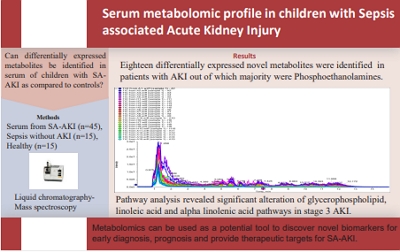
Question: Can the potential metabolites/pathways involved in the pathogenesis of sepsis-associated acute kidney injury (SA-AKI) be identified using metabolomics?
Finding: We identified 18 novel metabolites involved in the pathogenesis of SA-AKI as well as 31 metabolites that were altered in severe AKI. Linoleic acid, linolenic acid, and phospholipid pathways were altered in SA-AKI.
Meaning: Once validated, these markers may be used to diagnose SA-AKI at an early stage before sufficient kidney injury occurs.
- Correspondence and reply
- Nephrology (Genitourinary)
- Authors’ reply: a commentary on “Assessing kidney outcomes in childhood-onset lupus nephritis: role of National Institutes of Health-modified histological indices”
- Pornpimol Rianthavorn
- Clin Exp Pediatr. 2026;69(4):364-365. Published online March 6, 2026
-
- Correspondence
- Nephrology (Genitourinary)
- A commentary on “Assessing kidney outcomes in childhood-onset lupus nephritis: role of National Institutes of Health-modified histological indices”
- Yanlan Ma, Yunyun Zhu
- Clin Exp Pediatr. 2026;69(4):362-363. Published online March 6, 2026
-
- Original Article
- Nephrology (Genitourinary)
- Discordance between antibiotic therapy and recurrent urinary tract infections in young children with third-generation cephalosporin-resistant infections
- Yusin Kim, Hyun A Lee, Gil Lee, Kyungseok Park, Ye Kyung Kim, Peong Gang Park
- Clin Exp Pediatr. 2026;69(3):228-235. Published online November 26, 2025
-
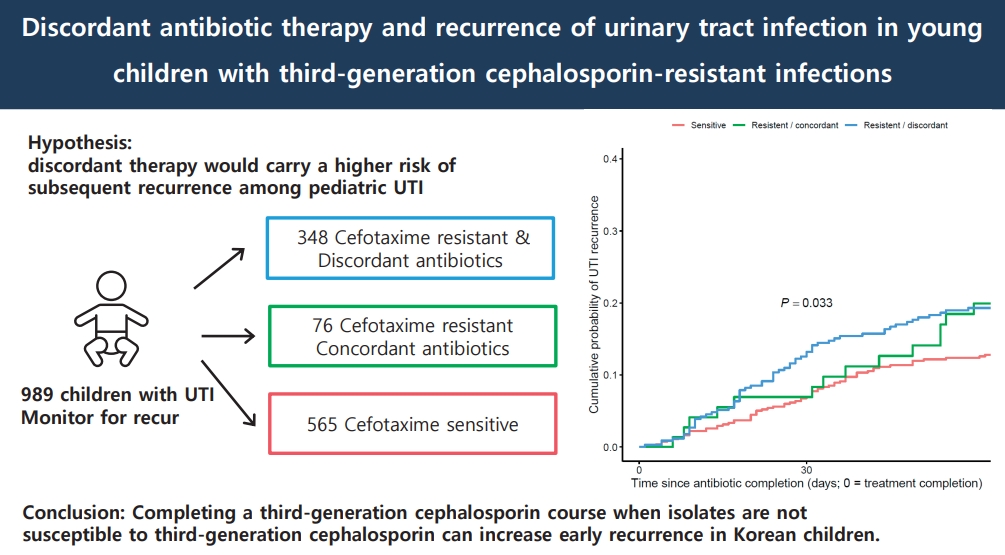
Question: Does completing a third-generation cephalosporin course, despite in vitro resistance, increase the early urinary tract infection recurrence rate in children?
Finding: Among 989 Korean children, discordant therapy increased the 2-month recurrence risk by 40% compared with concordant or susceptible therapy.
Meaning: Checking isolate susceptibility and switching to an active oral drug may curb recurrence and limit the use of broad-spectrum antibiotics.
- Assessing kidney outcomes in childhood-onset lupus nephritis: role of National Institutes of Health-modified histological indices
- Nuanpan Penboon, Pornpimol Rianthavorn
- Clin Exp Pediatr. 2026;69(2):130-139. Published online October 23, 2025
-
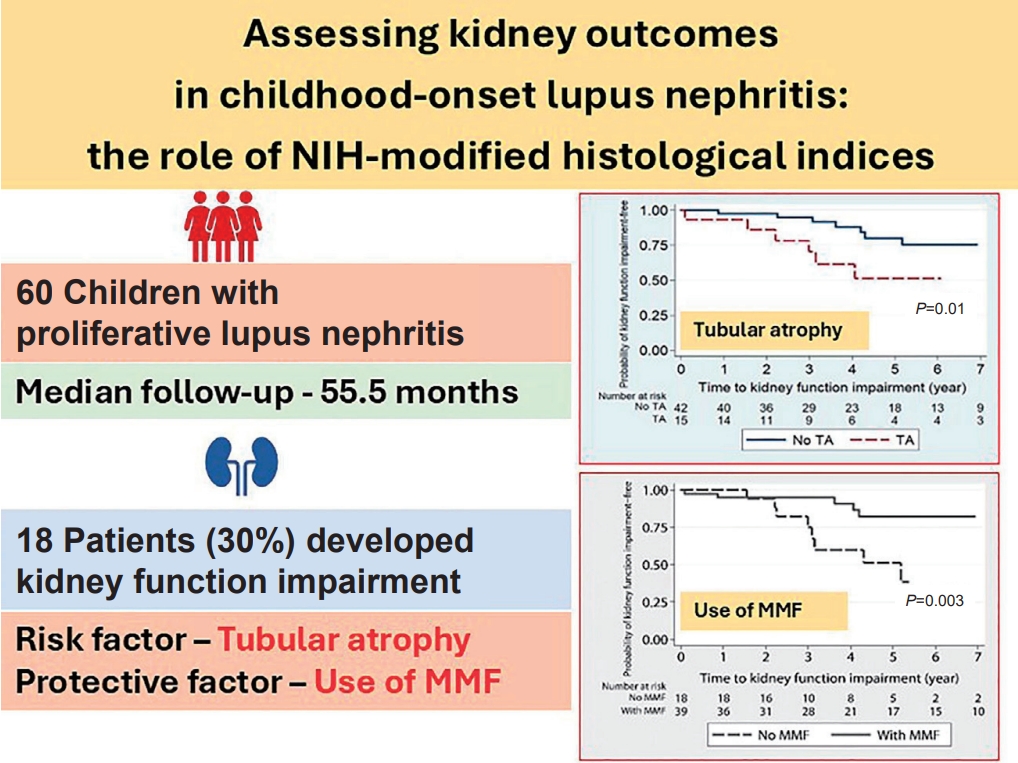
Question: In children with proliferative lupus nephritis, do National Institutes of Health-modified indices and treatment choices predict long-term kidney function?
Finding: Higher chronicity index scores, especially tubular atrophy and interstitial fibrosis, predicted kidney impairment. Additionally, the use of mycophenolate mofetil (MMF) for maintenance therapy was associated with a lower risk of kidney function decline.
Meaning: The early recognition of chronic lesions and MMF-based maintenance therapy may improve kidney outcomes in childhood-onset lupus nephritis.
- Correspondence
- Nephrology (Genitourinary)
- Authors' reply: a commentary on “COVID-19 vaccine hesitancy among parents of children with systemic lupus erythematosus”
- Karnchanit Sausukpaiboon, Nuanpan Penboon, Pornpimol Rianthavorn
- Clin Exp Pediatr. 2025;68(8):626-627. Published online July 18, 2025
-
- Original Article
- Nephrology (Genitourinary)
- COVID-19 vaccine hesitancy among parents of children with systemic lupus erythematosus
- Karnchanit Sausukpaiboon, Nuanpan Penboon, Pornpimol Rianthavorn
- Clin Exp Pediatr. 2025;68(6):454-462. Published online February 3, 2025
-

Question: What is the acceptance rate for coronavirus disease 2019 vaccination among parents of children with systemic lupus erythematosus (SLE)?
Finding: One-third of parents were hesitant to vaccinate their child. Parental willingness to vaccinate themselves, older patient age, and belief in the vaccine's potency were associated with vaccine acceptance.
Meaning: These findings highlight the need for targeted interventions to improve vaccine acceptance among parents of children with SLE.
- C3 glomerulopathy in children: experience at a resource-limited center
- Soumya Reddy, Abhishek Ghante, Mahesha Vankalakunti, Anil Vasudevan
- Clin Exp Pediatr. 2025;68(4):311-318. Published online November 28, 2024
-

Question: What are the clinicopathological features and outcomes of pediatric C3 glomerulopathy (C3G) in resource-limited settings?
Finding: Children with C3G in resource-limited settings have significant morbidities, and most experience kidney sequelae despite treatment. Electron microscopy was performed in only 50% of our patients, while none received complement assays or genetic testing.
Meaning: Pediatric C3G presentation, management, and kidney outcomes vary. Its thorough evaluation and management are challenging in resource-limited settings.
- Letter to the editor
- Nephrology (Genitourinary)
- Impact of COVID-19 pandemic on healthcare provision in youth with systemic lupus erythematosus
- Punchita Apisrinitirath, Nuanpan Siripen, Pornpimol Rianthavorn
- Clin Exp Pediatr. 2024;67(11):628-631. Published online October 28, 2024
-

- Review Article
- Nephrology (Genitourinary)
- Effects of diethylene glycol contamination of pharmaceutical products on unexplained acute kidney injury in children: a systematic review
- Sani Rachman Soleman, Muhammad Luthfi Adnan, Hilmi Ardian Sudiarto, Satria Bintang Mahathma, Alya Ayu Tazkia, Hana Afifah Firdaus, Alfreda Amelia Khotijah, Miranti Dewi Pramaningtyas, Emi Azmi Choironi
- Clin Exp Pediatr. 2024;67(8):395-402. Published online January 4, 2024
-

A recent unexplained acute kidney injury (AKI) outbreak due to pharmaceutical product contamination with diethylene glycol (DEG) raises public attention. Our study revealed that DEG-contaminated paracetamol causes unexplained AKI in children. However, paracetamol is not the only contaminated drug. Other drugs, such as cough expectorants, antihistamines, and sedatives, can also be affected. Other chemicals, such as ethylene glycol and propylene glycol, can also contribute to poisonings.
- Editorial
- Nephrology (Genitourinary)
- Clinical considerations and practical issues of kidney complications in children after COVID-19 infection or vaccination
- Jiwon Jung, Joo Hoon Lee
- Clin Exp Pediatr. 2024;67(1):35-36. Published online November 17, 2023
-
· The proper monitoring for and treatment of coronavirus disease 2019 (COVID-19)-induced acute kidney injury, which is common in critically ill children, are recommended.
· Glomerulopathy associated with COVID-19 or its vaccination has been reported, and the overall clinical course is similar to that of non-COVID-19-associated diseases.
· Additional COVID-19 vaccinations are recommended; however, careful and individualized decisions should be made in patients with COVID-19- or vaccination-associated glomerulopathy.
- Review Article
- Nephrology (Genitourinary)
- X-linked hypophosphatemic rickets: from diagnosis to management
- Eujin Park, Hee Gyung Kang
- Clin Exp Pediatr. 2024;67(1):17-25. Published online June 14, 2023
-
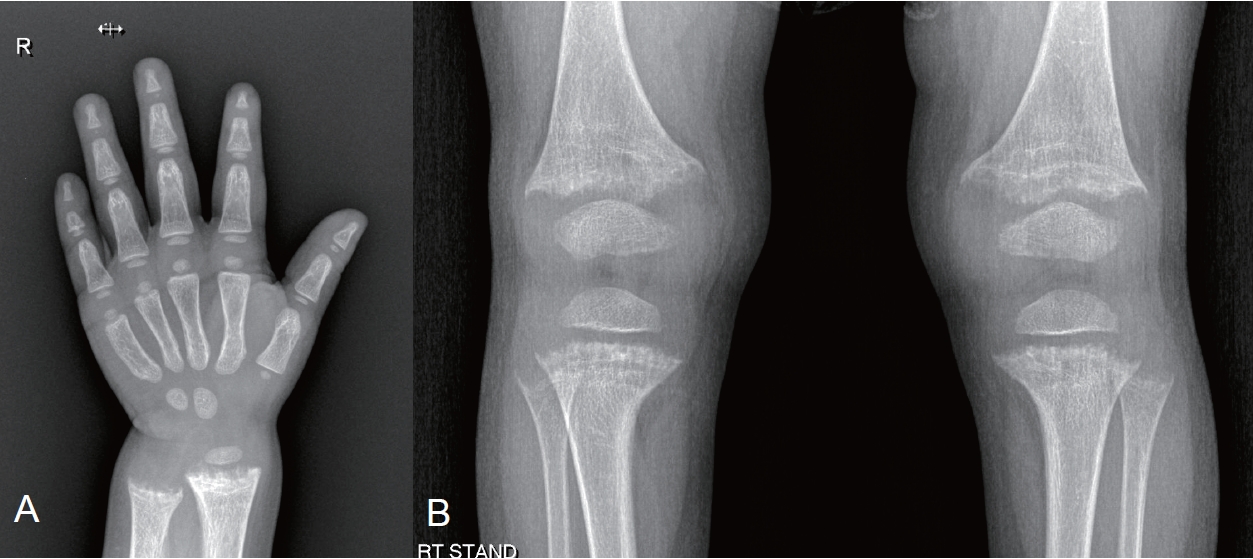
· X-linked hypophosphatemia (XLH), the most common cause of hypophosphatemic rickets, affects 1/20,000 people.
· XLH is caused by a loss-of-function mutation of the PHEX gene.
· Its main pathogenesis is elevated fibroblast growth factor-23 (FGF23) level.
· Burosumab, an FGF23 inhibitor, was developed in the early 2000s.
· Burosumab was approved in Korea in 2020 for XLH patients aged 1+ years with radiographic evidence of bone disease.
- Kidney complications associated with COVID-19 infection and vaccination in children and adolescents: a brief review
- Hee Sun Baek, Min Hyun Cho
- Clin Exp Pediatr. 2023;66(10):424-431. Published online June 28, 2023
-
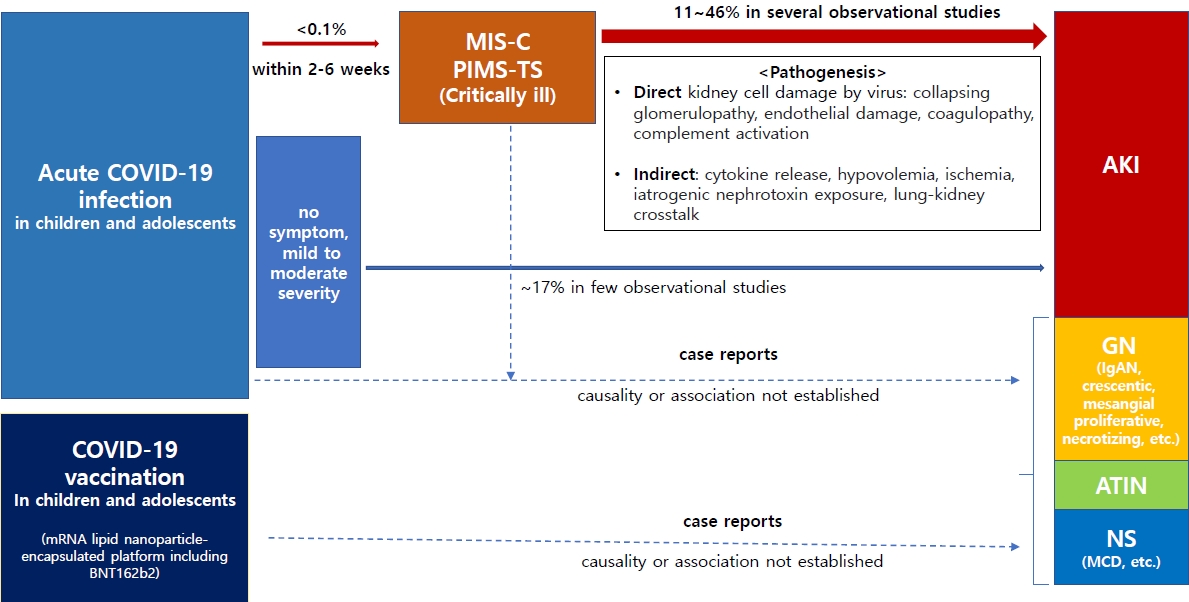
Several observational studies have shown that acute kidney injury affects up to 46% of children and adolescents who develop severe postinflammatory responses, such as multisystem inflammatory syndrome in childhood, due to coronavirus disease 2019 (COVID-19). Although causality has not been established, some cases of glomerulopathy or nephrotic syndrome occurring after COVID-19 infection or vaccination have been reported. Therefore, kidney complications associated with these conditions in children and adolescents warrant attention.
- Editorial
- Nephrology (Genitourinary)
- Optimal hemodialysis treatment for pediatric kidney failure patients
- Yo Han Ahn
- Clin Exp Pediatr. 2023;66(3):125-126. Published online February 15, 2023
-
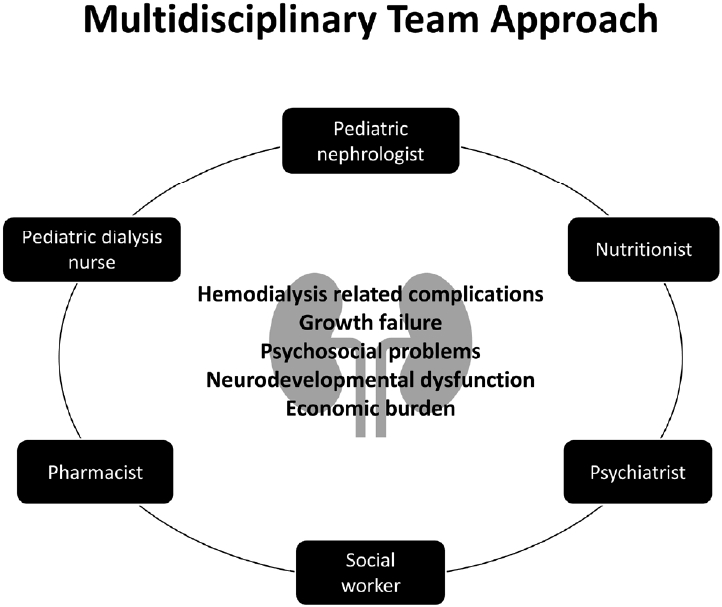
· Although the basic concept of hemodialysis (HD) is similar in adults and children, specific factors must be considered in the latter, including the small dialyzer and circuit, difficult vascular access, and frequent complications.
· HD-associated complications include catheter-related problems, hemodynamic instability, and neurodevelopmental and cognitive dysfunction.
· Pediatric HD is challenging, and steady efforts are needed to perform it safely and reduce its complications, thereby improving clinical outcomes.
- Hypertension in adulthood is programmed during the perinatal period
- Min Hyun Cho
- Clin Exp Pediatr. 2022;65(10):494-495. Published online August 12, 2022
-
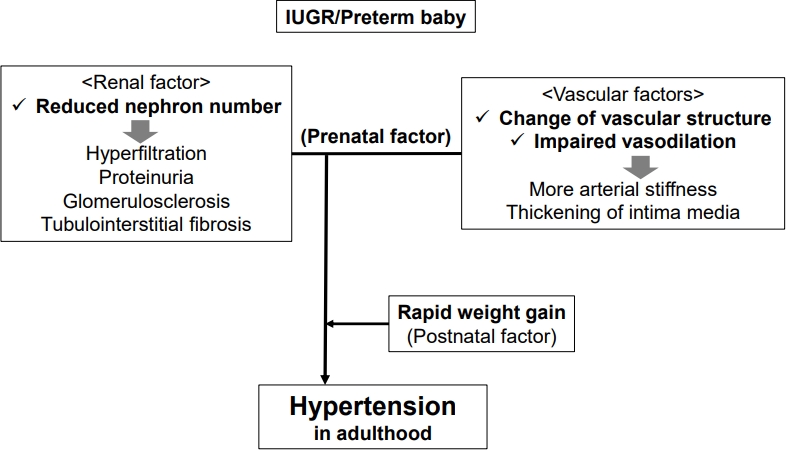
∙ Intrauterine growth restriction (IUGR) and preterm birth can be significant risk factors for the development of adult hypertension.
∙ Several perinatal factors of hypertension are related to IUGR, including renal, vascular, and rapid catch-up growth.
- Review Article
- Nephrology (Genitourinary)
- Neonatal hypertension: concerns within and beyond the neonatal intensive care unit
- Kathleen Altemose, Janis M. Dionne
- Clin Exp Pediatr. 2022;65(8):367-376. Published online May 30, 2022
-

Some neonates, especially those who are premature, may experience hypertension while in the neonatal intensive care unit (NICU). The most common causes are prematurity-related and the hypertension usually resolves over the first 1–2 years of life. Unfortunately, the increasing population of NICU graduates is at risk for later cardiovascular and kidney disease in childhood and adulthood. This population requires careful attention to blood pressure and weight throughout their life course.
- Blood pressure measurements and hypertension in infants, children, and adolescents: from the postmercury to mobile devices
- Seon Hee Lim, Seong Heon Kim
- Clin Exp Pediatr. 2022;65(2):73-80. Published online September 15, 2021
-

· Hypertension is defined as a blood pressure (BP) >90th (elevated) or 95th (hypertension) percentile in children by height, age, and sex and >95th percentile in neonates by age, birth weight, and sex.
· Although the oscillometric method can be used for screenings, the auscultatory method remains the gold standard. The hybrid method employs the auscultatory and electronic methods and can reduce bias.
· BP measurement mobile device applications have a potential for development.
- Editorial
- Nephrology (Genitourinary)
- Obesity and chronic kidney disease: what should pediatric nephrologists know?
- Jung Won Lee
- Clin Exp Pediatr. 2021;64(10):521-522. Published online June 1, 2021
-
• Obesity is not only a comorbidity of hypertension, it may be a riskfactorfor chronickidneydisease.
• Renal impairment associated with obesity is believed to start early in childhood and continue into adulthood, implying a higher risk of adverse cardiovascular events.
• The identification of kidney injury, implementation of preventive strategies, and prompt treatment are essential to improving clinical outcomes in obese children with early kidney disease.
- Review Article
- Nephrology (Genitourinary)
- Obesity and chronic kidney disease: prevalence, mechanism, and management
- Hyung Eun Yim, Kee Hwan Yoo
- Clin Exp Pediatr. 2021;64(10):511-518. Published online April 6, 2021
-

· Obesity is strongly associated with the development and progression of chronic kidney disease.
· Altered renal hemodynamics, metabolic effects, and lipid nephrotoxicity may play a key role in the development of obesity-related kidney disease.
· Children born to obese mothers are at increased risk of developing obesity and chronic kidney disease later in life.
· A multilevel approach is needed to prevent obesity and related chronic diseases.
- Clinical note
- Nephrology (Genitourinary)
- Extracorporeal membrane oxygenation with systemic heparinization as a rescue therapy for acute life-threatening pulmonary thromboembolism complicating nephrotic syndrome
- Kyusang You, So Mi Kim, Dongmin Kim, Kyoungmin Ryu, Mee Jeong Lee
- Clin Exp Pediatr. 2021;64(8):430-432. Published online November 16, 2020
-

Question: How would you treat acute life-threatening pulmonary thromboembolism occurring in nephrotic patients?
Finding: A 16-year-old woman with minimal change-associated nephrotic syndrome presented with cardiac arrest caused by an acute bilateral pulmonary thromboembolism. Her hemodynamics stabilized with resolution of thrombi while on venoarterial extracorporeal membrane oxygenation (ECMO) and systemic heparinization.
Meaning: In selected cases, ECMO with systemic heparinization may rescue patients from acute life-threatening pulmonary thromboembolism even without reperfusion therapy.
- Editorial
- Nephrology (Genitourinary)
- Pulmonary thromboembolism: a rare but life-threatening complication of nephrotic syndrome
- Heeyeon Cho
- Clin Exp Pediatr. 2021;64(8):406-407. Published online February 4, 2021
-
Pulmonary thromboembolism (PTE) is often diagnosed in children with nephrotic syndrome. Massive PTE can cause hemodynamic instability, right ventricular failure, and circulatory collapse. Extracorporeal membrane oxygenation can be used for massive PTE as a method of hemodynamic support and adjunct to surgical embolectomy.
- Original Article
- Nephrology (Genitourinary)
- Expression profiling of cultured podocytes exposed to nephrotic plasma reveals intrinsic molecular signatures of nephrotic syndrome
- Stuti Panigrahi, Varsha Chhotusing Pardeshi, Karthikeyan Chandrasekaran, Karthik Neelakandan, Hari PS, Anil Vasudevan
- Clin Exp Pediatr. 2021;64(7):355-363. Published online November 1, 2020
-

Question: Is it possible to classify nephrotic syndrome (NS) through gene expression profiling of podocytes exposed to NS plasma?
Finding: Our data showed different expression profiles in podocytes exposed to nephrotic plasma from different clinical groups, suggesting the molecular stratification of patients into intrinsic subtypes.
Meaning: Transcriptome profiling of podocytes treated with NS plasma can stratify patients into intrinsic subtypes and provide insight into the molecular mechanisms of podocyte injury.
- Urinary neutrophil gelatinase-associated lipocalin: a marker of urinary tract infection among febrile children
- Ji Hyun Moon, Kee Hwan Yoo, Hyung Eun Yim
- Clin Exp Pediatr. 2021;64(7):347-354. Published online October 17, 2020
-

Question: Reliably diagnosing urinary tract infection (UTI) in febrile children is often difficult. Can urinary neutrophil gelatinase-associated lipocalin (uNGAL) better predict UTI and acute pyelonephritis (APN) than serum C-reactive protein (CRP) and white blood cell (WBC) count?
Finding: uNGAL better facilitated the prediction of UTI and APN, than serum CRP and WBC counts in febrile children.
Meaning: uNGAL is a suitable biomarker for UTI and APN in febrile children.
- Editorial
- Nephrology (Genitourinary)
- Inhibition of the renin-angiotensin system during fetal kidney development
- Eujin Park
- Clin Exp Pediatr. 2021;64(3):121-122. Published online September 22, 2020
-
· Fetal exposure to renin-angiotensin system (RAS) inhibitors leads to short- and long-term kidney complications.
· Women of reproductive age who are absolutely indicated for RAS inhibitors should be adequately informed of the risks for the duration of treatment.
- Original Article
- Nephrology (Genitourinary)
- Sonographic renal length and volume of normal Thai children versus their Chinese and Western counterparts
- Chantima Rongviriyapanich, Thanarat Sakunchit, Chirawat Sudla, Supamas Mungkung, Napapong Pongnapang, Chai Hong Yeong
- Clin Exp Pediatr. 2020;63(12):491-498. Published online July 13, 2020
-

Question: What is the normal renal size of Thai children and is the renal nomogram comparable to those of Western and Chinese cohorts?
Finding: The renal length of Thai children was moderately correlated with that of Western children, while the age-specific renal volume was significantly smaller than that of Chinese children.
Meaning: Renal size in children can vary among regions and sociodemographic backgrounds; hence, a local reference standard is needed.
- Editorial
- Nephrology (Genitourinary)
- Undescended testis: importance of a timely referral to a surgical specialist
- Su Jin Kim
- Clin Exp Pediatr. 2020;63(11):429-430. Published online March 23, 2020
-

Undescended testes (UDT) is the most common congenital genitourinary abnormality in male infants and associated with decreased fertility and a higher future malignancy risk, especially in cases of delayed orchiopexy after puberty. It is important to timely referral to a surgical specialist and timely surgical correction of UDT to improve fertility and decrease the risk of malignancy.
- Clinical Note
- Nephrology (Genitourinary)
- First episode of nephrotic syndrome with acute abdominal pain
- Samridhi Goyal, Rachita Singh Dhull, Bobbity Deepthi, Abhijeet Saha
- Clin Exp Pediatr. 2020;63(10):411-414. Published online July 21, 2020
-
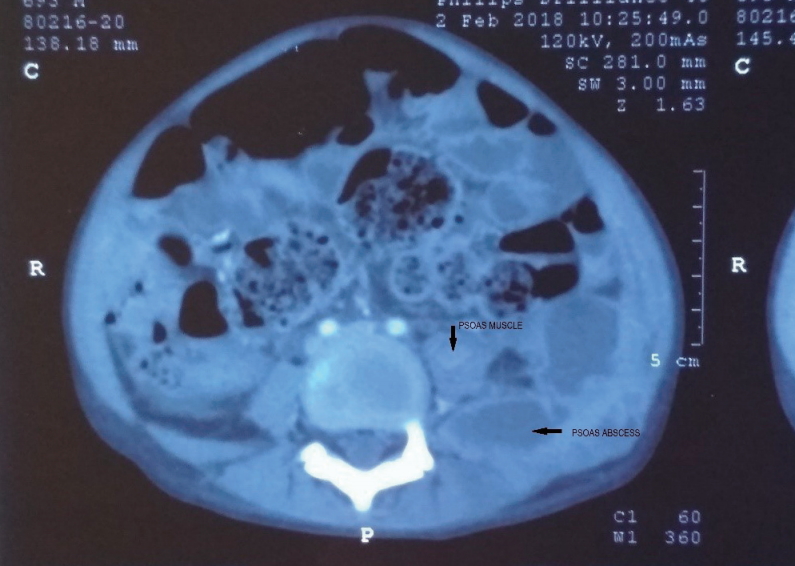
Question: What are the likely causes of pain abdomen in Nephrotic syndrome?
Finding: Severe hypovolemia leading to mesenteric ischemia, spontaneous bacterial peritonitis, gastroenteritis, adverse effect of corticosteroids leading to gastritis, mesenteric ischemia due to thromboembolism, acute appendicitis, intussusception due to severe gut wall oedema and rarely Psoas abscess.
Meaning: Clinical suspicion and careful investigation is warranted to diagnose rare cause of pain abdomen like Psoas abscess.
- Editorial
- Nephrology (Genitourinary)
- Dapsone: a steroid-sparing drug for refractory immunoglobulin A vasculitis?
- Jin-Soon Suh
- Clin Exp Pediatr. 2020;63(5):178-179. Published online April 14, 2020
-