
Search
- Page Path
-
- HOME
- Search
- Review Article
- Incidence, causative organisms, and risk factors of bloodstream infections in pediatric liver transplant patients: a systematic review
- Mohamad Shieb, Rand Hasanain, Zara Arshad, Faisal Nawaz, Rahul Kashyap, Eric Stern
-
Bacterial bloodstream infections (BSI) are the leading cause of mortality and morbidity in pediatric solid organ transplant recipients. This systematic review aimed to pool global data from leading transplant institutions and identify the overall incidence, risk factors, and causative organisms of BSI in pediatric liver transplant recipients. A systematic review of the PubMed and OVID databases was conducted from 2000... -
DOI: https://doi.org/10.3345/cep.2023.01466 [Accepted]
- Metabolic complications of obesity in children and adolescents
- Hyunjin Park, Jung Eun Choi, Seunghee Jun, Hyelim Lee, Hae Soon Kim, Hye Ah Lee, Hyesook Park
-
The global prevalence of childhood and adolescent obesity, exacerbated by the COVID-19 pandemic, is affecting not only school-aged children but also preschoolers. Early-onset obesity, along with a higher risk of metabolic complications, may contribute to a lower age of onset of cardiovascular disease (CVD). As metabolic diseases such as diabetes, dyslipidemia, and non-alcoholic fatty liver disease (NAFLD) observed in adulthood... -
DOI: https://doi.org/10.3345/cep.2023.00892 [Accepted]
- Original Article
- Gastroenterology
- Relationship between nonalcoholic fatty liver disease and hyperandrogenemia in adolescents with polycystic ovary syndrome
- Ozlem Kara, Hanife Aysegul Arsoy, Murat Keskin
- Clin Exp Pediatr. 2023;66(9):395-402. Published online June 14, 2023
-

Question: Is polycystic ovary syndrome (PCOS) a risk factor for nonalcoholic fatty liver disease (NAFLD) in adolescents?
Finding: The frequency of NAFLD did not increase in adolescents with PCOS. However, hyperandrogenemia was a risk factor for NAFLD.
Meaning: Adolescents with PCOS and hyperandrogenemia should be closely monitored for hepatic steatosis.
- Review Article
- Endocrinology
- Nonalcoholic fatty liver disease and insulin resistance in children
- Kyungchul Song, Ho-Seong Kim, Hyun Wook Chae
- Clin Exp Pediatr. 2023;66(12):512-519. Published online January 9, 2023
-
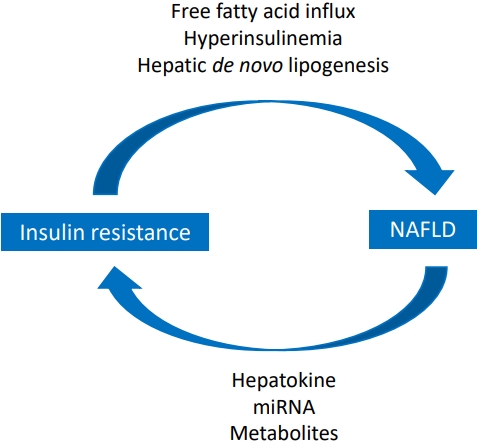
· The prevalence of pediatric nonalcoholic fatty liver disease (NAFLD) increased from 8.2% in 2009 to 12.1% in 2018 in Korea.
· Laboratory tests, biomarkers, and imaging studies are used for the early detection of NAFLD.
· Insulin resistance is closely related to NAFLD.
- Gastroenterology
- Liver fibrosis in children: a comprehensive review of mechanisms, diagnosis, and therapy
- Elif Ozdogan, Cigdem Arikan
- Clin Exp Pediatr. 2023;66(3):110-124. Published online December 19, 2022
-
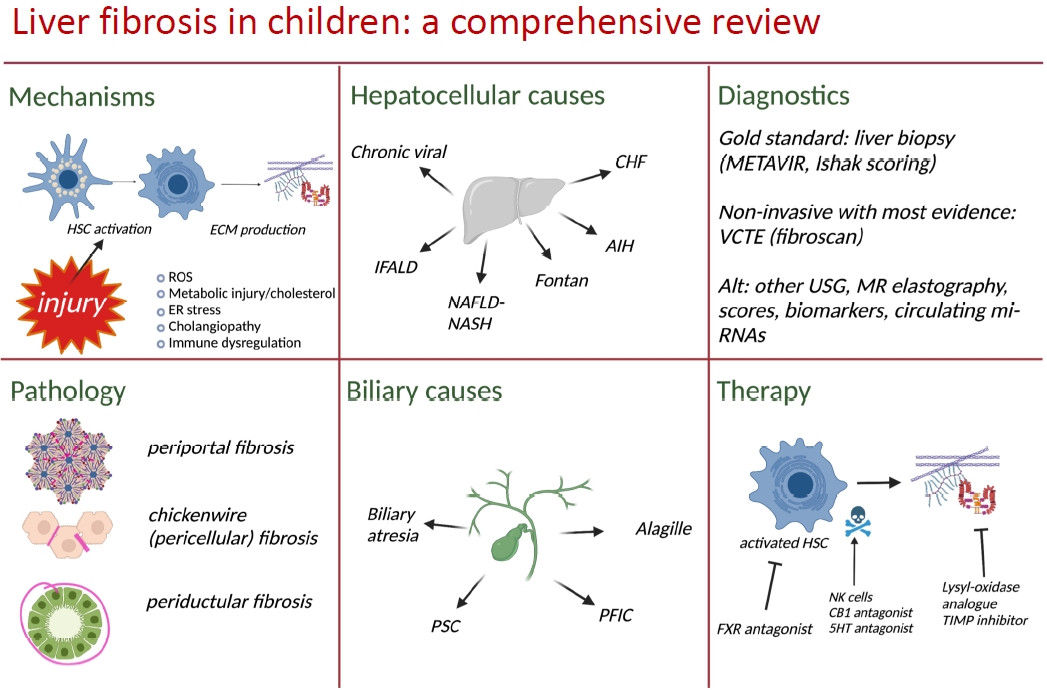
· Chronic liver diseases in children are heterogenous but converge in the common pathway of fibrosis.
· Much of the literature on mechanisms of fibrogenesis focus on adults but pediatric physiology has documented differences.
· Understanding of these distinctions are necessary to define, treat, and prevent fibrosis.
· Current management of liver fibrosis relies heavily on liver biopsy. Multiple tools have shown high diagnostic performance in pediatric and adult populations. Large, multicenter studies are needed for validation.
- Original Article
- Endocrinology
- Effects of probiotics combined with dietary and lifestyle modification on clinical, biochemical, and radiological parameters in obese children with nonalcoholic fatty liver disease/nonalcoholic steatohepatitis: a randomized clinical trial
- Thushara Rodrigo, Samaranayake Dulani, Sumudu Nimali Seneviratne, Arjuna P. De Silva, Jerad Fernando, H. Janaka De Silva, Jayasekera , V. Pujitha Wickramasinghe
- Clin Exp Pediatr. 2022;65(6):304-311. Published online November 11, 2021
-

Question: Could probiotics be used as a therapeutic modality in nonalcoholic fatty liver disease/nonalcoholic steatohepatitis?
Finding: There seem no added advantages over lifestyle modifications compared to Probiotics.
Meaning: There does not seem to be an advantage of probiotics over lifestyle modifications in improving obesity-associated metabolic derangement in children.
- Gastroenterology
- Noninvasive markers for esophageal varices in children with cirrhosis
- Parisa Rahmani, Fatemeh Farahmand, Ghobad Heidari, Azadeh Sayarifard
- Clin Exp Pediatr. 2021;64(1):31-36. Published online July 21, 2020
-
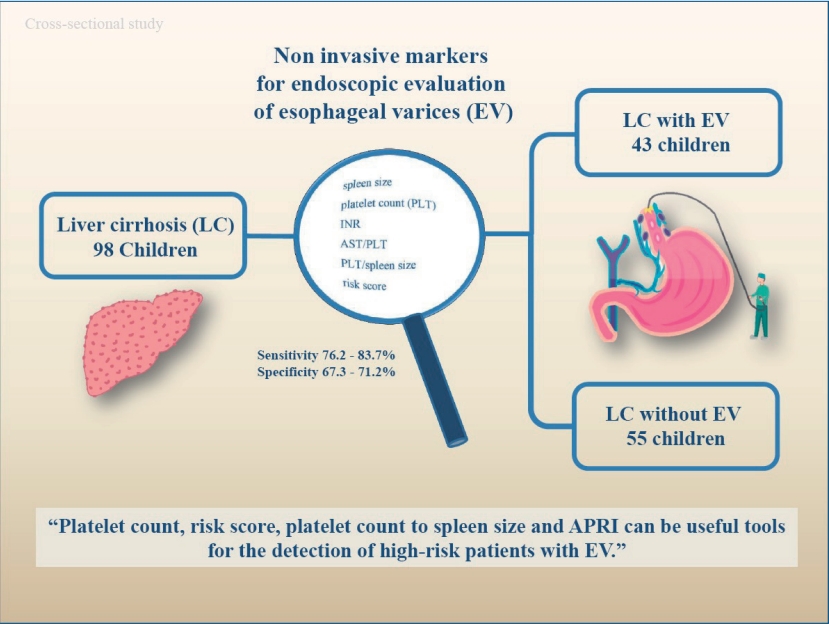
Question: Can noninvasive biomarkers identify esophageal varices among children with esophageal cirrhosis?
Finding: The spleen size, platelet count, international normalized ratio, aspartate aminotransferase to platelet ratio index, platelet count to spleen size ratio, and risk score differed significantly between the patients with and those without esophageal varices.
Meaning: These biological parameters can predict esophageal varices among pediatric patients and indicate the need for esophagogastroduodenoscopy.
- Endocrinology
- Lipid accumulation product is a predictor of nonalcoholic fatty liver disease in childhood obesity
- Bahar Özcabı, Salih Demirhan, Mesut Akyol, Hatice Öztürkmen Akay, Ayla Güven
- Clin Exp Pediatr. 2019;62(12):450-455. Published online October 28, 2019
-
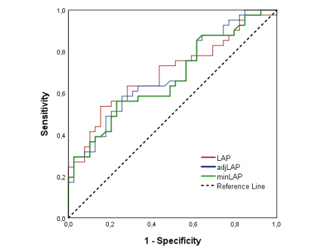
Background: Lipid accumulation product (LAP) is associated with the presence and severity of nonalcoholic fatty liver disease (NAFLD) in adults.
Purpose: Here we evaluated the ability of LAP to predict NAFLD in obese children. Methods: Eighty obese children (38 girls; age 6–18 years) were included. Anthropometric measurements and biochemical values were obtained from the patients’ medical records. LAP was calculated as [waist...
- Gastroenterology
- Nonalcoholic fatty liver disease in obese and nonobese pediatric patients
- Eun Jeong Kim, Hyun Jin Kim
- Clin Exp Pediatr. 2019;62(1):30-35. Published online September 17, 2018
-
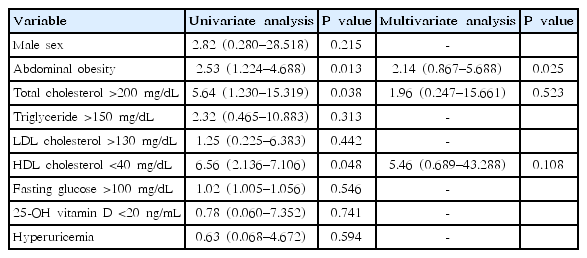
Purpose: Obesity is risk factor for nonalcoholic fatty liver disease (NAFLD). However, nonobese patients are also increasingly susceptible to NAFLD. The aim of this study was to compare the clinical characteristics of obese and nonobese pediatric patients with NAFLD. Methods: We retrospectively studied 68 patients who were diagnosed with NAFLD between January 2010 and October 2016 at 10–18 years of age....
- Neurology
- The clinical characteristics and prognosis of subgaleal hemorrhage in newborn
- Sun Jin Lee, Jin Kyu Kim, Sun Jun Kim
- Clin Exp Pediatr. 2018;61(12):387-391. Published online September 16, 2018
-
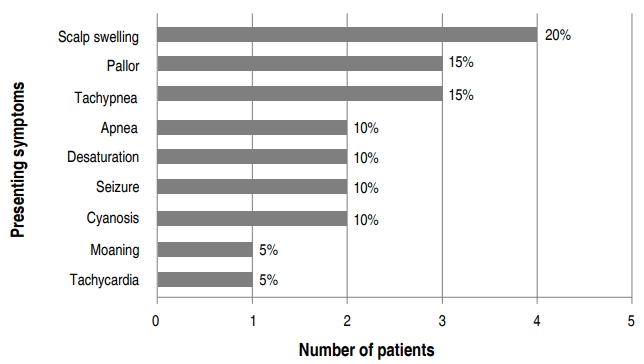
Purpose: Subgaleal hemorrhage (SGH) is a rare but potentially fatal condition in newborns; however, few studies have reported on this condition. We aimed to identify the clinical characteristics and prognostic factors of SGH. Methods: We retrospectively reviewed the medical records of 20 neonates diagnosed with SGH between January 2000 and June 2017. Enrolled neonates were clinically diagnosed when they had tender...
- Neonatology (Perinatology)
- Does anaesthesia in mothers during delivery affect bilirubin levels in their neonates?
- Zeinab A El-Kabbany, Nadin N Toaima, Tamer N Toaima, Mona Y Gamal EL-Din
- Clin Exp Pediatr. 2017;60(12):385-389. Published online December 22, 2017
-
Purpose This study aimed to assess whether different anesthetic techniques and oxytocin use applied during delivery affect transcutaneous bilirubin levels during the first 24 hours in neonates.
Methods A total of 1,044 neonates delivered by either caesarian section (C/S) or normal vaginal delivery (NVD) were included in the study. They were classified into 5 groups as follows: group 1: born by C/S using...
- Gastroenterology
- Clinical significance of serum alanine aminotransferase and lifestyle intervention in children with nonalcoholic fatty liver disease
- Kyoung Ah Kwon, Peter Chun, Jae Hong Park
- Clin Exp Pediatr. 2016;59(9):362-367. Published online September 21, 2016
-
Purpose This study aimed to investigate the clinical significance of serum alanine aminotransferase (ALT) levels in children with nonalcoholic fatty liver disease (NAFLD) and the effect of lifestyle intervention on NAFLD.
Methods The clinical data of 86 children diagnosed with NAFLD were reviewed retrospectively. Forty-six patients belonged to the elevated ALT group and 40 to the normal ALT group. The clinical parameters of...
- Case Report
- Immunology
- Concomitant use of corticosteroid and antimicrobials for liver abscesses in patients with chronic granulomatous disease
- Kyung-Sue Shin, Mu Suk Lee
- Clin Exp Pediatr. 2016;59(4):196-201. Published online April 30, 2016
-
Chronic granulomatous disease (CGD) is a rare inherited disorder caused by defective nicotinamide adenine dinucleotide phosphate oxidase enzyme and characterized by recurrent bacterial and fungal infections. Although liver abscess is a common manifestation of CGD, its management in CGD patients is not well-defined. In addition, the generalized guidelines for treating liver abscesses do not necessarily apply to CGD patients. Corticosteroids...
- Liver abscess due to
Klebsiella pneumoniae in a healthy 12-year-old boy - Da Hye Yoon, Yeon Jin Jeon, E Young Bae, Dae Chul Jeong, Jin Han Kang
- Clin Exp Pediatr. 2013;56(11):496-499. Published online November 27, 2013
-
Pyogenic liver abscess (PLA) is rare in healthy children. We report a case of PLA in an immunocompetent 12-year-old boy. Percutaneous catheter drainage was performed for the abscess. In addition, parenteral antibiotics were administered for 3 weeks.
Klebsiella pneumoniae was detected in the culture of blood and drained fluid. Here, we present this case and a brief review of the...
Klebsiella pneumoniae liver abscess in an immunocompetent child- Jang-Mi Kwon, Hye Lim Jung, Jae Won Shim, Deok Soo Kim, Jung Yeon Shim, Moon Soo Park
- Clin Exp Pediatr. 2013;56(9):407-410. Published online September 30, 2013
-
Klebsiella pneumoniae has emerged as a leading pathogen that causes pyogenic liver abscesses (PLAs) in Korea.K. pneumoniae liver abscess (KLA) is potentially life threatening, and the diagnosis is difficult. In developed countries, PLA is rarely observed in children and is frequently associated with disorders of granulocyte function and previous abdominal infection. We observed a case of KLA in a...
- Liver transplantation in a child with acute liver failure resulting from drug rash with eosinophilia and systemic symptoms syndrome
- Seung Min Song, Min Sung Cho, Seak Hee Oh, Kyung Mo Kim, Young Seo Park, Dae Yeon Kim, Sung Gyu Lee
- Clin Exp Pediatr. 2013;56(5):224-226. Published online May 28, 2013
-
Drug rash with eosinophilia and systemic symptoms (DRESS) syndrome is characterized by a severe idiosyncratic reaction including rash and fever, often with associated hepatitis, arthralgias, lymph node enlargement, or hematologic abnormalities. The mortality rate is approximately 10%, primarily owing to liver failure with massive or multiple disseminated focal necrosis. Here, we report a case of a 14-year-old girl treated with...
- Review Article
- Noninvasive diagnosis of pediatric nonalcoholic fatty liver disease
- Hye Ran Yang
- Clin Exp Pediatr. 2013;56(2):45-51. Published online February 25, 2013
-
Because nonalcoholic steatohepatitis can progress towards cirrhosis even in children, early detection of hepatic fibrosis and accurate diagnosis of nonalcoholic fatty liver disease (NAFLD) are important. Although liver biopsy is regarded as the gold standard of diagnosis, its clinical application is somewhat limited in children due to its invasiveness. Noninvasive diagnostic methods, including imaging studies, biomarkers of inflammation, oxidative stress,...
- Original Article
- The efficacy of aspartate aminotransferase-to-platelet ratio index for assessing hepatic fibrosis in childhood nonalcoholic steatohepatitis for medical practice
- Earl Kim, Yunkoo Kang, Seungmin Hahn, Mi Jung Lee, Young Nyun Park, Hong Koh
- Clin Exp Pediatr. 2013;56(1):19-25. Published online January 29, 2013
-
Purpose Childhood obesity is associated with nonalcoholic fatty liver disease (NAFLD), and it has become one of the most common causes of childhood chronic liver diseases which significant as a cause of liver related mortality and morbidity in children in the United States. The development of simpler and easier clinical indices for medical practice is needed to identify advanced hepatic fibrosis...
- Clinical characteristics of obese boys and girls in a high school: focused on abdominal fat indices, fatty liver and carotid intima-media thickness
- Jung Eun Oh, Jiyoung Jung, Hae Soon Kim, Young Mi Hong, Jung Hyun Yoo, Young Whan Song, Jo Won Jung, Nam Su Kim, Chung Il Noh
- Clin Exp Pediatr. 2011;54(7):292-297. Published online July 31, 2011
-
Purpose Our study aimed to evaluated sex differences in clinical features of obese high school students.
Methods One hundred three obese high school students (body mass index [BMI]≥85th percentile) and 51 control students (BMI<85th percentile) were enrolled in this study. Anthropometric measurements were performed. Fasting serum glucose, insulin, aspartate aminotransferase, alanine aminotransferase, total cholesterol, triglyceride, low-density lipoprotein cholesterol (LDL-C), high-density lipoprotein cholesterol (HDL-C),...
- Clinical features of infantile hepatic hemangioendothelioma
- Eun Hee Kim, Kyung Nam Koh, Meerim Park, Bo Eun Kim, Ho Joon Im, Jong Jin Seo
- Clin Exp Pediatr. 2011;54(6):260-266. Published online June 30, 2011
-
Purpose Infantile hepatic hemangioendothelioma (IHHE) is the most common type of hepatic vascular tumor in infancy. We conducted this study to review our clinical experience of patients with IHHE and to suggest management strategies.
Methods We retrospectively analyzed the medical records of 23 IHHE patients (10 males, 13 females) treated at the Asan Medical Center between 1996 and 2009.
Results Median age at diagnosis was...
- Case Report
- A case of pyogenic liver abscess in a 10-year-old girl
- Jung Lim Byun, Sun Hwan Bae, Sang Woo Park
- Clin Exp Pediatr. 2010;53(5):666-668. Published online May 31, 2010
-
Pyogenic liver abscesses are rare in children. In pediatric patients, altered host defences seem to play an important role. However, pyogenic liver abscess also occurs in healthy children. We experienced a case of pyogenic liver abscess in a healthy immunocompetent 10-year-old-girl. The patient presented two distinct abscesses: one subphrenic and the other intrahepatic. The intrahepatic abscess resolved with percutaneous drainage...
- Original Article
- The relationship between the time from arrival at a hospital to delivery and the occurrence of cerebral palsy in premature infants of less than 34 weeks of gestational age
- Jae Woong Whang, A Lum Heo, Soo Hyun Koo, Hae Jung Lee, Jun Wha Lee, Joo Seok Lee, Kyung Lae Cho
- Clin Exp Pediatr. 2009;52(11):1228-1233. Published online November 15, 2009
-
Purpose : This study aimed to evaluate whether a shorter time from the arrival at a hospital to delivery is related to the occurrence of cerebral palsy in premature infants of less than 34 weeks of gestational age. Methods : We studied 142 newborns of less than 34 weeks of gestational age. The time from the arrival at the hospital... -
- Case Report
- A case of delayed hemorrhage of a subcapsular liver hematoma in a neonate
- Soo Kyoung Moon, Tae Suk Lee, Hye Sun Yoon
- Clin Exp Pediatr. 2008;51(1):89-92. Published online January 15, 2008
-
A subcapsular liver hematoma (SLH) is a relatively common lesion in fetuses and neonates. Although an SLH ruptures rarely, it may be life threatening. We report on a term neonate with a delayed rupture of an SLH that occurred on day 7 of life. The infant had been resuscitated with intubation, positive pressure ventilation, and chest compression at birth because... -
- Review Article
- Acute liver failure in children
- Kyung Mo Kim
- Clin Exp Pediatr. 2007;50(9):841-847. Published online September 15, 2007
-
Acute liver failure (ALF) is a very rare but devastating illness in children. Specific treatment to recovery is often not available, and the underlying cause of the liver failure is often unknown and diverse especially in children. Liver transplantation has increased the chance of survival; however it needs an optimal timing to reach the best result which is not familiar... -
- Case Report
- A case of hepatopulmonary syndrome in a child with fatty liver disease secondary to hypopituitarism after craniopharyngioma resection
- Sun Ju Im, Hyun Seok Park, Hyoung Doo Lee, Jae Hong Park, Hee Ju Park
- Clin Exp Pediatr. 2007;50(8):794-798. Published online August 15, 2007
-
Hepatopulmonary syndrome is a triad that includes: hepatic dysfunction, intrapulmonary vascular dilatation and abnormal arterial oxygenation. The incidence of intrapulmonary vascular dilatations, in adults with end-stage liver disease, has been reported to be 13% to 47%, however the incidence in children is unclear and the cases in Korean children have never been reported. The hepatopulmonary syndrome may occur as a... -
- A Case of Infantile Hemangioendothelioma of the Liver Treated with Hepatic Embolization and Lobectomy
- Jae Seon Kim, Soo Kyung Moon, Hye Sun Yoon, Tae Seok Lee
- Clin Exp Pediatr. 2005;48(6):660-664. Published online June 15, 2005
-
Infantile hemangioendothelioma(IHE) of the liver is the most common vascular tumor in infants before the age of 6 months. It is a histologically benign tumor with potentially life-threatening complications. The clinical manifestations are variable, ranging from asymptomatic forms to intractable high-output heart failure. In addition, abdominal mass, intraperitoneal hemorrhage due to rupture of mass, respiratory distress, hematologic abnormalities and jaundice... -
- Original Article
- Correlation of Body Mass Index, Body Fat Distribution, Aminotranferases and Computed Tomography in Obese Children with Fatty Liver
- So Eun Park, Hye Ran Yang, Ju Young Chang, Jae Sung Ko, Jeong Kee Seo, Whal Lee, Woo Sun Kim
- Clin Exp Pediatr. 2005;48(3):276-283. Published online March 15, 2005
-
Purpose : Visceral fat accumulation plays a major role in metabolic complications of obesity. It is known that nonalcoholic fatty liver in obese adults is associated with visceral fat accumulation. Body mass index(BMI) is used as the index of obesity in children. The aim of this study is to evaluate the correlation of BMI and visceral adipose tissue(VAT), and the... -
- Case Report
- A Case of Choledochal Cyst Complicated by Liver Cirrhosis on Pathology in a 20-Month-Old-Girl
- Sun Hwan Bae, Sung Yun Choi, Tae Seok Lee, Ho Jeong Lee
- Clin Exp Pediatr. 2005;48(1):104-107. Published online January 15, 2005
-
Choledochal cyst is considered to be congenital anomalies of the biliary tract, characterized by varying degrees of cystic dilatation at various segments of the biliary tract. A 20-month-old girl was admitted to Eul-Ji general hospital because of abdominal distension. Physical examination revealed marked splenomegaly and hepatomegaly with nodular surface and hard consistency. Laboratory examination showed elevated transaminase level, alkaline phosphatase... -
- Original Article
- Prevalence of the Nonalcoholic Fatty Liver Disease in Obese Children
- Sung Woog Hwang, Duk Hee Kim, Ho Seong Kim
- Clin Exp Pediatr. 2005;48(1):13-20. Published online January 15, 2005
-
Purpose : Obesity is, along with metabolic syndrome, closely related with nonalcoholic fatty liver disease. This study tried to evaluate the prevalence of nonalcoholic liver disease in obese children and verify the factors associated with the disease. Methods : Two hundred and seventy nine children who showed a body mass index of 95 percentile over the baseline in health examinations... -
- The Prevalence of Childhood and Adolescent Obesity in Jeju and Clinical Characteristics according to the Degree of Obesity
- Jung Ho Seo
- Clin Exp Pediatr. 2004;47(4):362-367. Published online April 15, 2004
-
Purpose : Recently, childhood obesity has increased and became a major health concern in Korea. The aim of this study is to examine the prevalence of childhood and adolescent obesity in Jeju and to analyze clinical characteristics according to the degree of obesity. Methods : A total of 3,643 students from April 2002 to August 2002 were studied. To examine the... -

-

-
-

-

-
Impact Factor4.2
-
6.52022CiteScore92nd percentilePowered by