- Letter to the Editor
- Infection
- Changes in epidemiology of parainfluenza virus and respiratory syncytial virus infection during coronavirus disease 2019 pandemic in Korea
-
Kyung-Ran Kim, Hwanhee Park, Doo Ri Kim, Yae-Jean Kim
-
Clin Exp Pediatr. 2022;65(6):320-321. Published online March 10, 2022
-

|
Question: How the epidemiology of other childhood respiratory viruses has changed during coronavirus disease 2019 (COVID-19) in Korea?
Finding: Parainfluenza virus (PIV) typically circulated in the spring, and respiratory syncytial virus (RSV) epidemic started in autumn in Korea before COVID-19 pandemic. PIV and RSV seasons disappeared in 2020 and came back in 2021 with atypical seasonality. PIV season was changed from spring to autumn, and the beginning of RSV season was slightly delayed from autumn to early winter in 2021.
Meaning: Circulation of PIV and RSV was changed to unusual seasons and patterns during COVID-19 pandemic period. |
-
-
- Perspective
- Infection
- Statement on healthcare system preparedness in response to COVID-19 Omicron subvariants BA.4 and BA.5 surge in Korea from the Korean Pediatric Society and Korean Society of Pediatric Infectious Diseases
-
Eun Young Cho, Dong Hyun Kim, Soo-Han Choi, Ki Wook Yun, Jong Gyun Ahn, Hye-Kyung Cho, Hyunju Lee, Jina Lee, Taek-Jin Lee, Byung-Wook Eun, Jin Lee, Dae Sun Jo, Yun-Kyung Kim, Yae-Jean Kim; Committee on Infectious Diseases of the Korean Pediatric Society
-
Clin Exp Pediatr. 2022;65(11):510-511. Published online September 23, 2022
-
|
|
In order to respond to the recent surge in coronavirus disease 2019 (COVID-19) cases and the continuously changing epidemiology of COVID-19, a sustainable and flexible pediatric healthcare system must be prepared considering the specificity of pediatric care. We demand a more proactive response from the health authorities to check the current state of pediatric COVID-19 patient care and to ensure that pediatric patients receive appropriate and timely management. |
-
-
- Review Article
- Infection
- Updates on the coronavirus disease 2019 vaccine and consideration in children
-
Hyun Mi Kang, Eun Hwa Choi, Yae-Jean Kim
-
Clin Exp Pediatr. 2021;64(7):328-338. Published online June 21, 2021
-
|
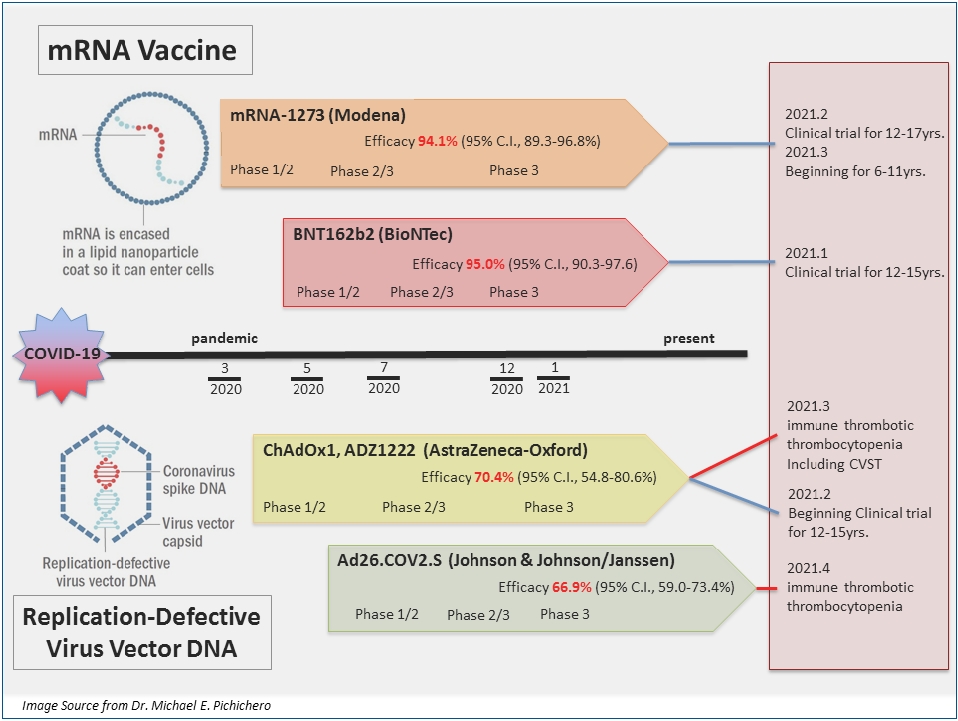
· The number of coronavirus disease 2019 cases has exponentially increased worldwide, and children ≤19 years old account for 11.0% of all confirmed cases.
· mRNA vaccines, BNT162b2 and mRNA-1273, and adenoviral vector vaccines, AZD1222 and Ad26.COV2.S, authorized for emergency use in the Emergency Use Listing of the World Health Organization are reviewed.
· Clinical trials of these vaccines have shown that they are safe and serious adverse reactions are rarely observed. |
-
-
- Review article
- Immunology
- Systematic review of literature and analysis of big data from the National Health Insurance System on primary immunodeficiencies in Korea
-
Sohee Son, Ji-Man Kang, Younsoo Hahn, Kangmo Ahn, Yae-Jean Kim
-
Clin Exp Pediatr. 2021;64(4):141-148. Published online July 13, 2020
-
|
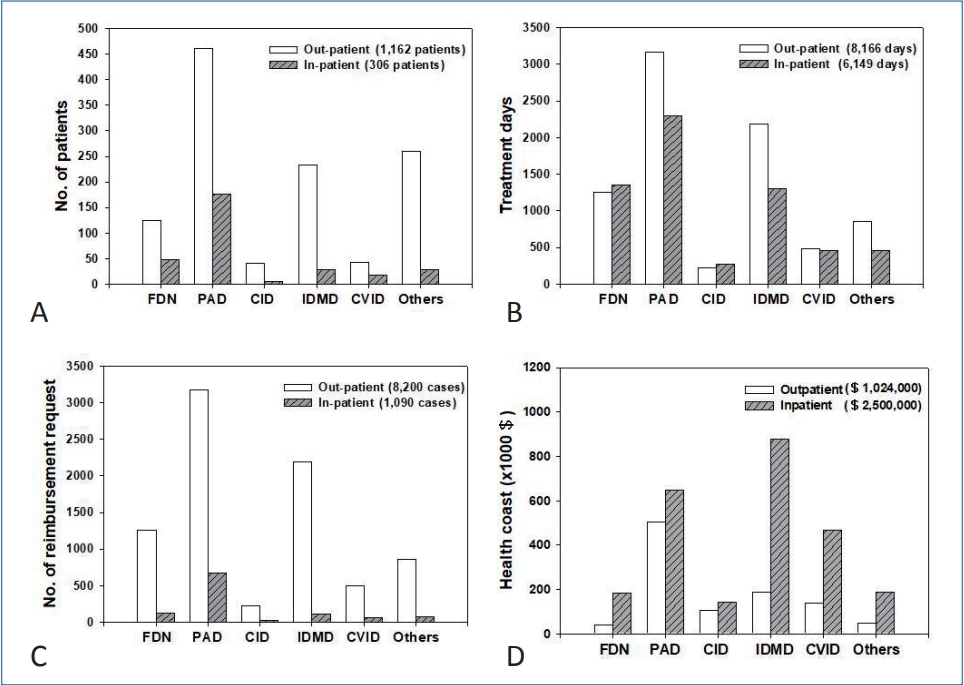
In this article, a systematic review of reported primary immu�nodeficiency disease (PID) cases in Korea was performed and we attempted to estimate the number of PID patients and healthcare costs for the first time in Korea. Our review revealed that Korean PID cases are greatly underreported in the literature based on health insurance. Physicians in the field and health care policymakers should be aware of the disease burden of PID. |
-
-
- Review Article
- Infection
- Recommendation for use of diphtheria and tetanus toxoids and acellular pertussis, inactivated poliovirus, Haemophilus influenzae type b conjugate, and hepatitis B vaccine in infants
-
Hye-Kyung Cho, Su Eun Park, Yae-Jean Kim, Dae Sun Jo, Yun-Kyung Kim, Byung-Wook Eun, Taek-Jin Lee, Jina Lee, Hyunju Lee, Ki Hwan Kim, Eun Young Cho, Jong Gyun Ahn, Eun Hwa Choi; The Committee on Infectious Diseases of the Korean Pediatric Society
-
Clin Exp Pediatr. 2021;64(12):602-607. Published online June 8, 2021
-
|
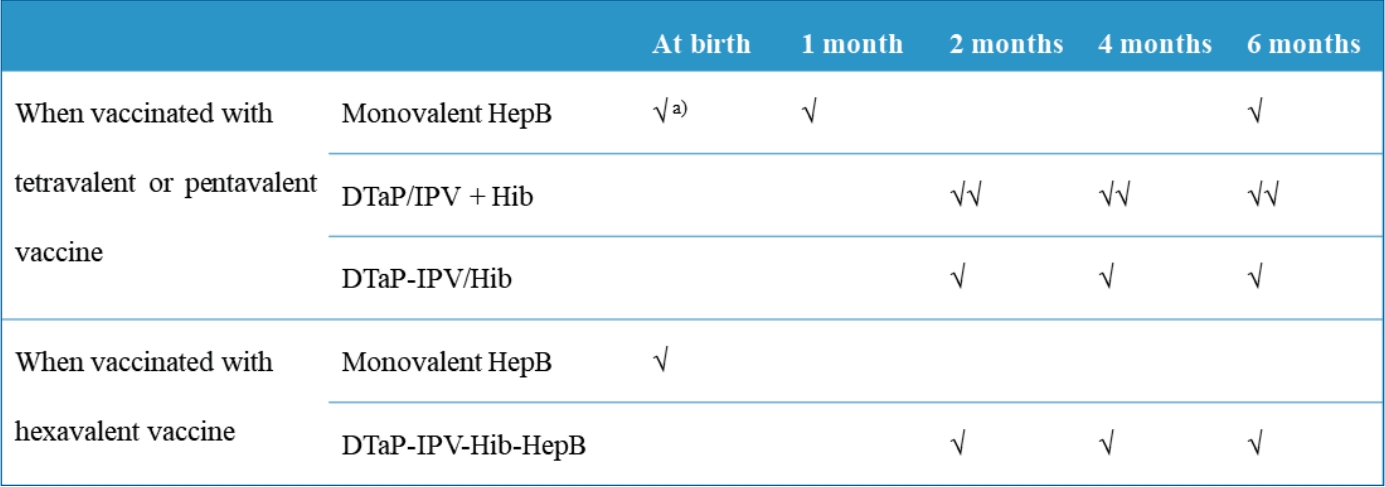
∙ Diphtheria and tetanus toxoids and acellular pertussis-inactivated poliovirus-Haemophilus influenzae type b-hepatitis B (DTaP-IPV-Hib-HepB) was licensed in Korea in April 2020.
∙ DTaP-IPV-Hib-HepB is indicated as a 3-dose primary series for infants aged 2, 4, and 6 months who received the standalone HepB vaccine at birth.
∙ Infants born to HepB surface antigen-positive mothers are currently recommended to be immunized with HepB immunoglobulin at birth and then monovalent HepB vaccine at 0, 1, and 6 months. |
-
-
- Recommended immunization schedule for children and adolescents: Committee on Infectious Diseases of the Korean Pediatric Society, 2018
-
Eun Hwa Choi, Su Eun Park, Yae-Jean Kim, Dae Sun Jo, Yun-Kyung Kim, Byung-Wook Eun, Taek-Jin Lee, Jina Lee, Hyunju Lee, Ki Hwan Kim, Hye-Kyung Cho, Eun Young Cho, Jong-Hyun Kim
-
Clin Exp Pediatr. 2019;62(7):252-256. Published online July 15, 2019
-
|
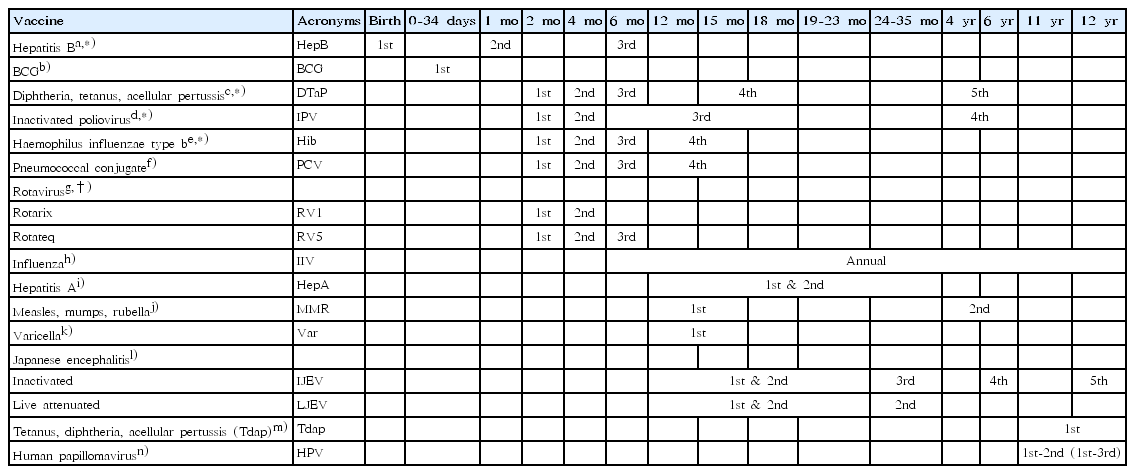
The Committee on Infectious Diseases of the Korean Pediatric Society recommended immunization schedule for children and adolescents aged 18 years or younger in the 9th (2018) edition of Immunization guideline. This report provides the revised recommendations made by the committee and summarizes several changes from the 2015 guideline. National immunization program (NIP) launched a human papillomavirus (HPV) immunization for girls... |
-
-
- Case Report
- Infection
- Scabies mimicking graft versus host disease in a hematopoietic cell transplant recipient
-
Dongsub Kim, Soo-Han Choi, Dong Youn Lee, Juyoun Kim, Eunjoo Cho, Keon Hee Yoo, Hong Hoe Koo, Yae-Jean Kim
-
Clin Exp Pediatr. 2018;61(11):371-373. Published online November 9, 2018
-

|
Scabies is a highly contagious skin infestation caused by the mite, Sarcoptes scabiei var. hominis. Complex responses to scabies mites in the innate, humoral, and cellular immune systems can cause skin inflammation and pruritus. Diagnosis can be challenging because scabies resembles other common skin conditions. We report the first Korean case of scabies in a hematopoietic cell transplant (HCT) recipient,... |
-
-
- Original Article
- Infection
- A contact investigation after exposure to a child with disseminated tuberculosis mimicking inflammatory bowel disease
-
Dongsub Kim, Sodam Lee, Sang-Hee Kang, Mi-Sun Park, So-Young Yoo, Tae Yeon Jeon, Joon-Sik Choi, Bora Kim, Jong Rim Choi, Sun Young Cho, Doo Ryeon Chung, Yon Ho Choe, Yae-Jean Kim
-
Clin Exp Pediatr. 2018;61(11):366-370. Published online November 15, 2018
-
|
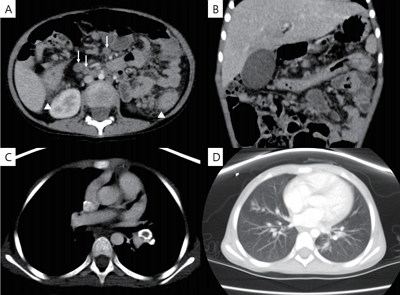
Purpose: Tuberculosis (TB) is one of the most important diseases that cause significant mortality and morbidity in young children. Data on TB transmission from an infected child are limited. Herein, we report a case of disseminated TB in a child and conducted a contact investigation among exposed individuals.
Methods: A 4-year-old child without Bacille Calmette-Guérin vaccination was diagnosed as having culture-proven... |
-
-
- Etiology and clinical characteristics of fever of unknown origin in children: a 15-year experience in a single center
-
Yi-Seul Kim, Kyung-Ran Kim, Ji-Man Kang, Jong-Min Kim, Yae-Jean Kim
-
Clin Exp Pediatr. 2017;60(3):77-85. Published online March 27, 2017
-
|
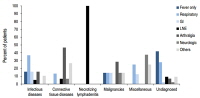
Purpose Fever is one of the most common symptoms in children. In previous studies, infectious disease was the most common cause of pediatric fever of unknown origin (FUO). The aim of this study is to investigate the etiology, clinical characteristics and prognosis of pediatric FUO in 21 century with more diagnostics available and to analyze the factors for certain disease categories. MethodsAmong... |
-
-
- Original Article
- Infection
- Pneumocystis jirovecii pneumonia in pediatric patients: an analysis of 15 confirmed consecutive cases during 14 years
-
Kyung-Ran Kim, Jong Min Kim, Ji-Man Kang, Yae-Jean Kim
-
Clin Exp Pediatr. 2016;59(6):252-255. Published online June 30, 2016
-
|
|
Purpose Pneumocystis jirovecii pneumonia occurs in various immunocompromised patients. Despite the prophylaxis strategies in clinical practice, certain patients develop P. jirovecii pneumonia. This study was performed to investigate pediatric cases with P. jirovecii pneumonia in a single center. MethodsWe identified pediatric patients younger than 19 years with microbiologically confirmed P. jirovecii pneumonia from January 2000 to February 2014. A retrospective chart review... |
-
-
- Review Article
- Infection
- Recommended immunization schedule for children and adolescents: Immunization Guideline (8th edition) released by the Korean Pediatric Society in 2015
-
Jong-Hyun Kim, Eun Hwa Choi, Su Eun Park, Yae-Jean Kim, Dae Sun Jo, Yun-Kyung Kim, Byung-Wook Eun, Jina Lee, Soo-Young Lee, Hyunju Lee, Ki Hwan Kim, Kyung-Hyo Kim
-
Clin Exp Pediatr. 2016;59(12):461-465. Published online December 31, 2016
-
|
|
This report includes the recommended immunization schedule table for children and adolescents based on the 8th (2015) and revised 7th (2012) Immunization Guidelines released by the Committee on Infectious Diseases of the Korean Pediatric Society (KPS). Notable revised recommendations include: reorganization of the immunization table with a list of vaccines on the vertical axis and the corresponding age on the... |
-
-
- Recommended immunization schedule for children and adolescents: the Korean Pediatric Society, 2013
-
Dae Sun Jo, Jong-Hyun Kim, Eun Hwa Choi, Su Eun Park, Yae-Jean Kim, Yun Kyung Kim, Jina Lee, Byung Wook Eun, Soo Young Lee, Hyunju Lee, Ki Hwan Kim, Kyung-Hyo Kim
-
Clin Exp Pediatr. 2013;56(6):231-234. Published online June 21, 2013
-
|
|
This article contains the recommended immunization schedule by the Committee on Infectious Diseases of the Korean Pediatric Society, updated in March 2013, when Haemophilus influenzae type b vaccine is now included in the National Immunization Program in Korea. It also includes catch-up immunization schedule for children and adolescents who are behind the recommended schedule. These schedules are a minor revision... |
-
-
- Systemic use of fluoroquinolone in children
-
Soo-Han Choi, Eun Young Kim, Yae-Jean Kim
-
Clin Exp Pediatr. 2013;56(5):196-201. Published online May 28, 2013
-
|
|
Fluoroquinolones are an important class of antibiotics that are widely used in adult patients because of their broad spectrum of activity, good tissue penetration, and oral bioavailability. However, fluoroquinolone use in children is limited because juvenile animals developed arthropathy in previous experiments on fluoroquinolone use. Indications for fluoroquinolone use in patients younger than 18 years, as stated by the U.S.... |
-
-
- Case Report
- 2009 H1N1 influenza virus infection and necrotizing pneumonia treated with extracorporeal membrane oxygenation
-
Suntae Ji, Ok Jeong Lee, Ji-Hyuk Yang, Kangmo Ahn, Joongbum Cho, Soo In Jeong, Woo-sik Han, Yae-Jean Kim
-
Clin Exp Pediatr. 2011;54(8):345-349. Published online August 31, 2011
-
|
|
A 3-year-old girl with acute respiratory distress syndrome due to a H1N1 2009 influenza virus infection was complicated by necrotizing pneumonia was successfully treated with extracorporeal membrane oxygenation (ECMO). This is the first reported case in which a pediatric patient was rescued with ECMO during the H1N1 influenza epidemic in Korea in 2009. |
-
-
- Review Article
- Recommendation for the use of newly introduced Tdap vaccine in Korea
-
Kyong Min Choi, Kyung Hyo Kim, Yae-Jean Kim, Jong-Hyun Kim, Su Eun Park, Hoan Jong Lee, Byung Wook Eun, Dae Sun Jo, Eun Hwa Choi, Young Jin Hong
-
Clin Exp Pediatr. 2011;54(4):141-145. Published online April 30, 2011
-
|
|
Pertussis is an acute respiratory infection characterized by paroxysmal cough and inspiratory whoop for over 2 weeks. The incidence of pertussis has decreased markedly after the introduction of DTwP/DTaP vaccine, but the incidence of pertussis has increased steadily among young infant and among adolescents and adults in many countries. Td vaccine was used in this age group but the increase... |
-
-
- Case Report
- A case of Hyper-IgE syndrome with a mutation of the STAT3 gene
-
Ji-man Kang, Jungmun Suh, Jihyun Kim, Hee-Jin Kim, Yae-jean Kim, Hun Seok Lee, Young Kee Shin, Kangmo Ahn, Sang-Il Lee
-
Clin Exp Pediatr. 2010;53(4):592-597. Published online April 15, 2010
-
|
|
Hyperimmunoglobulin E syndrome (HIES) is a rare immunodeficiency disease which is characterized by high serum IgE levels, eczema, and recurrent infections. Herein we present the case of a patient with HIES associated with STAT3 gene (stat3) mutation. A 16 year-old girl was admitted to our hospital due to hemoptysis caused by pneumonia with bronchiectasis. She had a history of recurrent... |
-
-
- Review Article
- Pediatric tuberculosis and drug resistance
-
Yae-Jean Kim
-
Clin Exp Pediatr. 2009;52(5):529-537. Published online May 15, 2009
-
|
|
Drug-resistant tuberculosis in children has important implications for both the patients and tuberculosis control programs. In Korea, among all new patients, the isoniazid resistance rate was 9.9% and multidrug-resistant tuberculosis rate was 2.7% in 2004 (in patients aged 10-19 yr, the multidrug-resistant tuberculosis rate reached 2.1%). Tuberculosis in pediatric patients is difficult to diagnose because many children have nonspecific clinical... |
-
-
|