- Original Article
- Infection
- Clinical characteristics of pediatric patients infected with SARS-CoV-2 versus common human coronaviruses: a national multicenter study
-
In Suk Sol, Eun Lee, Hyeon-Jong Yang, Yong Ju Lee, Hye Yung Yum, Mi-Hee Lee, Mi Ae Chu, Hui Jeong Moon, Hyo-Bin Kim, Ju Hee Seo, Jung Yeon Shim, Ji Young Ahn, Yoon Young Jang, Hai Lee Chung, Eun Hee Chung, Kyunghoon Kim, Bong-Seong Kim, Cheol Hong Kim, Yang Park, Meeyong Shin, Kyung Suk Lee, Man Yong Han, Soo-Jong Hong, Eun Kyeong Kang, Chang Keun Kim; on behalf of The Pneumonia & Respiratory Disease Study Group of Korean Academy of Pediatric Allergy and Respiratory Disease
-
Clin Exp Pediatr. 2023;66(3):134-141. Published online December 22, 2022
-
|
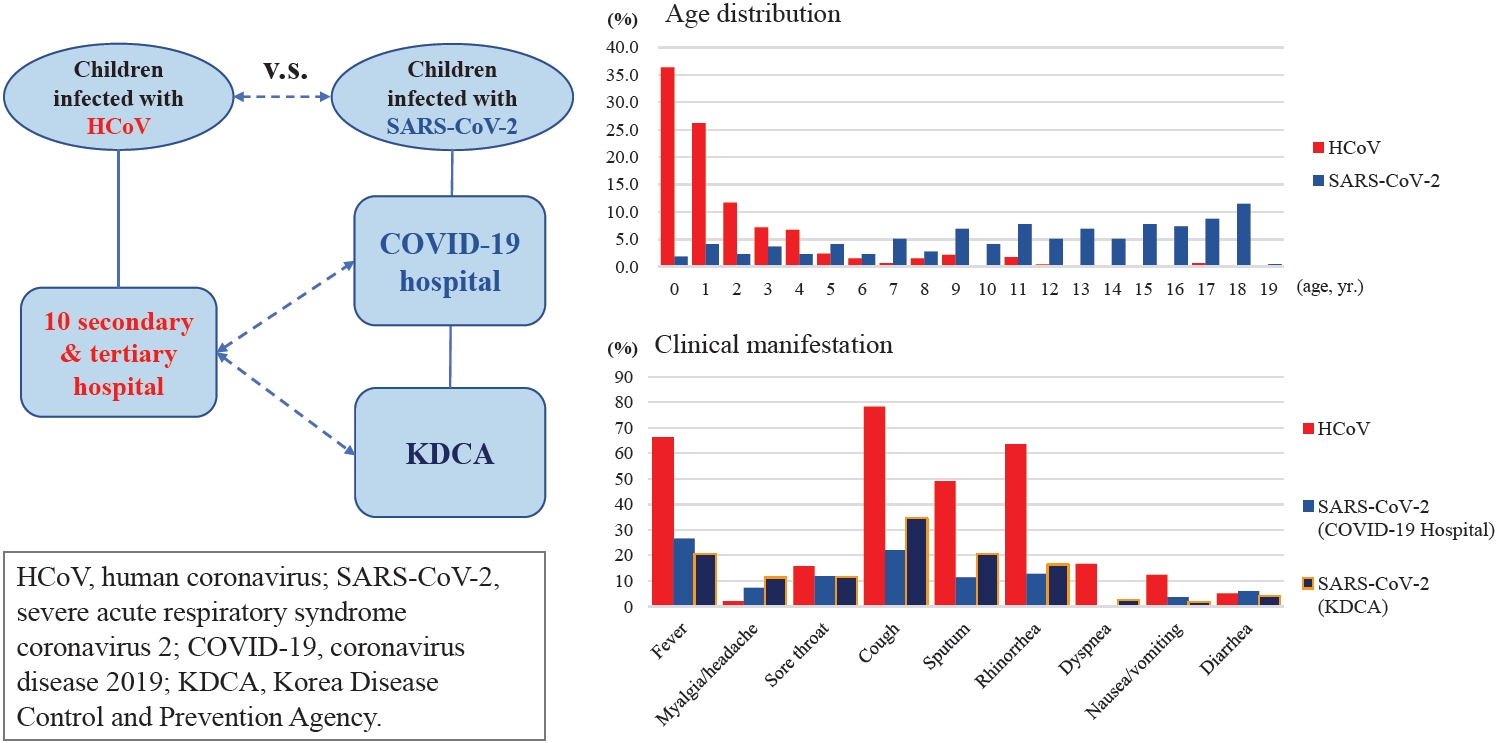
Question: The clinical differences between severe acute respiratory syndrome coronavirus-2 (SARS-CoV-2) and human coronaviruses (HCoV) in children remain unknown.
Finding: This study compared the clinical findings of children infected with SARS-CoV-2 versus HCoV. Its findings suggest that children and adolescents with SARS-CoV-2 have a milder clinical course than those with HCoV.
Meaning: The clinical course of children and adolescents with SARS-CoV-2 should be closely monitored during the coronavirus disease 2019 pandemic. |
-
-
- Review Article
- Other
- Behavioral insomnia in infants and young children
-
Eun Kyeong Kang, Seung Soo Kim
-
Clin Exp Pediatr. 2021;64(3):111-116. Published online July 15, 2020
-

|
• Behavioral insomnia is common and affects a child’s daytime functioning and emotions.
• Diagnosing insomnia using the child’s sleep history, a sleep diary/log, and sleep questionnaires is important.
• Behavioral intervention, the main treatment, involves creating positive associations with sleep, establishing a consistent sleep schedule and bedtime routines, and the development of selfsoothing skills. |
-
-
- Original Article
- Evaluation of immunogenicity of the 2008-2009 seasonal influenza vaccines by microneutralization test
-
Seung Youn Kim, Yun Kyung Kim, Byung Wook Eun, Nam Hee Kim, Eun Kyeong Kang, Byong Sop Lee, Jung Sub Lim, Jun Ah Lee, Dong Ho Kim
-
Clin Exp Pediatr. 2012;55(12):474-480. Published online December 20, 2012
-
|
|
Purpose For evaluating the immunogenicity of an influenza vaccine, the microneutralization (MN) test has a higher sensitivity and specificity as compared to the hemagglutination inhibition (HI) test. However, the MN test is more time consuming and is difficult to standardize. We performed the MN test to determine its usefulness as an alternative or complementary test to the HI test for evaluating... |
-
-
- Epidemic acute interstitial pneumonia in children occurred during the early 2006s
-
Chong Kun Cheon, Hyun-Seung Jin, Eun Kyeong Kang, Hyo Bin Kim, Byoung-Joo Kim, Jinho Yu, Seong Jong Park, Soo-Jong Hong, June Dong Park
-
Clin Exp Pediatr. 2008;51(4):383-390. Published online April 15, 2008
-
|
|
Purpose : This study was aimed to analyze the clinical characteristics of patients with acute interstitial pneumonia who had presented similar clinical patterns from March to June, 2006 and to describe our experience of treatment and to identify risk factors associated with prognosis.
Methods : The clinical characteristics, radiologic and histopathologic findings and response to steroids of 15 patients (non-survival... |
-
-
- Antithrombin-III as an early prognostic factor in
children with acute lung injury
-
Young Seung Lee, Seonguk Kim, Eun Kyeong Kang, June Dong Park
-
Clin Exp Pediatr. 2007;50(5):443-448. Published online May 15, 2007
-
|
|
Purpose : To evaluate the potential prognostic value of the antithrombin-III (AT-III) level in the children with acute lung injury (ALI), we analyzed several early predictive factors of death including AT-III level at the onset of ALI and compared the relative risk of them for mortality.
Methods : Over a 18-month period, a total of 198 children were admitted to our... |
-
-
- Case Report
- A case of hereditary hemorrhagic telangiectasia
-
Young Seung Lee, Seonguk Kim, Eun Kyeong Kang, June Dong Park
-
Clin Exp Pediatr. 2007;50(10):1018-1023. Published online October 15, 2007
-
|
|
Hereditary hemorrhagic telagiectasia (HHT), which is characterized by the classic triad of mucocutaneous telangiectases, arteriovenous malformations (AVMs) and inheritance, is an autosomal dominant disorder. The characteristic manifestations of HHT are all due to abnormalities of the vascular structure. This report deals with the case of a 14-year-old girl with typical features of HHT that include recurrent epistaxis, mucocutanous telangiectases, pulmonary... |
-
-
- Original Article
- Assessment of Bronchial Hyperresponsiveness Using Chest Auscultation and Oxygen Saturation Measurement in
Pre-school Children with a History of Wheezing
-
Young Yoo, Jinho Yu, Hee Kang, Eun Kyeong Kang, Young Yull Koh
-
Clin Exp Pediatr. 2004;47(4):417-423. Published online April 15, 2004
-
|
|
Purpose : This study aimed to determine the efficacy and usefulness of chest auscultation and oxygen saturation measurement in the assessment of bronchial hyperresponsiveness to inhaled methacholine in pre-school wheezing children.
Methods : One hundred and four children with histories of wheezing underwent bronchial challenges with nebulized methacholine using chest auscultation and oxygen saturation measurement. The challenge was considered positive when... |
-
-
- The Relationship between House Dust Mite Sensitization and
Month Birth Distribution in Children with Respiratory Allergy
-
Eun Kyeong Kang, Kyu Min Na, Hee Kang, Young Yoo, Young Yull Koh
-
Clin Exp Pediatr. 2003;46(4):370-375. Published online April 15, 2003
-
|
|
Purpose : It has been suggested that the exposure to aeroallergens during early infancy after birth is important in the subsequent development of sensitization and allergic diseases. In Korea, the level of house dust mites as one of the important aeroallergens is known to be the highest in autumn. The aim of this study was to test whether the distribution... |
-
-
- Exhaled Nitric Oxide Concentration in Children with Asthma and Allergic Rhinitis : Association with Atopy and Bronchial Hyperresponsiveness
-
Kyu Min Nah, Yang Park, Eun Kyeong Kang, Hee Kang, Young Yull Koh, Sun Wha Lee, Domyung Paek
-
Clin Exp Pediatr. 2003;46(3):284-290. Published online March 15, 2003
-
|
|
Purpose : A new airway inflammatory marker, exhaled nitric oxide(ENO) has been reported to correlate with bronchial hyperresponsiveness(BHR) and atopy. The purpose of this study was to analyze the relationship of ENO with BHR or atopy in patients with asthma and with allergic rhinitis.
Methods : The subjects consisted of 55 children with asthma, 17 with allergic rhinitis, and 14 healthy... |
-
-
- Blood Eosinophil and Serum Eosinophil Cationic Protein
as a Marker of Bronchial Hyperresponsiveness
in Children with Suspected Asthma
-
Yang Park, Hee Kang, Eun Kyeong Kang, Young Yull Koh
-
Clin Exp Pediatr. 2002;45(12):1577-1584. Published online December 15, 2002
-
|
|
Purpose : Airway inflammation is considered to be a characteristic feature of asthma, and eosinophils are recognized as the most important inflammatory cells. This study aims to assess the importance of blood eosinophil count and serum eosinophil cationic protein(ECP) levels as a non- invasive marker of bronchial hyperresponsiveness(BHR) in children with suspected asthma.
Methods : This study used data from 87... |
-
-
- Comparison of Eosinophil Markers between Acute and Recovery Stages in Children with Mycoplasma pneumoniae Pneumonia
-
Kyu Min Nah, Eun Kyeong Kang, Hee Kang, Yang Park, Young Yull Koh
-
Clin Exp Pediatr. 2002;45(10):1227-1233. Published online October 15, 2002
-
|
|
Purpose : Several studies have shown that increases of eosinophil markers are common findings
of asthma and Mycoplasma pneumoniae infection, and eosinophil markers reflect the clinical stage
of asthma. The purpose of this study was to investigate the change of eosinophil markers according
to the clinical stage of Mycoplasma pneumonia.
Methods : The patient group consisted of 33 outpatient children with Mycoplasma pneumonia. Peripheral
blood... |
-
-
- Case Report
- A Case of Hereditary Fructose Intolerance
-
Eun Kyeong Kang, Hye Ran Yang, Jeong Kee Seo, Sun Hoan Bai, Joo Young Jeong, Jae Sung Ko, Il Soo Ha, Jeong Han Song, Kyeong Ae Wi, Yoon Sook Shin
-
Clin Exp Pediatr. 2002;45(1):120-124. Published online January 15, 2002
-
|
|
Hereditary fructose intolerance(HFI) is an autosomal recessive disease caused by catalytic deficiency
of aldolase B in which affected homozygotes develop hypoglycemia and abdominal symptoms
after taking foods containing fructose. Chronic exposure to fructose may lead to progressive
hepatic injury, renal injury, growth retardation, and ultimately to liver and kidney failure. Herein,
we report a case of HFI with presentation of episodic vomiting, diarrhea, cold... |
-
-
|