- Original Article
- Neurology
- Long-term outcome in children with infantile epileptic spasms syndrome: a multicenter retrospective study in Korea
-
Sun Ah Choi, Minhye Kim, Hye Jin Kim, Woo Joong Kim, Byung Chan Lim, Ji Yeon Han, Hunmin Kim, Min-Jee Kim, Mi-Sun Yum, Jiwon Lee, Jeehun Lee, Hyewon Woo, Jon Soo Kim
-
Clin Exp Pediatr. 2026;69(5):386-393. Published online February 19, 2026
-

|
Question: How have epilepsy and cognitive outcomes of children with infantile epileptic spasms syndrome (IESS) evolved over the past 20 years?
Finding: Approximately 78% of children developed chronic epilepsy, and one-third progressed to drug-resistant epilepsy, while 90% of them exhibited intellectual disabilities.
Meaning: Given the poor outcomes associated with IESS, consensus guidelines tailored to Korean clinical practice are required to ensure timely treatment and improve outcomes. |
-
-
- Editorial
- Neurology
- Tocilizumab as a key therapeutic option in high-risk pediatric acute necrotizing encephalopathy
-
Jon Soo Kim
-
Clin Exp Pediatr. 2026;69(2):114-116. Published online January 26, 2026
-

|
· Acute necrotizing encephalopathy (ANE) is a severe, infection- triggered encephalitis driven primarily by cytokine- mediated immune dysregulation rather than direct viral cytotoxicity.
· Tocilizumab, through targeted inhibition of interleukin-6 signaling, is an important therapeutic option for ANE that may improve survival and neurological outcomes of high-risk pediatric patients. |
-
-
- Increasing our understanding of rotavirus-induced central nervous system manifestations
-
Jon Soo Kim
-
Clin Exp Pediatr. 2022;65(11):536-537. Published online May 6, 2022
-
|
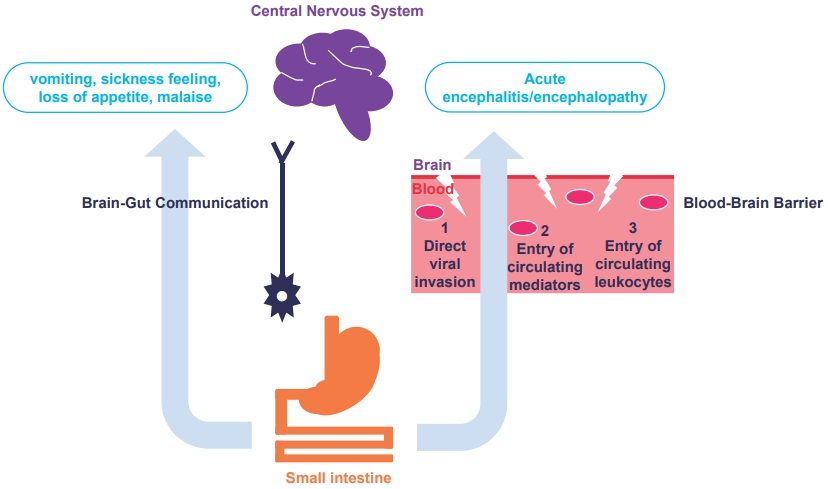
· Diverse clinicoradiological features of central nervous system (CNS) complications in rotavirus infection can be identified with the rapid and wide use of various brain magnetic resonance imaging protocols.
· An increased understanding of the various pathophysiological mechanisms of rotavirus-induced CNS manifestations will enable precise management in the future. |
-
-
- Case Report
- Neurology
- A pediatric case of idiopathic Harlequin syndrome
-
Ju Young Kim, Moon Souk Lee, Seung Yeon Kim, Hyun Jung Kim, Soo Jin Lee, Chur Woo You, Jon Soo Kim, Ju Hyung Kang
-
Clin Exp Pediatr. 2016;59(Suppl 1):S125-S128. Published online November 30, 2016
-
|
|
Harlequin syndrome, which is a rare disorder caused by dysfunction of the autonomic system, manifests as asymmetric facial flushing and sweating in response to heat, exercise, or emotional factors. The syndrome may be primary (idiopathic) with a benign course, or can occur secondary to structural abnormalities or iatrogenic factors. The precise mechanism underlying idiopathic harlequin syndrome remains unclear. Here, we... |
-
-
- A case of isodicentric chromosome 15 presented with epilepsy and developmental delay
-
Jon Soo Kim, Jinyu Park, Byung-Joo Min, Sun Kyung Oh, Jin Sun Choi, Mi Jung Woo, Jong-Hee Chae, Ki Joong Kim, Yong Seung Hwang, Byung Chan Lim
-
Clin Exp Pediatr. 2012;55(12):487-490. Published online December 20, 2012
-
|
|
We report a case of isodicentric chromosome 15 (idic(15) chromosome), the presence of which resulted in uncontrolled seizures, including epileptic spasms, tonic seizures, and global developmental delay. A 10-month-old female infant was referred to our pediatric neurology clinic because of uncontrolled seizures and global developmental delay. She had generalized tonic-clonic seizures since 7 months of age. At referral, she could... |
-
-
- Original Article
- Reticulocyte hemoglobin content for the diagnosis of iron deficiency
in young children with acute infection
-
Jon Soo Kim, Jun Seok Choi, Doo Young Choi, Chur Woo You
-
Clin Exp Pediatr. 2008;51(8):827-833. Published online August 15, 2008
-
|
|
Purpose : Early identification of iron deficiency in young children is essential to prevent damaging long-term consequences. It is often difficult for the pediatrician to know which indices should be used when diagnosing these conditions especially in hospitalized young children. This study investigated the clinical significances of reticulocyte hemoglobin content in young children with acute infection.
Methods : We studied... |
-
-
|