|
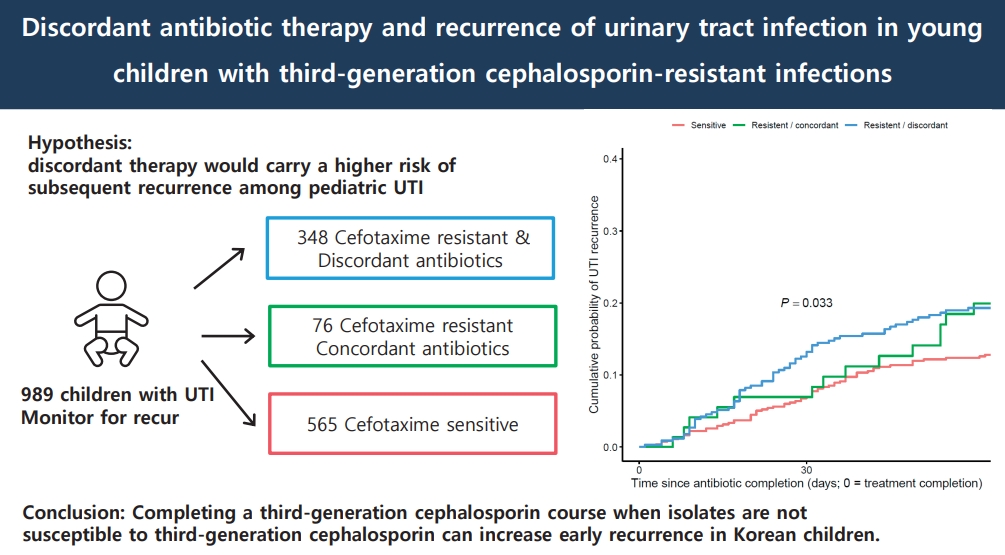
Background: Third-generation cephalosporins remain the empirical mainstay for pediatric urinary tract infections (UTIs) in Korea, yet the resistance rate now approaches 30%, thereby threatening treatment effectiveness.
Purpose: To determine whether completing a cephalosporin regimen, despite in vitro resistance, increases early UTI recurrence rates. Methods: We retrospectively reviewed the cases of children aged <24 months with their first Gram-negative UTI admitted in... |
|
|
Question: Which immunomodulatory strategies can reduce mortality in children with acute necrotizing encephalopathy (ANE)? Finding: High-dose methylprednisolone (30 mg/kg/day) significantly improved the survival of high-risk patients, particularly when combined with tocilizumab. Meaning: These findings support the use of a severity-based immunotherapy approach to optimize the outcomes of pediatric ANE. |
|
|
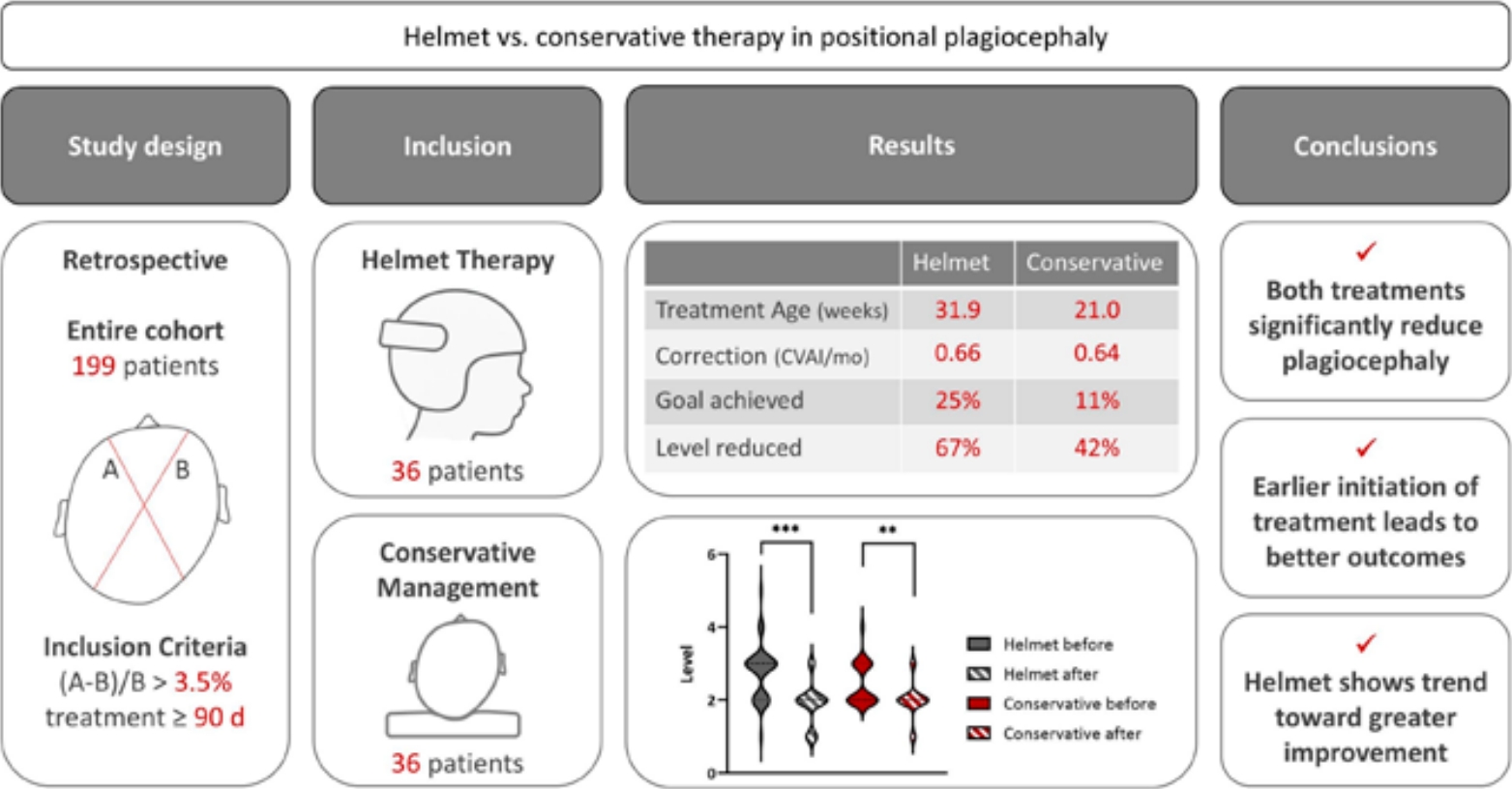
Question: Is helmet therapy more effective than conservative management in treating positional plagiocephaly? Finding: Both approaches reduced cranial asymmetry with comparable correction speed. Helmet therapy showed a trend toward greater severity reduction. Meaning: Early treatment initiation was the strongest predictor of improvement. Helmet therapy may offer additional benefit in more severe cases. |
|
|
The prevalence of autism is increasing worldwide. The United States has the highest numbers, likely due to the availability of better treatment options. However, global disparities exist, especially in low-resource settings in which stigma, underdiagnosis, and limited services hinder care. A coordinated international approach emphasizing early screening, inclusive policies, and culturally sensitive support systems can bridge this gap and improve the outcomes for children with autism and their families worldwide. |
|
|
Question: Can neutrophil elastase (NE) levels predict infection— the primary cause of mortality—among children with hematological malignancies and febrile neutropenia (FN)? Finding: Elevated levels of NE were found in children with chemotherapy-induced FN and a bacterial infection. Meaning: Increased NE levels and prolonged FN are important factors associated with mortality risk. |
|
|
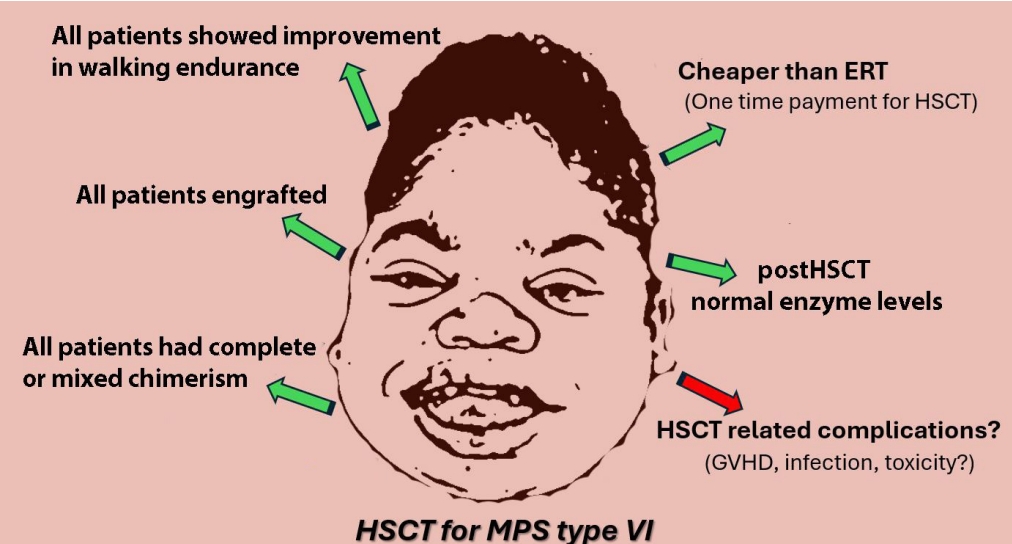
Question: Could hematopoietic stem cell transplantation (HSCT) be an alternative to enzyme replacement therapy (ERT) for type VI mucopolysaccharidosis (MPS VI)? Finding: HSCT is generally not offered due to reports of high toxicity and mortality. However, we detected fewer complications and graft-versus-host disease cases and no deaths with HSCT. Meaning: HSCT is both less expensive than ERT and permanent; thus, it should be considered an alternative treatment for MPS VI. |
|
|
Question: What are the outcomes of jaundiced neonates when phototherapy is discontinued at 2 different total serum bilirubin (TSB) thresholds? Findings: The study involved 80 neonates, comparing a recommended TSB threshold and a lower threshold for phototherapy discontinuation. Results showed a 14.3% reinstitution rate of treatment, with no adverse outcomes. Meaning: Careful posttreatment monitoring is essential when discontinuing phototherapy, and future research should consider updated guidelines like those from the American Academy of Pediatrics. |
| Protocolized sedation may reduce ventilation requirements, pediatric intensive care unit length of stay, and sedative exposure. However, it may increase the likelihood of unplanned extubation, highlighting the importance of incorporating preventive measures to mitigate this risk. |
|
|
· This study analyzed 45 randomized controlled trials (5,061 participants, 13 interventions) of the comparative efficacies of treatments for acute bronchiolitis in infants. · Inhalation therapy with epinephrine and hypertonic saline significantly reduced the length of hospital stay compared with normal saline. · Hypertonic saline had the greatest ability to improve the clinical severity score of bronchiolitis in infants younger than 2 years of age. |
|
|
Height gains result from longitudinal bone growth. Upon adequate growth, growth plate closure limits longitudinal bone growth. To date, gonadotropin-releasing hormone analogs, aromatase inhibitors, C-type natriuretic peptide analogs, and fibroblast growth factor receptor 3 inhibitors have been studied or used as therapeutic interventions to delay growth plate closure and increase human height. The development of more effective therapeutic modalities for short stature, precocious puberty, and skeletal dysplasia is anticipated. |
|
|
· To enhance the safety of food allergen immunotherapy, alternative approaches such as sublingual immunotherapy, epicutaneous immunotherapy, low-dose oral immunotherapy (OIT), and omalizumab with OIT are being explored. · Factors such as causative allergen type, natural outgrowth, symptom severity, and patient age should be considered. · Individualized food allergen immunotherapy plans should be established to determine the most beneficial treatment for each patient. |
|
|
Question: Is helmet therapy effective for positional plagiocephaly? What factors influence helmet therapy efficacy for positional plagiocephaly? Finding: Helmet therapy is effective for infants with moderate to severe positional plagiocephaly, and its effectiveness is influenced by age at treatment initiation, severity of head asymmetry, and daily duration of helmet wear. Meaning: Pediatricians should initiate helmet therapy for positional plagiocephaly sooner, ideally before 9 months of age, to maximize treatment efficacy. |
|
|
· Oral immunotherapy should be supervised by pediatricians with experience administering oral food challenge tests and managing allergic reactions. · Food allergen intake is gradually increased and maintained for years. · Patients may experience allergic reactions and psychological problems. · Adjunctive therapies (biologics, antihistamines, and leukotriene receptor antagonists) may improve efficacy and safety. · Contraindications include uncontrolled asthma, malignancy, active autoimmune disorders, and beta-blocker usage. |
|
|
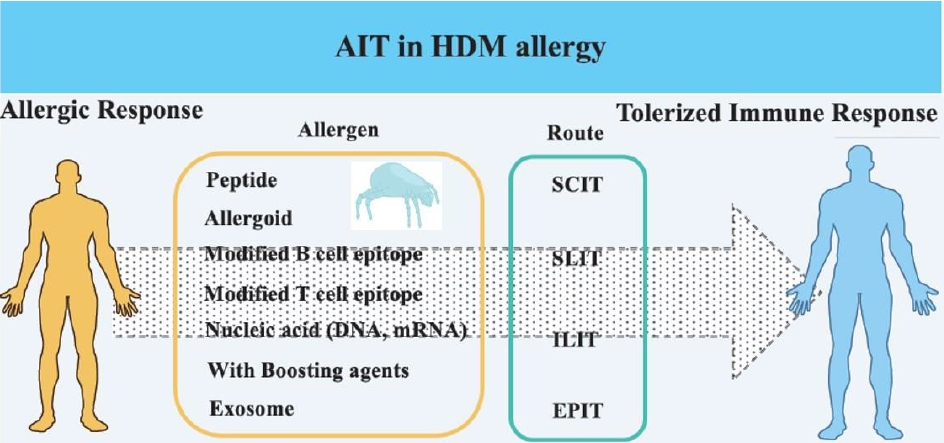
Allergen immunotherapy (AIT) has developed over the last few decades and has emerged as a promising treatment. House dust mite (HDM) is a target allergen in AIT, and various modified HDM allergens have been improved for their efficacy. Moreover, clinical trials have proved their significantly therapeutic effects in allergy. This article review focuses on HDM allergens developed for AIT efficacy,... |
|
|
Question: This study aimed to elucidate the outcomes of high-risk neuroblastoma (HR-NB) patients treated with high-dose chemotherapy and stem cell rescue without immunotherapy. Finding: The 5-year overall survival and event-free survival rates were 45.1% and 40.4%, respectively. Meaning: High-dose chemotherapy plus stem cell rescue followed by cis-retinoic acid for 12 months is well tolerated and could improve survival in patients with HR-NB in limited resource settings. |
|
|
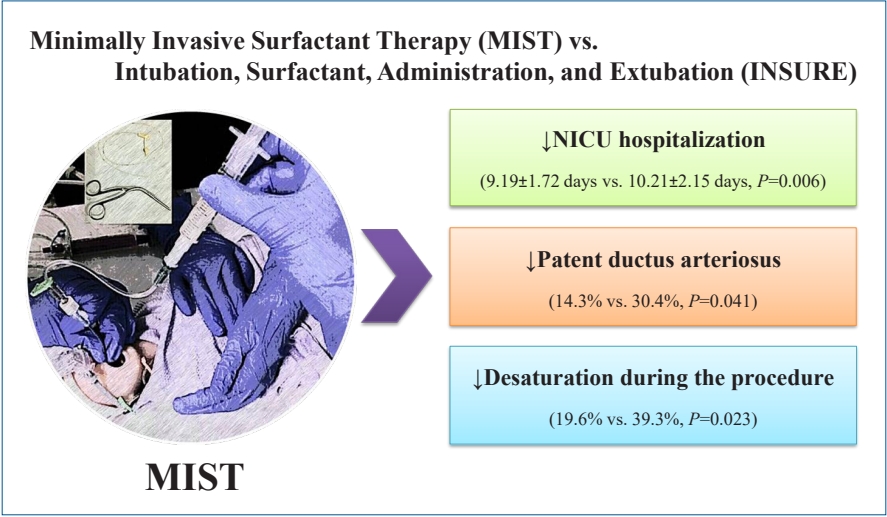
Question: Are the short-term outcomes of minimally invasive surfactant therapy (MIST) relatively superior to those of INtubation, SURfactant administration, and Extubation (INSURE) in preterm infants with respiratory distress syndrome (RDS)? Finding: MIST could be an appropriate substitution for INSURE in preterm infants with RDS since it reduced hospitalization time and number of side effects. Meaning: MIST is recommended for surfactant administration for its proven advantages over the INSURE technique. |
|
|
Advances in autoimmune encephalitis studies in the past 10 years have led to the identification of new syndromes and biomarkers that have transformed the diagnostic approach to the disorder. The disorder or syndrome has been linked to a wide variety of pathologic processes associated with the neuron-specific autoantibodies targeting intracellular and plasma membrane antigens. However, current criteria for autoimmune encephalitis... |
|
|
Hyperammonemia can be caused by several genetic inborn errors of metabolism including urea cycle defects, organic acidemias, fatty acid oxidation defects, and certain disorders of amino acid metabolism. High levels of ammonia are extremely neurotoxic, leading to astrocyte swelling, brain edema, coma, severe disability, and even death. Thus, emergency treatment for hyperammonemia must be initiated before a precise diagnosis is... |
|
|
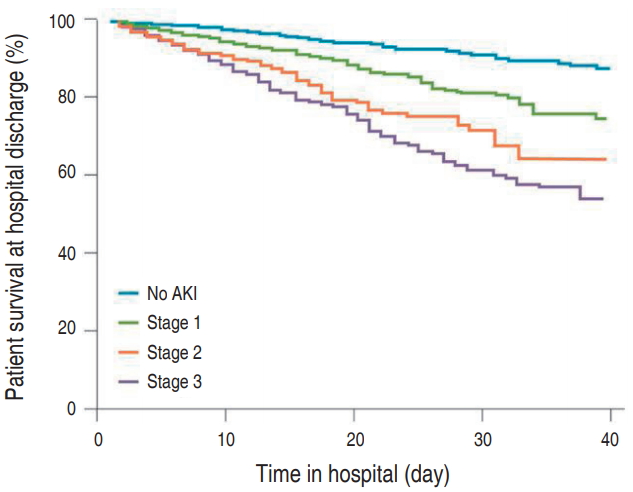
Acute kidney injury (AKI) is characterized by abrupt deterioration of renal function, and its diagnosis relies on creatinine measurements and urine output. AKI is associated with higher morbidity and mortality, and is a risk factor for development of chronic kidney disease. There is no proven medication for AKI. Therefore, prevention and early detection are important. Physicians should be aware of... |
|
|
Purpose: Pompe disease (PD) is an autosomal recessive disorder caused by a deficiency of acid alphaglucosidase resulting from pathogenic GAA variants. This study describes the clinical features, genotypes, changes before and after enzyme replacement therapy (ERT), and long-term outcomes in patients with infantile-onset PD (IOPD) and late-onset PD (LOPD) at a tertiary medical center. Methods: The medical records of 5 Korean... |
|
Hemolytic uremic syndrome (HUS) is often encountered in children with acute kidney injury. Besides the well-known shiga toxin-producing |
|
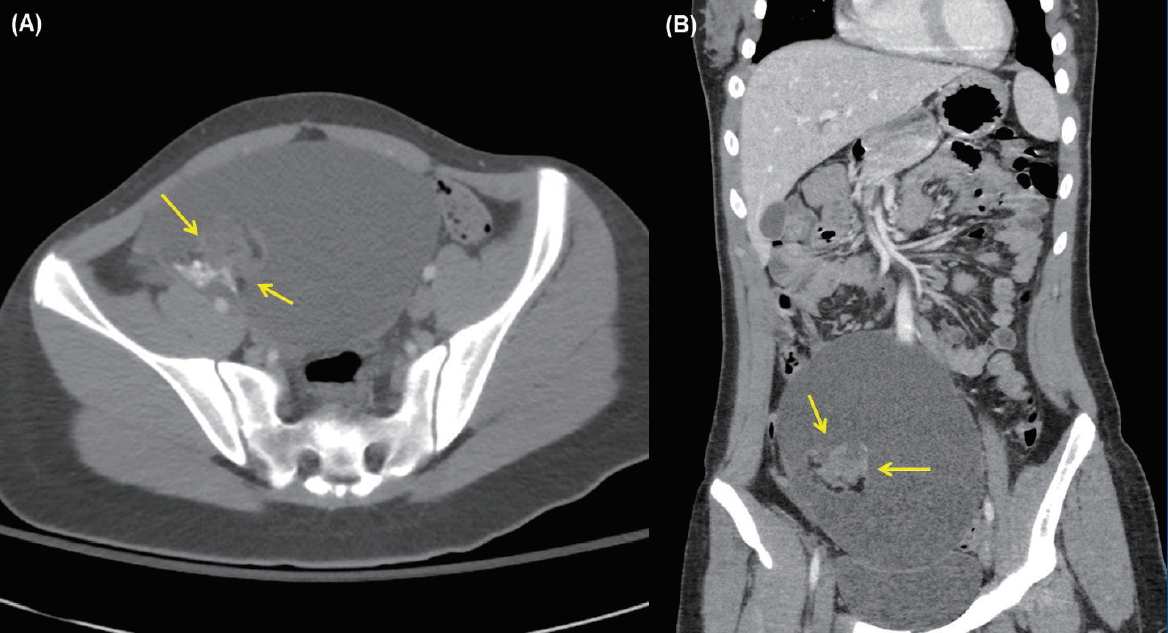
Wilms' tumor is the most common malignant renal tumor in childhood. The brain metastasis of a Wilms' tumor with anaplastic histopathology is rare. We present the case of an 8-year-old girl with Wilms' tumor, who presented with multiple brain metastases 5 years after her primary diagnosis. The brain masses were diagnosed after a generalized tonic-clonic seizure attack. The big solid... |
|
Neuroblastomas are sometimes associated with abnormal constitutional karyotypes, but the XYY karyotype has been rarely described in neuroblastomas. Here, we report a case of an esthesioneuroblastoma in a boy with a 47, XYY karyotype. A 6-year-old boy was admitted to our hospital because of nasal obstruction and palpable cervical lymph node, which he first noticed several days previously. A polypoid... |
|
Although a significant number of reports on new therapeutic options for refractory Kawasaki disease (KD) such as steroid, infliximab, or repeated intravenous immunoglobulin (IVIG) are available, their effectiveness in reducing the prevalence of coronary artery lesions (CAL) remains controversial. This study aimed to define the clinical characteristics of patients with refractory KD and to assess the effects of adjuvant therapy... |
|
Food allergy is common and sometimes life threatening for Korean children. The current standard treatment of allergen avoidance and self-injectable epinephrine does not change the natural course of food allergy. Recently, oral, sublingual, and epicutaneous immunotherapies have been studied for their effectiveness against food allergy. While various rates of desensitization (36% to 100%) and tolerance (28% to 75%) have been... |
|
It is uncommon for pediatric patients with rhabdomyosarcoma to present with clinical and/or laboratory features of disseminated intravascular coagulation (DIC). We report a case of metastatic alveolar rhabdomyosarcoma with severe bleeding because of DIC in a 13-year-old boy. He experienced persistent oozing at the site of a previous operation, gross hematuria, and massive epistaxis. Two weeks after initiating combination chemotherapy... |
|
The use of a 12-week steroid regimen (long-term therapy, LT) for the first episode of idiopathic nephrotic syndrome (NS) reportedly induces a more sustained remission and lower relapse rate than previous regimens, including an 8-week steroid regimen (short-term therapy, ST). Here, we assessed the potential for selective application of 2 steroid regimens (LT vs. ST) based on the days to... |
|
Administration of antiretroviral drugs to mothers and infants significantly decreases mother-to-child human immunodeficiency virus (HIV) transmission; cesarean sections and discouraging breastfeeding further decreases this risk. The present study confirmed the HIV status of babies born to mothers infected with HIV and describes the characteristics of babies and mothers who received preventive treatment. This study retrospectively analyzed medical records of nine infants... |
|
Cord blood (CB) has been used as an important and ethical source for hematopoietic stem cell transplantation (SCT) as well as cell therapy by manufacturing mesenchymal stem cell, induced pleuripotential stem cell or just isolating mononuclear cell from CB. Recently, the application of cell-based therapy using CB has expanded its clinical utility, particularly, by using autologous CB in children with... |
|
Pediatric infection with |
Clinical and Experimental Pediatrics is an open access journal. All articles are distributed under the terms of the Creative Commons Attribution NonCommercial License (http://creativecommons.org/licenses/by-nc/4.0/)
Copyright © 2026 by Korean Pediatric Society.