- Review Article
- Gastroenterology
- Balancing therapeutic benefits and hidden risks of proton pump inhibitors in pediatric practice: a narrative review and update
-
Maria Rogalidou, Alexandra Papadopoulou
-
Clin Exp Pediatr. 2026;69(3):186-196. Published online February 25, 2026
-
|
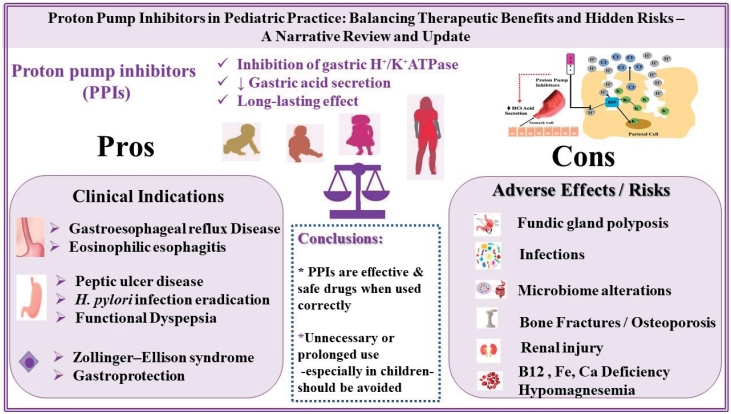
Proton pump inhibitors (PPIs) effectively treat acid-related disorders, including gastroesophageal reflux disease, eosinophilic esophagitis, peptic ulcers, and Zollinger-Ellison syndrome. Long-term use, particularly in children, may lead to microbiome alterations, nutrient deficiencies, infections, renal injury, osteoporosis, fractures, and other gastrointestinal changes. PPI therapy should be guided by clear clinical indications, prescribed at the lowest effective dose for the shortest necessary duration, and regularly reassessed to minimize risks in young children. |
-
-
- Ingestion of foreign bodies and caustic substances in children: a narrative review on clinical evaluation and management update
-
Maria Rogalidou
-
Clin Exp Pediatr. 2026;69(1):11-21. Published online December 10, 2025
-

|
Foreign body and caustic substance ingestion in children aged 1–5 years can feature to severe and, sometimes life-threatening complications. High-risk items include batteries, magnets, and corrosive chemicals. Severity depends on object type, location, and ingestion timing. Prompt diagnosis and early endoscopic intervention are crucial. Individualized management, high clinical suspicion, and parental education are essential to improving outcomes and preventing immediate and long-term complications affecting a child’s quality of life. |
-
-
|