- Clinical Note
- Genetics and Metabolism
- Happle-Tinschert syndrome in an infant: clinical, radiologic and genetic correlation
- Belén Rodríguez-Sanchez, Francisco Javier Narbona-Cárceles, Jorge Martín-Nieto-González, Marina de la Puente-Alonso, Luis Zamarro-Díaz, Luis Jiménez-Briones, Julia Suárez-González, Francisco Arias-Lotto, Minia Campos-Domínguez
- Clin Exp Pediatr. 2026;69(2):182-185. Published online January 20, 2026
-
- Expanding genotype-phenotype correlation of Kenny-Caffey syndrome type 1
- Manuela Lo Bianco, Federica Sipala, Xena Giada Pappalardo, Gaia Fusto, Roberta Rizzo, Federico Favata, Carla Cimino, Silvia Marino, Martino Ruggieri, Agnese Suppiej, Simone Ronsisvalle, Raffaele Falsaperla
- Clin Exp Pediatr. 2025;68(8):616-619. Published online May 12, 2025
-
- Original Article
- Genetics and Metabolism
- Role of microRNA-498 and microRNA-410 in neonatal hypoxic-ischemic encephalopathy
- Eman Salah Eldeen Arafat, Hasnaa Hesham Abotaleb, Dina Abdel Razek Midan, Abdel Hamid Abdo Ismail, Zeinab Sabri Abouzouna
- Clin Exp Pediatr. 2025;68(7):512-521. Published online February 26, 2025
-
Question: Is it role of microRNA-410 (miRNA-410) and microRNA-498 (miRNA-498) in neonatal hypoxic-ischemic encephalopathy (HIE)?
Findings: miRNA-498 and miRNA-410 can be auxiliary diagnostic and prognostic tools for neonatal HIE.
Meaning: we can use miRNA-498 and miRNA-410 as markers and indicator for HIE.
- Long-term follow-up of neurocognitive function in patients with citrin deficiency and cholestasis
- Meng-Ju Melody Tsai, Jung-Chi Chang, Heng-Yu Lu, Susan Shur-Fen Gau, Yin-Hsiu Chien, Wuh-Liang Hwu, Yen-Hsuan Ni, Huey-Ling Chen, Ni-Chung Lee
- Clin Exp Pediatr. 2025;68(3):257-265. Published online November 28, 2024
-
Question: Do transient metabolic disturbances in early childhood due to citrin deficiency have lasting effects on neurocognitive function?
Finding: Children with citrin deficiency have a higher prevalence of ADHD compared to the general population, with elevated ammonia levels in infancy associated with increased hyperactivity-impulsivity risk.
Meaning: Metabolic disturbances in early childhood due to citrin deficiency may contribute to long-term neurocognitive impacts, particularly ADHD, while IQ and life outcomes generally remain normal.
- Interleukin (IL)-1B and IL-1 receptor antagonist gene polymorphisms in children with primary immune thrombocytopenia
- Seham Mohamed Ragab, Wafaa Moustafa Abo ElFotoh, Mahmoud Ahmed El-Hawy, Eman Abdelfatah Badr, Saara Khairat Ali Mostafa, Mai El-Sayad Abd El-Hamid
- Clin Exp Pediatr. 2024;67(9):465-473. Published online July 24, 2024
-
· Polymorphisms in interleukin (IL)-1B and IL-1 receptor (IL-1R) antagonists may significantly affect the pathogenesis of immune thrombocytopenia (ITP).
· IL-1B and IL-1R antagonist gene polymorphisms are correlated with severity and susceptibility to primary ITP in children.
- Editorial
- Genetics and Metabolism
- Advancing orphan drug development for rare diseases
- Jung Min Ko
- Clin Exp Pediatr. 2024;67(7):356-357. Published online November 17, 2023
-
· Rare diseases present unique challenges and unmet needs for which the development of orphan drugs tailored to them offers hope.
· Despite the hurdles posed by limited patient populations, orphan drug designations from regulatory agencies provide incentives, such as extended market exclusivity and tax credits, that ignite transformative advances.
· Scientific progress in genomics, personalized medicine, and analytics empowers precise interventions by decoding genetic anomalies and encouraging effective treatments.
- Review Article
- Genetics and Metabolism
- Development of orphan drugs for rare diseases
- Han-Wook Yoo
- Clin Exp Pediatr. 2024;67(7):315-327. Published online June 28, 2023
-
· Orphan disease is a rare disease, primarily affecting newborn and children. Vast majority of orphan diseases has genetic background.
· Orphan disease is individually rare. But as a whole, it is not rare, becoming a great socioeconomic burden.
· The diagnosis of rare genetic disease has been problematic, but recent progress of genome analysis technologies makes it faster and more precise.
· There are many unmet needs as to the curative treatment. However, the number of treatable rare diseases is growingly increasing owing to the development of biotechnology.
· Most orphan drugs are extremely expensive because of numer ous hurdles during the process of drug development as well as small number of patients.
- Clinical Note
- Genetics and Metabolism
- Biallelic POLR3A variants cause Wiedemann-Rautenstrauch syndrome with atypical brain involvement
- Byungseung Moon, Minhye Kim, Hye Jin Kim, Jae So Cho, Hey Joon Son, Byung Chan Lim, Ki Joong Kim, Jong Hee Chae, Soo Yeon Kim
- Clin Exp Pediatr. 2023;66(3):142-144. Published online December 30, 2022
-
- Review Article
- Genetics and Metabolism
- Understanding the genetics of systemic lupus erythematosus using Bayesian statistics and gene network analysis
- Seoung Wan Nam, Kwang Seob Lee, Jae Won Yang, Younhee Ko, Michael Eisenhut, Keum Hwa Lee, Jae Il Shin, Andreas Kronbichler
- Clin Exp Pediatr. 2021;64(5):208-222. Published online July 15, 2020
-
Bayesian false-discovery probability and false-positive report probability are the 2 major Bayesian methods used to evaluate noteworthiness of a genetic variant.
Application of stricter P value is needed to confirm statistical significance in meta-analyses.
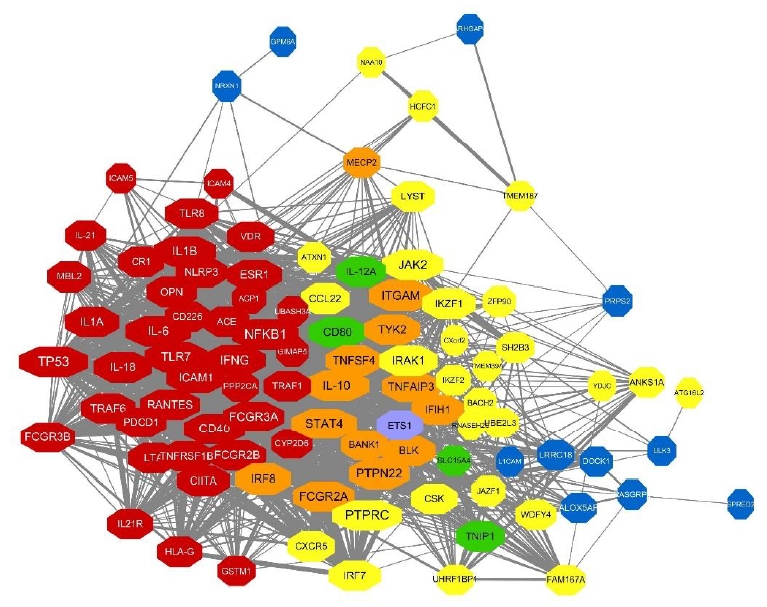
Gene network analysis of noteworthy genetic variants shows a blueprint of the genetic background in complex diseases.
- Editorial
- Genetics and Metabolism
- Improving the lives of children with neurofibromatosis type 1
- Yoo-Mi Kim
- Clin Exp Pediatr. 2021;64(4):165-166. Published online September 18, 2020
-
· The early diagnosis of neurofibromatosis type 1 (NF1) could be supported by molecular testing in sporadic NF1 patients and would benefit their health.
· The well-planned surveillance and introduction of newly developed drugs targeting molecular pathways could improve the lives of pediatric NF1 patients.
- Review Article
- Genetics and Metabolism
- Neurofibromatosis type I: points to be considered by general pediatricians
- Eungu Kang, Hee Mang Yoon, Beom Hee Lee
- Clin Exp Pediatr. 2021;64(4):149-156. Published online July 15, 2020
-
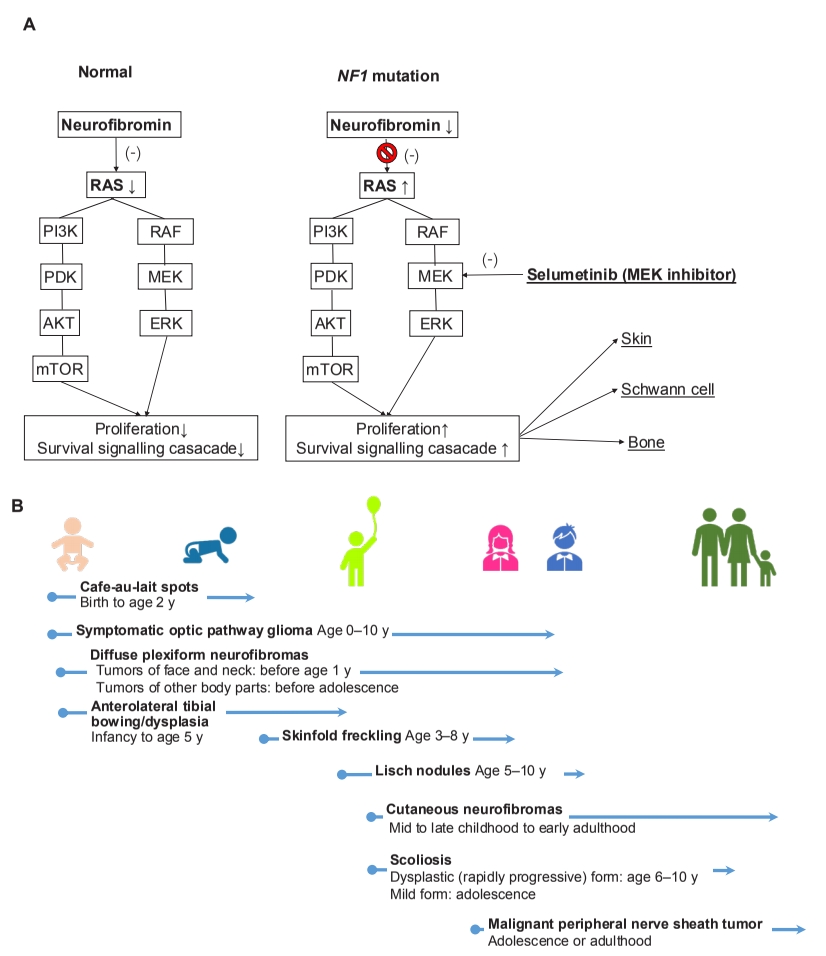
Neurofibromatosis type 1 (NF1), a prevalent genetic disease that is transmitted in an autosomal dominant manner, is characterized by multiple cutaneous café-au-lait spots and neurofibromas as well as various degrees of neurological, skeletal, and neoplastic manifestations. The clinical features of NF1 increase in frequency with age, while the clinical diagnosis can remain undetermined in some pediatric patients. Importantly, affected patients...
- Systematic review and meta-analysis
- Genetics and Metabolism
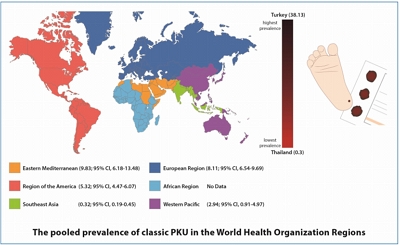
- Global prevalence of classic phenylketonuria based on Neonatal Screening Program Data: systematic review and meta-analysis
- Hamid Reza Shoraka, Ali Akbar Haghdoost, Mohammad Reza Baneshi, Zohre Bagherinezhad, Farzaneh Zolala
- Clin Exp Pediatr. 2020;63(2):34-43. Published online February 6, 2020
-
Question: What is the global prevalence of classic phenylketonuria based on Neonatal Screening Program Data?
Finding: The overall worldwide prevalence of the disease is 6.002 per 100,000 neonates. The highest prevalence (38.13) was reported in Turkey, while the lowest (0.3) in Thailand.
Meaning: This difference in the prevalence may be due to differences in the number of consanguineous marriages among the different regions, phenylalanine cutoff points, and sample sizes.
- Editorial
- Genetics and Metabolism
- Considerations for evaluating the effectiveness and long-term outcome of enzyme replacement therapy in Pompe disease
- Chong Kun Cheon
- Clin Exp Pediatr. 2020;63(1):14-15. Published online August 7, 2019
-
- Original Article
- Genetics and Metabolism
- Clinical and molecular characterization of Korean children with infantile and late-onset Pompe disease: 10 years of experience with enzyme replacement therapy at a single center
- Min-Sun Kim, Ari Song, Minji Im, June Huh, I-Seok Kang, Jinyoung Song, Aram Yang, Jinsup Kim, Eun-Kyung Kwon, Eu-Jin Choi, Sun-Ju Han, Hyung-Doo Park, Sung Yoon Cho, Dong-Kyu Jin
- Clin Exp Pediatr. 2019;62(6):224-234. Published online October 4, 2018
-
Purpose: Pompe disease (PD) is an autosomal recessive disorder caused by a deficiency of acid alphaglucosidase resulting from pathogenic GAA variants. This study describes the clinical features, genotypes, changes before and after enzyme replacement therapy (ERT), and long-term outcomes in patients with infantile-onset PD (IOPD) and late-onset PD (LOPD) at a tertiary medical center. Methods: The medical records of 5 Korean...
- Case Report
- Genetics and Metabolism
- The first Korean case with Floating-Harbor syndrome with a novel SRCAP mutation diagnosed by targeted exome sequencing
- Eun Mi Choi, Dong Hyun Lee, Seok Jin Kang, Ye Jee Shim, Heung Sik Kim, Jun Sik Kim, Jong In Jeong, Jung-Sook Ha, Ja-Hyun Jang
- Clin Exp Pediatr. 2018;61(12):403-406. Published online September 16, 2018
-
Floating-Harbor syndrome is a rare autosomal dominant genetic disorder associated with SRCAP mutation. To date, approximately 50 cases of Floating-Harbor syndrome have been reported, but none have been reported in Korea yet. Floating-Harbor syndrome is characterized by delayed bony maturation, unique facial features, and language impairment. Here, we present a 6-year-old boy with a triangular face, deep-set protruding eyes, low-set...
- Letter to the Editor
- Genetics and Metabolism
- Commentary on “Megalencephaly-capillary malformation-polymicrogyria syndrome: the first case report in Korea”
- Sung-Min Park, Byung-Soo Kim, Moon-Bum Kim, Hyun-Chang Ko
- Clin Exp Pediatr. 2018;61(1):35-36. Published online January 22, 2018
-
- Case Report
- Genetics and Metabolism
- The First Korean case of combined oxidative phosphorylation deficiency-17 diagnosed by clinical and molecular investigation
- Young A Kim, Yoo-Mi Kim, Yun-Jin Lee, Chong Kun Cheon
- Clin Exp Pediatr. 2017;60(12):408-412. Published online December 22, 2017
-
Combined oxidative phosphorylation deficiency-17 (COXPD-17) is very rare and is caused by homozygous or compound heterozygous mutations in the
ELAC2 gene on chromosome 17p12. TheELAC2 gene functions as a mitochondrial tRNA processing gene, and only 4 different pathogenic mutations have been reported inELAC2 -associated mitochondrial dysfunction involving oxidative phosphorylation. Affected patients show various clinical symptoms and prognosis, depending on...
- Original Article
- Genetics and Metabolism
- Neonatal indirect hyperbilirubinemia and glucose-6-phosphate dehydrogenase deficiency
- Hasan M. Isa, Masooma S. Mohamed, Afaf M. Mohamed, Adel Abdulla, Fuad Abdulla
- Clin Exp Pediatr. 2017;60(4):106-111. Published online April 25, 2017
-
Purpose This study aimed to determine the prevalence of glucose-6-phosphate dehydrogenase (G6PD) deficiency among infants with neonatal indirect hyperbilirubinemia (NIH); compare G6PD-deficient and G6PD-normal patients regarding hyperbilirubinemia and need for exchange transfusions (ET); and assess risk factors for ET and kernicterus.
Methods This is a case-control retrospective study. Medical records of NIH patients admitted to the Pediatric Department, Salmaniya Medical Complex, Bahrain, between...
- Case Report
- Genetics and Metabolism
- A compound heterozygous mutation in the
FMO3 gene: the first pediatric case causes fish odor syndrome in Korea - Ji Hyun Kim, Sung Min Cho, Jong-Hee Chae
- Clin Exp Pediatr. 2017;60(3):94-97. Published online March 27, 2017
-
Trimethylaminuria (TMAuria), known as “fish odor syndrome,” is a congenital metabolic disorder characterized by an odor resembling that of rotting fish. This odor is caused by the secretion of trimethylamine (TMA) in the breath, sweat, and body secretions and the excretion of TMA along with urine. TMAuria is an autosomal recessive disorder caused by mutations in flavin-containing monooxygenase 3 (
FMO3 )....
- Edentulous child with Allgrove syndrome: a rare case report
- Mohammad Vahedi, Shima Fathi, Hanif Allahbakhshi
- Clin Exp Pediatr. 2016;59(11):456-459. Published online November 18, 2016
-
Triple-A syndrome, also known as Allgrove syndrome, is a rare autosomal recessive disorder. The 3 features of this syndrome are achalasia, adrenal insufficiency, and alacrima. Achalasia could be the first manifestation of the triple-A syndrome; however, its etiology is unclear. Alacrima is generally asymptomatic but can be detected by obtaining patient history. Although adrenal insufficiency could have manifestations such as...
- A nonsense
PAX6 mutation in a family with congenital aniridia - Kyoung Hee Han, Hye Jin Lee, Il-Soo Ha, Hee Gyung Kang, Hae Il Cheong
- Clin Exp Pediatr. 2016;59(Suppl 1):S1-S4. Published online November 30, 2016
-
Congenital aniridia is a rare ocular malformation that presents with severe hypoplasia of the iris and various ocular manifestations. Most cases of congenital aniridia are known to be related to mutations in the paired box gene-6 (
PAX6 ), which is an essential gene in eye development. Herein, we report a familial case of autosomal dominant congenital aniridia with four affected members...
- Interstitial deletion of 5q33.3q35.1 in a boy with severe mental retardation
- Jin Hwan Lee, Hyo Jeong Kim, Jung Min Yoon, Eun Jung Cheon, Jae Woo Lim, Kyong Og Ko, Gyung Min Lee
- Clin Exp Pediatr. 2016;59(Suppl 1):S19-S24. Published online November 30, 2016
-
Constitutional interstitial deletions of the long arm of chromosome 5 (5q) are quite rare, and the corresponding phenotype is not yet clearly delineated. Severe mental retardation has been described in most patients who present 5q deletions. Specifically, the interstitial deletion of chromosome 5q33.3q35.1, an extremely rare chromosomal aberration, is characterized by mental retardation, developmental delay, and facial dysmorphism. Although the...
- Long-term clinical course of a patient with mucopolysaccharidosis type IIIB
- Ja Hye Kim, Yang Hyun Chi, Gu-Hwan Kim, Han-Wook Yoo, Jun Hwa Lee
- Clin Exp Pediatr. 2016;59(Suppl 1):S37-S40. Published online November 30, 2016
-
Mucopolysaccharidosis type III (MPS III) is a rare genetic disorder caused by lysosomal storage of heparan sulfate. MPS IIIB results from a deficiency in the enzyme alpha-
N -acetyl-D-glucosaminidase (NAGLU). Affected patients begin showing behavioral changes, progressive profound mental retardation, and severe disability from the age of 2 to 6 years. We report a patient with MPS IIIB with a long-term follow-up...
- Maternal 3-methylcrotonyl-coenzyme A carboxylase deficiency with elevated 3-hydroxyisovalerylcarnitine in breast milk
- Kyung Lae Cho, Yeo Jin Kim, Song Hyun Yang, Gu-Hwan Kim, Jun Hwa Lee
- Clin Exp Pediatr. 2016;59(Suppl 1):S41-S44. Published online November 30, 2016
-
We report here a case of maternal 3-methylcrotonyl-coenzyme A carboxylase (3-MCC) deficiency in a Korean woman. Her 2 infants had elevated 3-hydroxyisovalerylcarnitine (C5-OH) on a neonatal screening test by liquid chromatography-tandem mass spectrometry (LC-MS/MS), but normal results were found on urine organic acid analysis. The patient was subjected to serial testing and we confirmed a maternal 3-MCC deficiency by blood...
- Compound heterozygous mutations of
ACADS gene in newborn with short chain acyl-CoA dehydrogenase deficiency: case report and literatures review - Se Jin An, Sook Za Kim, Gu Hwan Kim, Han Wook Yoo, Han Hyuk Lim
- Clin Exp Pediatr. 2016;59(Suppl 1):S45-S48. Published online November 30, 2016
-
Short-chain acyl-CoA dehydrogenase deficiency (SCADD) is a rare autosomal recessive mitochondrial disorder of fatty acid β-oxidation, and is associated with mutations in the acyl-CoA dehydrogenase (
ACADS ) gene. Recent advances in spectrometric screening for inborn errors of metabolism have helped detect several metabolic disorders, including SCADD, without symptoms in the neonate period. This allows immediate initiation of treatment and monitoring, so...
- A rare case of Sjogren-Larsson syndrome with recurrent pneumonia and asthma
- Azita Tavasoli, Shirin Sayyahfar, Babak Behnam
- Clin Exp Pediatr. 2016;59(6):276-279. Published online June 30, 2016
-
Sjogren-Larsson syndrome (SLS) is a rare autosomal recessive neurocutaneous disorder with worldwide incidence of 0.4 per 100,000 people. It is characterized by the triad of congenital ichthyosis, spastic diplegia or quadriplegia, and mental retardation. Herein we report a 2-year-old male child with SLS, asthma, and recurrent pneumonia. SLS was confirmed by a molecular genetics study that revealed a deletion mutation...
- Original Article
- Genetics and Metabolism
- Identification of 1p36 deletion syndrome in patients with facial dysmorphism and developmental delay
- Go Hun Seo, Ja Hye Kim, Ja Hyang Cho, Gu-Hwan Kim, Eul-Ju Seo, Beom Hee Lee, Jin-Ho Choi, Han-Wook Yoo
- Clin Exp Pediatr. 2016;59(1):16-23. Published online January 22, 2016
-
Purpose The 1p36 deletion syndrome is a microdeletion syndrome characterized by developmental delays/intellectual disability, craniofacial dysmorphism, and other congenital anomalies. To date, many cases of this syndrome have been reported worldwide. However, cases with this syndrome have not been reported in Korean populations anywhere. This study was performed to report the clinical and molecular characteristics of five Korean patients with the...