- Original Article
- Basic Research
- Longitudinal changes in serum soluble C5b-9 levels following immunomodulatory therapy for multisystem inflammatory syndrome in children
-
Amrita Pattanaik, Prasad Varamballi, Srilatha Marate, Sushma Bhandarkar B., Shrikiran Aroor, Somashekar A.R., Suchetha S. Rao, Chiranjay Mukhopadhyay
-
Clin Exp Pediatr. 2026;69(9):726-732. Published online August 19, 2026
-

|
Question: Do serum soluble C5b-9 (sC5b-9) levels change following immunomodulatory therapy in children with multisystem inflammatory syndrome in children (MIS- C)?
Finding: In this longitudinal multicentric study of 100 children with MIS-C, serum sC5b-9 concentrations significantly decreased following treatment, although some patients showed persistently elevated levels at discharge.
Meaning: Serial sC5b-9 measurements may indicate treatment-associated immune activity and recovery in MIS-C. |
-
-
- Critical Care Medicine
- Comparative validity of microalbuminuria versus clinical mortality scores to predict pediatric intensive care unit outcomes
-
Shifa Nismath, Suchetha S. Rao, B.S. Baliga, Vaman Kulkarni, Gayatri M. Rao
-
Clin Exp Pediatr. 2020;63(1):20-24. Published online August 12, 2019
-
|
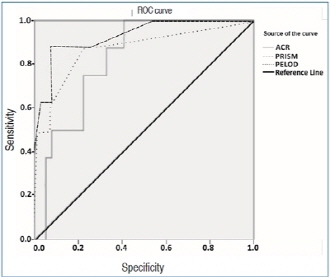
Question: Does microalbuminuria predict mortality in pediatric intensive care unit?
Finding: Positive correlation was found between albumin-creatinine ratio and pediatric intensive care unit stay, organ dysfunction and need of inotropes. Area under the receiver operating characteristic curve for albumin-creatinine ratio was comparable to mortality scores.
Meaning: Microalbuminuria is a good predictor of outcome in pediatric intensive care unit and is comparable with mortality scores. |
-
-
|