Previous issues

  • HOME
  • BROWSE ARTICLES
  • Previous issue
Volume 69(10); Oct 2026
Review Articles
Gastroenterology
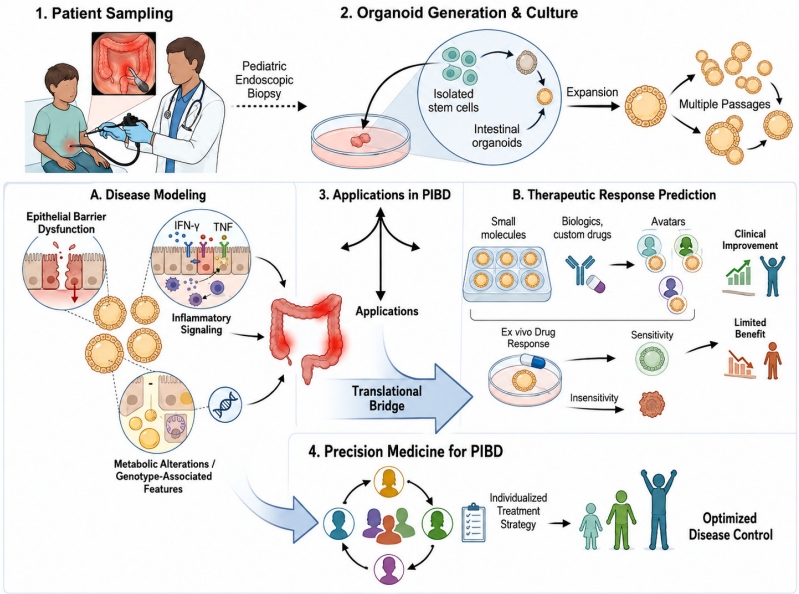
Patient-derived intestinal organoids in pediatric inflammatory bowel disease: applications in disease modeling and therapeutic response prediction
Ky Young Cho
Clin Exp Pediatr. 2026;69(10):753-761.   Published online September 1, 2026
· Patient-derived intestinal organoids provide a human-relevant platform for studying disease mechanisms and evaluating therapeutic responses in pediatric inflammatory bowel disease (PIBD).
· By preserving patient-specific epithelial characteristics, these models enable the functional assessment of disease heterogeneity and drug responsiveness.
· Although technical and biological limitations remain, ongoing advances in immune-inclusive and microphysiological systems are expected to enhance their translational value and support personalized treatment strategies for PIBD.
Immunology
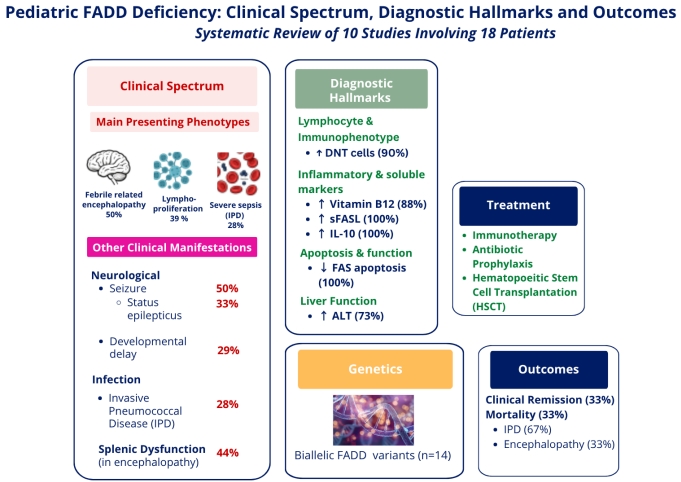
Current review of pediatric Fas-associated death domain protein deficiency: expanding clinical and therapeutic perspectives
Chuin-Hen Liew, Kah Kee Tan, Jelitha Ramachanderam, Sin Yee Teo, Khuen Foong Ng
Clin Exp Pediatr. 2026;69(10):762-772.   Published online September 4, 2026
Fas-associated death domain protein deficiency expands beyond a severe infantile immunodeficiency to a broader clinical spectrum in children involving autoimmunity, autoinflammation, and susceptibility to bacterial and viral infections. This review highlights recurrent febrile encephalopathy, invasive pneumococcal disease, and liver dysfunction as key features and identifies later-onset and self-limiting phenotypes.
Developmental and Behavioral Medicine
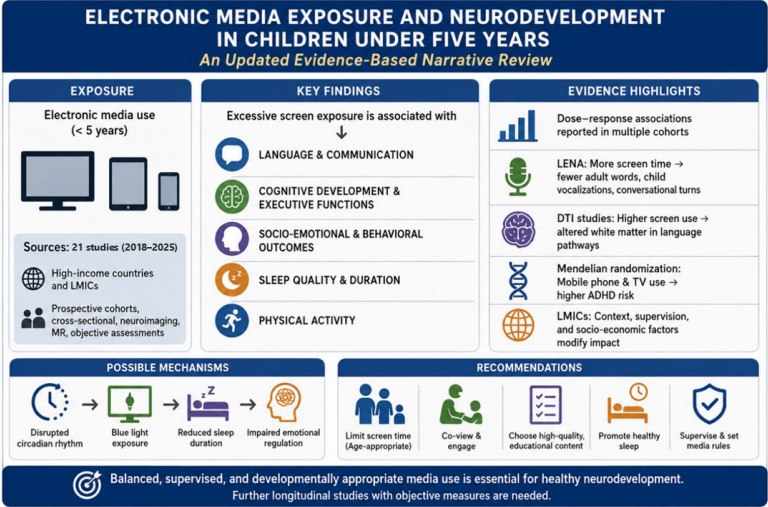
Electronic media exposure and neurodevelopment in children under 5 years of age: an updated evidence-based narrative review
Soumi Kundu, Sudip Bhattacharya, Rajan Kumar, Kusum Kumari, Chandrima Biswas, Asha Premlata Omega Oraon, Abhimanyu Ganguly
Clin Exp Pediatr. 2026;69(10):773-784.   Published online September 8, 2026
Excessive digital media exposure before 5 years is consistently associated with poorer language development, attention, executive functioning, sleep quality, and socioemotional development. The adverse effects are particularly evident when screen exposure replaces caregiver-child interaction and active play. High-quality educational content combined with caregiver coviewing may mitigate some of these risks. Pediatric counseling should emphasize age-appropriate media use, family media plans, and balanced daily routines.
Editorial
Neonatology (Perinatology)
Antenatal strategies for prevention of neonatal hypoxic-ischemic encephalopathy: potential role of metformin
Won-Ho Hahn
Clin Exp Pediatr. 2026;69(10):785-787.   Published online September 28, 2026
Neonatal hypoxic-ischemic encephalopathy remains a major cause of death and lifelong disability despite therapeutic hypothermia. Antenatal maternal neuroprotective strategies remain underexplored; however, recent preclinical findings suggest that metformin may be a low-cost and mechanistically distinct approach. Further studies are warranted to define its optimal timing, efficacy, and maternal-fetal safety.
Original Articles
Gastroenterology
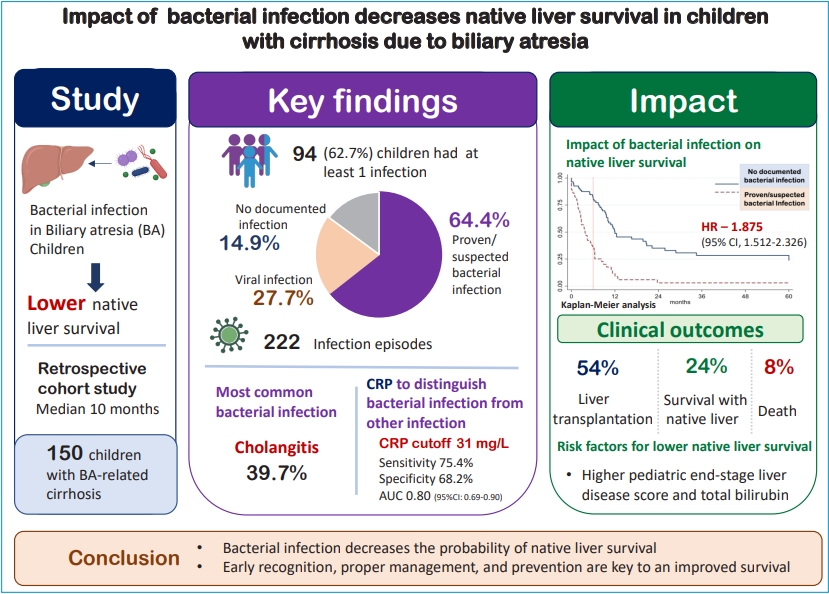
Impact of bacterial infection on native liver survival in children with cirrhosis due to biliary atresia
Varissara Kaewchaivijit, Pornthep Tanpowpong, Songpon Getsuwan, Sophida Boonsathorn, Chatmanee Lertudomphonwanit, Suporn Treepongkaruna
Clin Exp Pediatr. 2026;69(10):788-796.   Published online July 24, 2026
Question: Are bacterial infections associated with lower native liver survival in children with biliary atresia (BA)?
Finding: Children with BA and proven/suspected bacterial infections, including cholangitis, had significantly lower native liver survival and higher rates of liver transplantation or death.
Meaning: Early recognition, appropriate management, and prevention of bacterial infections may improve native liver survival in children with BA-related cirrhosis.
Endocrinology
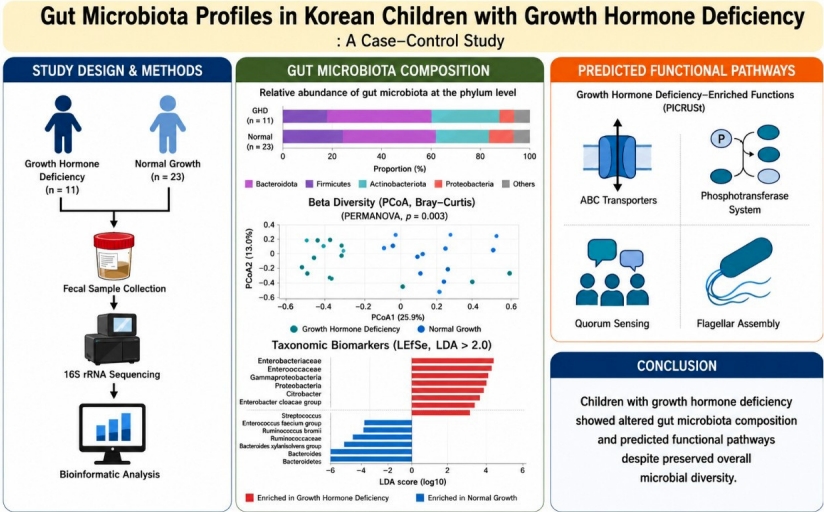
Gut microbiota profiles in Korean children with growth hormone deficiency: a case-control study
So Yoon Choi, Seom Gim Kong, Gyu Min Yeon, Yoo Rha Hong, Minyoung Jung, Jung Hyun Lee
Clin Exp Pediatr. 2026;69(10):797-805.   Published online August 19, 2026
Question: Is gut microbiota composition altered in children with growth hormone deficiency (GHD)?
Finding: Children with GHD exhibited altered gut microbiota composition and predicted microbial functional pathways despite similar overall microbial diversity.
Meaning: These preliminary findings suggest a potential association between gut microbiota and pediatric GHD and warrant validation in larger prospective studies.
Neonatology (Perinatology)
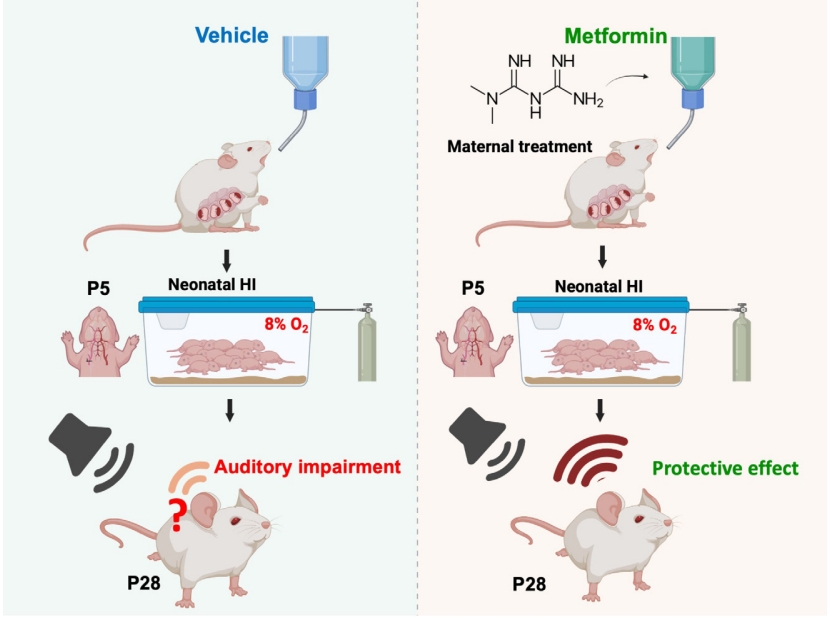
Maternal metformin protects developing auditory brainstem function after neonatal hypoxia-ischemia in a neonatal rat model
Sei Eun Kim, Joo Young Kweon, Yong Joo Ahn, Jun Hee Kim
Clin Exp Pediatr. 2026;69(10):806-816.   Published online September 17, 2026
Question: Does maternal metformin administration during pregnancy protect offspring auditory brainstem function after neonatal hypoxia-ischemia (HI)?
Finding: Maternal metformin prevented HI-induced hearing threshold elevation, preserved auditory brainstem response amplitudes, and partially rescued neuronal and oligodendrocyte lineage cells in the medial nucleus of the trapezoid body.
Meaning: Maternal metformin during gestation may serve as a prenatal neuroprotective strategy against neonatal hypoxic-ischemic brain injury.
Clinical Note
Gastroenterology
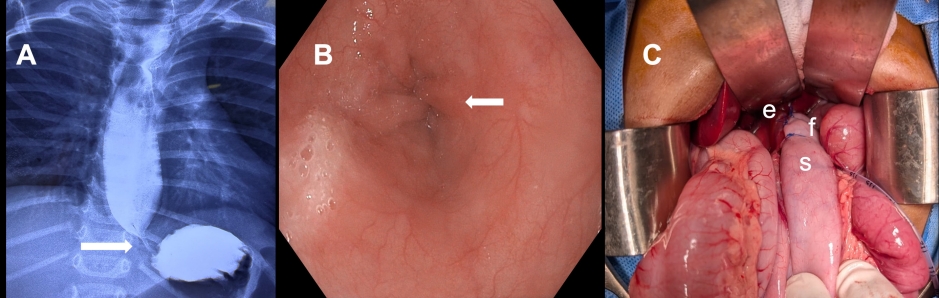
Achalasia, alacrimia, and normal adrenal function in a toddler: GDP-mannose pyrophosphorylase A-congenital disorder of glycosylation mimicking Allgrove syndrome
Prounika Koppula, Siva Satya Prasun Korrapati, Vybhav Venkatesh
Clin Exp Pediatr. 2026;69(10):817-819.   Published online August 19, 2026
Correspondence
Endocrinology
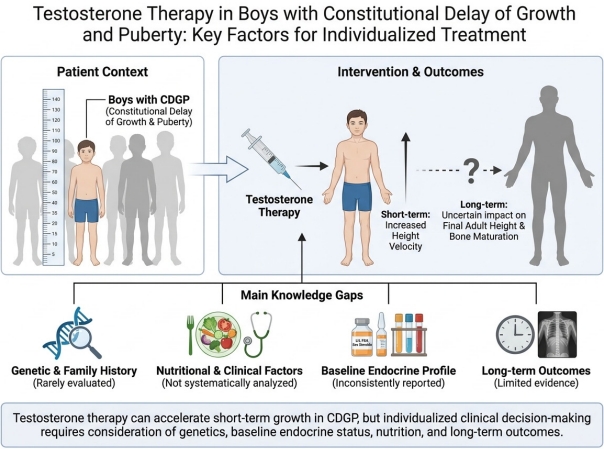
A commentary on “Testosterone therapy in boys with constitutional delay of growth and puberty: a PubMed-based systematic review and exploratory meta-analysis”
Muqaddas Boltaboeva, Abdulhamid Haydarov, Lola Rakhmanova
Clin Exp Pediatr. 2026;69(10):820-822.   Published online September 17, 2026
Current evidence suggests that testosterone therapy is effective in boys with constitutional delay of growth and puberty; however, important knowledge gaps persist regarding genetic predisposition, nutritional and clinical factors, baseline endocrine assessments, and long-term outcomes. Addressing these factors may improve patient selection, optimize treatment strategies, and facilitate more individualized clinical decision-making.
Correspondence and Reply
Endocrinology
Authors’ reply to a commentary on “Testosterone therapy in boys with constitutional delay of growth and puberty: a PubMed-based systematic review and exploratory meta-analysis”
Ashraf T. Soliman, Fawzia Alyafei, Nada Alaaraj, Noor Hamed, Shayma Ahmed, Khaled A. Siddiq, Mohammed Qusad, Mohamed AlKhalaf
Clin Exp Pediatr. 2026;69(10):823-824.   Published online September 28, 2026


TOPICS

Browse all articles >

ARTICLE CATEGORY

Browse all articles >

BROWSE ARTICLES
FOR CONTRIBUTORS
ABOUT
Editorial Office
Korean Pediatric Society
#1606 Seocho World Officetel, 19 Seoun-ro, Seocho-ku, Seoul 06732, Korea
Tel: +82-2-3473-7306    Fax: +82-2-3473-7307    E-mail: office@e-cep.org                

Clinical and Experimental Pediatrics is an open access journal. All articles are distributed under the terms of the Creative Commons Attribution NonCommercial License (http://creativecommons.org/licenses/by-nc/4.0/)

Copyright © 2026 by Korean Pediatric Society.      Developed in M2PI